

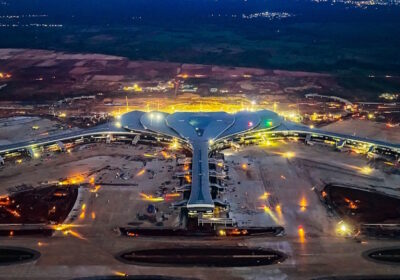
A Green Environment as the Structural Foundation of Sustainable Urban Development in Dong Nai
The transition toward sustainable cities is no longer understood merely as an urban planning aspiration or an environmental policy objective, but rather as a structural transformation in which economic development,…

Building the Strategic Vision for a Smart City Transformation
The transformation of a city into a Smart City never truly begins with the installation of sensors, the procurement of data platforms, or the deployment of artificial intelligence systems, however…
Citizen Data and Privacy in the AI City: Building Trust through Transparency
Data is the currency of the smart city. Every sensor, mobile device, and connected service generates information that helps urban systems become more efficient, sustainable, and responsive. Traffic lights adjust…

AI-Enabled Emergency Response: Real-Time Urban Crisis Detection and the Evolution of Smart Cities
In contemporary urban environments, where population density, infrastructure complexity, and interdependence of services continue to increase, the ability to detect and respond to emergencies in real time has become a…
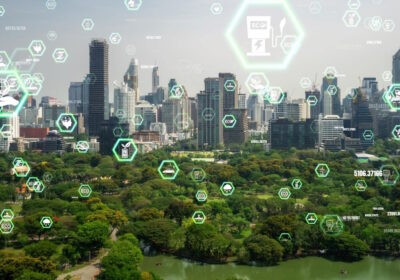
Environmental Monitoring and Urban Transformation: Artificial Intelligence at the Core of Smart Cities
Urban environments, as complex socio-technical systems, are undergoing a fundamental transformation driven by the convergence of data, connectivity, and artificial intelligence (AI). These interconnected, dynamic systems are not merely expanding…
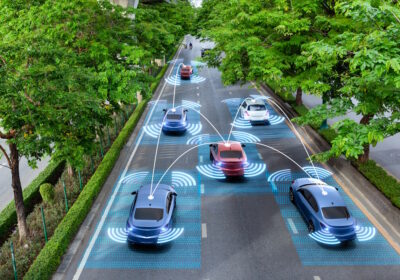
Connected Vehicles and Smart Infrastructure: Building Cooperative Mobility Networks for Smart Cities
The next phase of urban mobility is defined less by the performance of individual vehicles and more by the computational integration of vehicles, infrastructure, and public systems into a coordinated…