
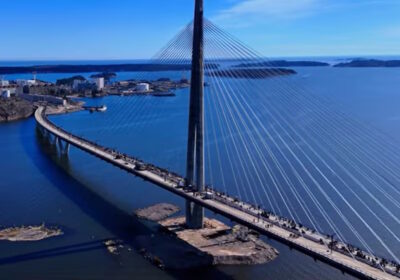
Helsinki’s Kruunuvuorensilta Bridge: A Transformative Step Toward Post-Car Urban Mobility
The inauguration of the Kruunuvuorensilta Bridge in Helsinki represents not merely the completion of a major piece of infrastructure, but rather a decisive manifestation of a broader urban paradigm shift…
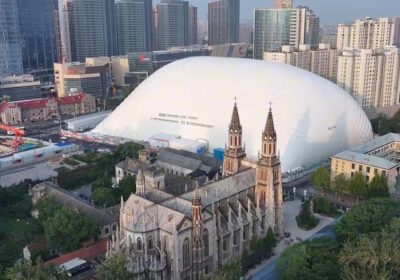
Why China Is Beginning to Cover Construction Sites with Giant Inflatable Domes
China’s accelerated urban transformation over the last three decades has created one of the most intense construction environments in modern history, as the expansion of transport infrastructure, commercial districts, residential…

Traffic Heat as a Hidden Driver of Urban Warming
The warming of contemporary cities cannot be understood solely through the traditional lens of solar radiation absorbed by concrete, asphalt, and glass surfaces; rather, it must also be interpreted through…

Machine Learning in Urban Growth Forecasting and Land Use Optimization
Cities are living organisms ,constantly expanding, reshaping, and adapting to the needs of their populations. Understanding how they grow, and predicting where that growth will occur, has always been a…

AI for Accessibility: Designing Inclusive Smart Cities for All
The promise of a smart city is not only about technology, it’s about people. For a city to be truly intelligent, it must also be inclusive. Accessibility has traditionally been…

Transforming Urban Parking Lots into Intelligent Service Hubs: The Role of AI in the Future of Urban Infrastructure
Parking infrastructure in major metropolitan areas is undergoing a profound transformation, evolving from static storage spaces for vehicles into dynamic, multifunctional urban service hubs. One of the most illustrative…