Powering the development and transformation of cities around the world

Empowering Cities Through Technology

At the IDHUS Institute, we support companies, organisations, municipalities and local governments in leveraging new technologies to design smarter, more sustainable, and people-centered cities. Our services combine strategic vision, technological expertise, and ethical insight to help urban administrations improve decision-making, optimize public services, and accelerate digital transformation.

Projects

The IDHUS Institute develops and participates in research and innovation projects focused on applying artificial intelligence and emerging technologies to real urban challenges. Our goal is to transform data and knowledge into practical solutions that enhance sustainability, efficiency, and quality of life in cities.

Turning Knowledge into Urban Intelligence

Working alongside universities, public administrations, and technology partners, we co-create initiatives that address key areas such as smart mobility, energy management, climate resilience, and digital governance. Each project is designed to integrate technology with social and environmental responsibility.

Analysing the development and transformation of cities around the world

From Traditional Urban Management to Data-Driven Governance
13 Apr 2026
From Traditional Urban Management to Data-Driven Governance
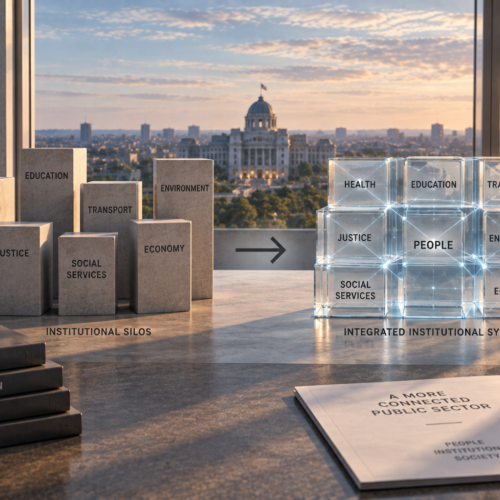
The transition from traditional urban administration to data-driven governance represents one of the most profound transformations in contemporary urban development, because it redefines not only how cities manage infrastructure and services, but how they perceive reality, make decisions, allocate resources, and engage with citizens in an increasingly complex and dynamic environment. At its core, this shift moves governance away from fragmented, reactive, and institutionally siloed models toward an integrated intelligence framework in which data functions as the strategic foundation of urban decision-making.
Traffic Heat as a Hidden Driver of Urban Warming
13 Apr 2026
Traffic Heat as a Hidden Driver of Urban Warming
Traffic is far more than a mobility and emissions issue; it is also an increasingly important driver of urban warming. It is clear that vehicular heat contributes to the urban heat island effect, raising local temperatures and intensifying thermal stress in dense city environment, which is why traffic-generated heat must become a central variable in climate resilience and Smart City planning.
A Green Environment as the Structural Foundation of Sustainable Urban Development in Dong Nai
12 Apr 2026
A Green Environment as the Structural Foundation of Sustainable Urban Development in Dong Nai
The transition toward sustainable cities is no longer understood merely as an urban planning aspiration or an environmental policy objective, but rather as a structur...
Building the Strategic Vision for a Smart City Transformation
11 Apr 2026
Building the Strategic Vision for a Smart City Transformation
The transformation of a city into a Smart City never truly begins with the installation of sensors, the procurement of data platforms, or the deployment of artificial...
Citizen Data and Privacy in the AI City: Building Trust through Transparency
11 Apr 2026
Citizen Data and Privacy in the AI City: Building Trust through Transparency
Data is the currency of the smart city. Every sensor, mobile device, and connected service generates information that helps urban systems become more efficient, sustain...
AI-Enabled Emergency Response: Real-Time Urban Crisis Detection and the Evolution of Smart Cities
19 Jan 2026
AI-Enabled Emergency Response: Real-Time Urban Crisis Detection and the Evolution of Smart Cities
In contemporary urban environments, where population density, infrastructure complexity, and interdependence of services continue to increase, the ability to detect a...
Technical Research and Development

Smart Cities Cohesive Model (SCCM)

The SCCM is a cohesive framework of structures, service levels, applications, and systems for Smart Cities, which facilitates and guides the implementation of technologies and processes that lead to the transformation of our cities towards new urban models of livability, sustainability, urban design, and technological interconnection.
More information