The inauguration of the Kruunuvuorensilta Bridge in Helsinki represents a pivotal moment in the evolution of urban mobility, as cities increasingly transition toward more sustainable, human-centered transport systems. Spanning over the Baltic Sea and designed exclusively for pedestrians, cyclists, and public transport, this infrastructure not only enhances connectivity but also embodies a broader strategic shift away from car dependency
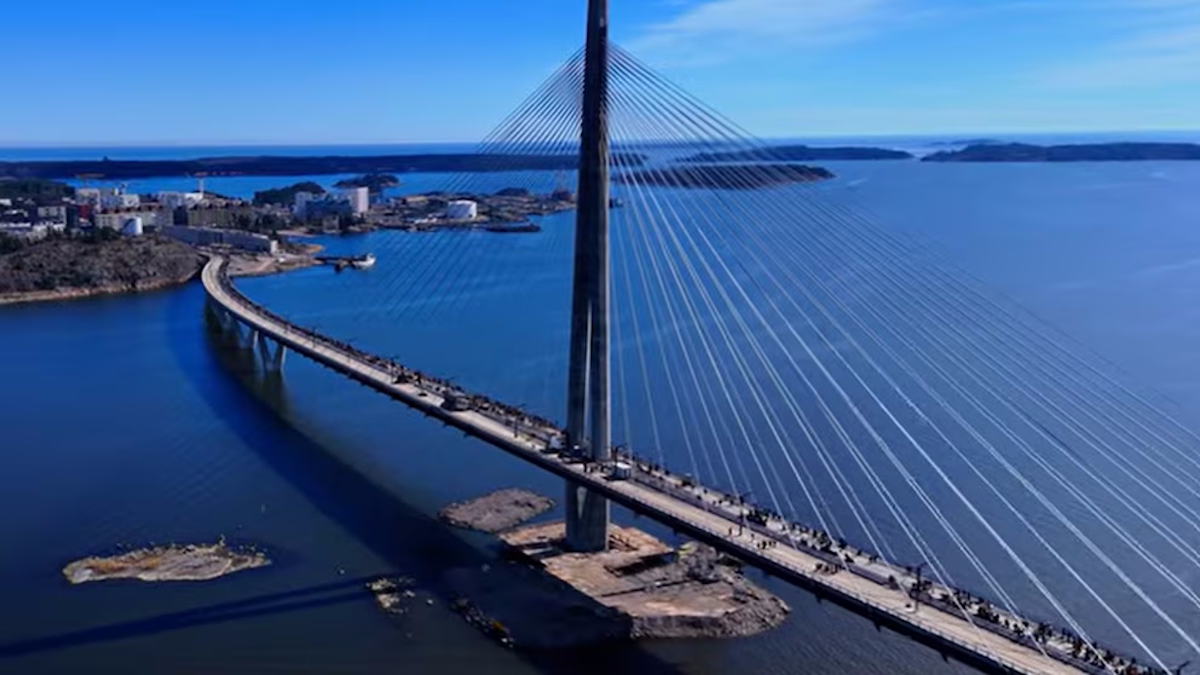
The inauguration of the Kruunuvuorensilta Bridge in Helsinki represents not merely the completion of a major piece of infrastructure, but rather a decisive manifestation of a broader urban paradigm shift in which cities progressively redefine their spatial logic, mobility priorities, and environmental commitments, moving away from car-dependent models toward more human-centered and ecologically balanced systems. Stretching 1,191 meters across the Baltic Sea, the bridge connects the districts of Korkeasaari and Kruunuvuorenranta with the urban core, effectively reshaping not only physical accessibility but also the experiential geography of the Finnish capital.
Redefining Connectivity in a Maritime Urban Landscape
In a city characterized by its fragmented archipelagic structure, where water bodies historically acted as both connectors and barriers, the construction of Kruunuvuorensilta introduces a new layer of permeability that significantly alters commuting patterns, spatial integration, and daily life rhythms. By reducing the travel distance between Kruunuvuorenranta and central Helsinki from approximately eleven kilometers to just five and a half, the bridge does not merely shorten routes but also reconfigures the mental map of the city, making previously peripheral areas feel tangibly closer and more accessible.
This transformation is particularly relevant in the context of Helsinki’s long-term urban expansion strategy, which aims to densify coastal districts while maintaining high environmental standards, and where improved connectivity becomes a prerequisite for both economic viability and social cohesion. In practical terms, a commuter who previously relied on indirect routes or ferry connections can now traverse the distance by bicycle or tram in a fraction of the time, illustrating how infrastructure design directly influences behavioral patterns and modal choices.
A Car-Free Infrastructure as a Strategic Urban Statement
Perhaps the most defining characteristic of the Kruunuvuorensilta Bridge lies in its strict exclusion of private vehicles, a decision that signals a clear and deliberate prioritization of active mobility and public transport over individual car use, and which aligns with Helsinki’s ambition to become a city where owning a car is no longer a necessity for everyday life. By dedicating the bridge exclusively to pedestrians, cyclists, and tram lines, the project reinforces a mobility hierarchy that privileges sustainability, efficiency, and inclusivity.
This approach is not merely symbolic but deeply functional, as studies across European cities have consistently demonstrated that infrastructure that physically excludes cars tends to produce higher rates of active mobility adoption, as it removes both real and perceived barriers related to safety, noise, and air pollution. For instance, in Copenhagen, the expansion of cycling-only bridges and corridors has contributed to cycling modal shares exceeding 40% of daily commutes, while in Amsterdam, the integration of pedestrian and cycling networks has been associated with measurable reductions in urban congestion and emissions.
Urban Identity, Public Space, and the Emergence of New Landmarks
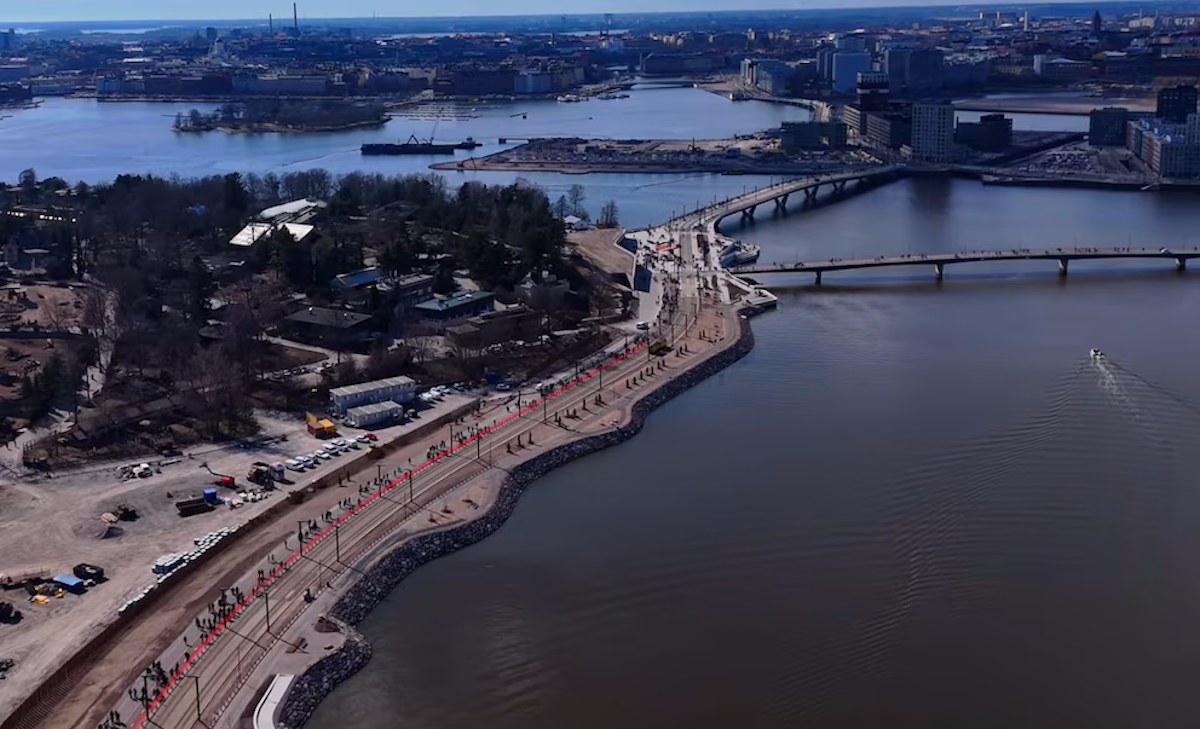
Beyond its functional role, the Kruunuvuorensilta Bridge has rapidly assumed the status of an urban landmark, as evidenced by the more than 50,000 visitors who crossed it during its weekend, a figure that underscores the capacity of well-designed infrastructure to transcend utility and become a cultural and social destination in its own right. The bridge offers panoramic views over the Baltic Sea and the Helsinki skyline, transforming the act of crossing into an experiential journey rather than a mere transit operation.
Mayor Daniel Sazonov’s characterization of the bridge as a “distinctive and exciting landmark” reflects an understanding that contemporary urban infrastructure increasingly operates at the intersection of engineering, design, and place-making, where the aesthetic and symbolic dimensions of projects contribute to city branding, tourism, and civic pride. In this sense, the bridge can be seen as part of a broader trend in which cities invest in iconic yet functional structures that reinforce their global identity while serving local needs.
Integrated Urban Development and Cultural Revitalization
The opening of the bridge coincides with a wider process of urban revitalization in Helsinki, where investments in mobility infrastructure are complemented by enhancements in cultural and leisure amenities, thereby creating a multidimensional urban transformation that integrates accessibility, livability, and economic vitality. The reopening of the historic Yrjönkatu indoor swimming hall, renowned for its Art Deco architecture, and the planned introduction of a traditional summer cottage at the Seurasaari Open-Air Museum, exemplify how the city continues to leverage its cultural heritage while expanding its contemporary offerings.
At the same time, the adaptive reuse of the Central Railway Station’s historic dining hall into the Taulu restaurant, along with the opening of the Waldorf Astoria Helsinki in 2025, highlights the interplay between infrastructure, tourism, and high-value economic activities, where improved accessibility contributes to increased footfall, longer visitor stays, and higher levels of urban consumption. These developments illustrate how mobility projects, when strategically aligned with urban planning and economic policy, can generate ripple effects across multiple sectors.
Health, Environment, and the Socioeconomic Impact of Active Mobility
From a public policy perspective, the development of infrastructure such as the Kruunuvuorensilta Bridge is closely associated with a range of positive externalities, including improvements in public health, reductions in greenhouse gas emissions, and enhanced social interaction. According to organizations such as the European Cyclists’ Federation, cities that invest heavily in cycling and pedestrian infrastructure tend to experience lower rates of cardiovascular diseases, reduced healthcare costs, and higher levels of citizen well-being, as active mobility becomes integrated into daily routines.
Moreover, the economic implications of such investments are increasingly well documented, with evidence suggesting that pedestrian- and cyclist-friendly environments often lead to increased local spending, higher retail occupancy rates, and greater resilience of small businesses, particularly in areas that benefit from increased foot traffic. In this context, the bridge not only facilitates movement but also acts as a catalyst for economic activation along its connected corridors.
Toward a Climate-Resilient and Human-Centered Urban Future
The Kruunuvuorensilta Bridge forms part of Helsinki’s broader ambition to position itself as a global leader in sustainable and climate-resilient urban development, where infrastructure investments are conceived not as isolated projects but as integral components of a systemic transition toward low-carbon, inclusive, and adaptive cities. By prioritizing non-motorized transport and integrating the bridge into a wider network of tram lines, cycling paths, and pedestrian routes, the city is actively working to reduce congestion, lower emissions, and promote healthier lifestyles.
This long-term vision reflects a growing recognition among urban planners and policymakers that the challenges of the 21st century, including climate change, urbanization, and social inequality, require holistic and forward-looking solutions, in which mobility infrastructure plays a central role. As Helsinki continues to monitor the impact of the bridge on mobility patterns, environmental indicators, and quality of life, the project stands as a compelling example of how strategic infrastructure can redefine urban futures and inspire similar transformations across cities worldwide.