
Publications

Cities of the Future: How Energy, Technology, and Digital Intelligence Are Redefining Urban Life

Cities of the Future: How Energy, Technology, and Digital Intelligence Are Redefining Urban Life

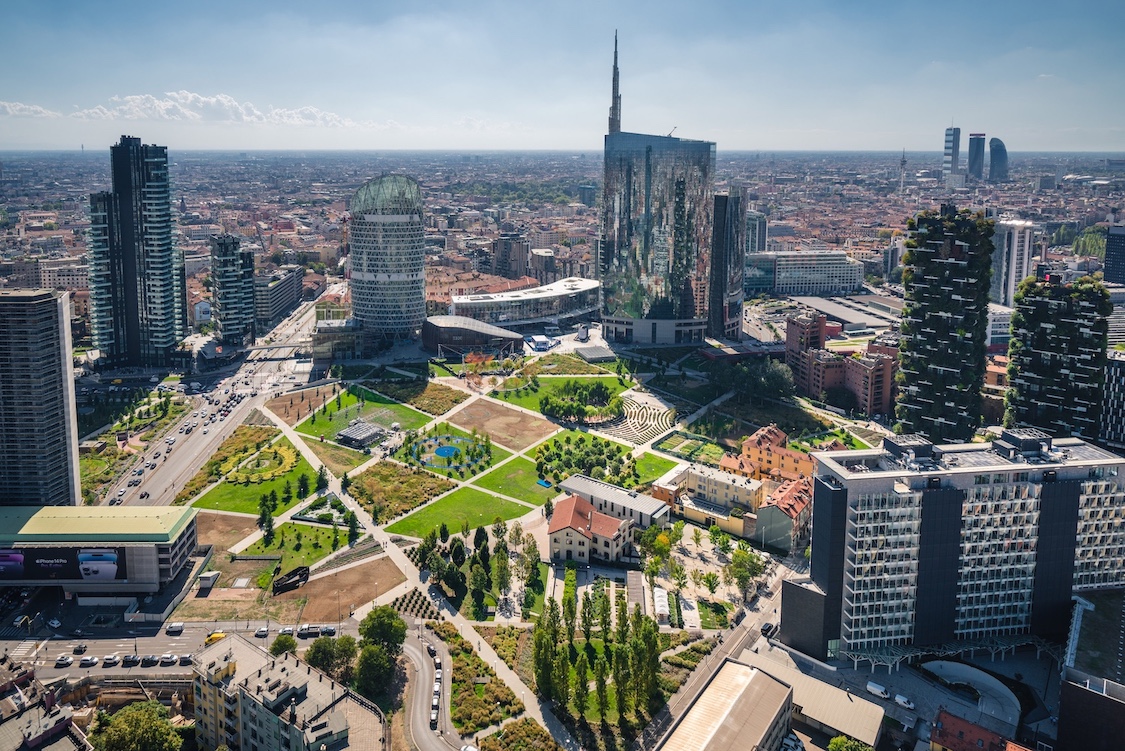
Cities are rapidly becoming the primary environment in which the future of humanity will be defined, as they are expected to host nearly 70 percent of the global population by 2050. This demographic shift, already underway, places unprecedented pressure on urban systems, infrastructures, and governance models, requiring cities to rethink their role, structure, and functioning in a profound and systemic way. Urban areas are no longer merely centers of consumption and economic activity, but increasingly complex ecosystems where energy, data, mobility, housing, and social services must interact efficiently and sustainably. In this context, the convergence of smart grids, energy storage…
Read More
Cities Becoming Intelligent: Artificial Intelligence as the Foundation of a New Urban Paradigm

Cities Becoming Intelligent: Artificial Intelligence as the Foundation of a New Urban Paradigm

  In recent years, artificial intelligence has undergone a decisive evolution, transitioning from an emerging technological concept into a structural component of contemporary societies. Its progressive integration into everyday life is particularly evident within the real estate sector, where AI has moved beyond theoretical experimentation to become a strategic instrument capable of reshaping the way cities are conceived, developed, and managed. Artificial intelligence is no longer an auxiliary technology but a transformative force that redefines urban environments by making them more sustainable, efficient, and deeply centered on human needs. Within this context, the real estate industry represents one of the…
Read More
Shaping the Future of Italian Cities: Smart Governance, Digital Innovation, and Citizen Centric Public Administration

Shaping the Future of Italian Cities: Smart Governance, Digital Innovation, and Citizen Centric Public Administration

Smart cities and digital services for citizens represent one of the most significant transformations currently reshaping public administration and urban governance in Europe, and Italy is no exception. Over the last decade, Italian cities have progressively embraced the smart city paradigm as a strategic framework to address structural challenges such as urban congestion, environmental sustainability, energy efficiency, and the growing demand for more accessible and transparent public services. According to the most recent report by the Smart City Observatory of the Polytechnic University of Milan, the market for smart city solutions in Italy exceeded one billion euros in 2024, marking…
Read More
Machine Learning in Urban Growth Forecasting and Land Use Optimization

Machine Learning in Urban Growth Forecasting and Land Use Optimization

Cities are living organisms ,constantly expanding, reshaping, and adapting to the needs of their populations. Understanding how they grow, and predicting where that growth will occur, has always been a central challenge for urban planners. In the past, projections were based on census data, economic indicators, and historical trends. Today, the complexity of urban transformation demands a new approach. Machine learning is emerging as a powerful tool to forecast urban growth and optimize land use with unprecedented accuracy and agility. Traditional forecasting models often struggle to capture the nonlinear relationships that shape urban expansion. Population growth, migration, housing prices, transportation…
Read More
The Ethical City: Managing Algorithmic Bias in Urban AI Systems

The Ethical City: Managing Algorithmic Bias in Urban AI Systems

As artificial intelligence becomes a central pillar of urban management, cities are gaining extraordinary new capabilities. AI helps predict traffic, optimize energy use, monitor pollution, and even guide public investment. Yet behind these technical achievements lies a crucial question: are the algorithms governing our cities fair? The idea of the ethical city, one that uses intelligence responsibly, transparently, and inclusively, is becoming one of the most urgent debates in the age of smart urbanism. Every AI system learns from data. And data, no matter how large or sophisticated, always reflects the biases of the society that generates it. When machine…
Read More
Conversational Agents in Local Government: 24/7 Citizen Assistance

Conversational Agents in Local Government: 24/7 Citizen Assistance

Public administrations are often perceived as slow, complex, and difficult to access. Citizens wait in lines, fill out forms, and navigate bureaucratic websites in search of information that should be immediate. Yet, in an era where artificial intelligence can hold fluent conversations, generate text, and understand context, these barriers are no longer necessary. Across the world, municipalities are beginning to deploy AI-powered conversational agents ,virtual assistants designed to provide 24/7 citizen assistance, that are transforming how local governments interact with their communities. A conversational agent is more than a chatbot. While early systems followed rigid, preprogrammed scripts, modern AI assistants…
Read More
Infrastructure Health Monitoring through Machine Learning

Infrastructure Health Monitoring through Machine Learning

Every bridge, tunnel, and building in a city tells a story , not just of design and construction, but of aging, stress, and constant adaptation to the forces of nature and human activity. Urban infrastructure is the skeleton of the modern city, and keeping it safe and reliable is one of the most complex engineering challenges of our time. Traditionally, maintenance has relied on scheduled inspections, human expertise, and manual diagnostics. But as cities expand and infrastructures age, this approach is becoming unsustainable. Enter machine learning, a technology that is transforming infrastructure health monitoring from a reactive process into a…
Read More