As Colombia’s major cities continue to expand at an accelerated pace, water management has emerged as one of the most critical challenges at the intersection of urban growth, social inequality, and environmental sustainability. Beyond issues of supply, the real challenge lies in the quality, accessibility, and governance of water systems, particularly in informal settlements where infrastructure gaps remain profound
The transformation of Colombia’s urban landscape over the last seven decades has been one of the most profound structural changes in the country’s modern history, and nowhere are its consequences more visible than in the management of water as a strategic urban resource.
What was once a predominantly rural nation has evolved into an overwhelmingly urban society, with approximately three quarters of its population now concentrated in metropolitan regions, a trend that has been especially intense in Bogotá, Medellín, Cali, Barranquilla, and Cartagena, cities that together function as the principal engines of national economic production and territorial modernization. Current demographic estimates place Colombia’s urbanization level at roughly 77%, confirming the long-term shift toward city-based economic life and metropolitan expansion. Yet this accelerated urban growth has not always been accompanied by equivalent progress in infrastructure planning, watershed protection, or socially inclusive service provision, and as a result the issue of water has emerged not merely as a technical challenge, but as one of the defining dimensions of urban inequality and environmental resilience.
Urban growth in Colombia must be understood not only as demographic expansion, but as a territorial process that has reconfigured hydrological systems, altered ecosystems, and intensified the spatial divide between formal and informal urban development. In the major cities, the physical footprint of urbanization has expanded beyond planned central districts into peri-urban hillsides, flood-prone zones, and environmentally fragile watersheds, often through informal settlements that emerge faster than institutions can regulate them. These areas, which in many metropolitan regions represent a significant share of the built environment, frequently lack legal land tenure, adequate drainage systems, wastewater treatment infrastructure, and formal access to potable water networks. The consequence is a dual city: one integrated into formal infrastructure grids and another surviving through precarious, intermittent, and frequently unsafe water access mechanisms.
This tension is particularly evident in Bogotá, where urban expansion has placed increasing pressure on water catchment areas, wetlands, and peripheral districts. The city’s economic centrality, accounting for a substantial share of Colombia’s GDP, has attracted continuous migration flows, including populations displaced by internal conflict and rural economic pressures. In peripheral localities such as Usme and Ciudad Bolívar, rapid settlement growth has often outpaced the capacity of municipal systems to extend reliable water and sanitation services. In practical terms, this means that while central neighborhoods may enjoy continuous access to treated water, families in peri-urban settlements often experience intermittent supply, lower pressure, and increased exposure to waterborne disease risks.
The central water challenge in Colombia is not fundamentally one of absolute scarcity, but of quality, governance, and territorial distribution. Unlike arid regions where physical shortage defines the crisis, Colombia is a country endowed with substantial freshwater resources. However, the degradation of rivers, reservoirs, and surface water systems through domestic wastewater discharge, agricultural runoff, mining contamination, and uncontrolled urban expansion has increasingly undermined water security. Approximately 60% of urban supply depends on surface water sources, making watershed conservation an essential component of urban planning.
A clear practical example can be found in Medellín and the Aburrá Valley, where urbanization along steep hillsides has intensified stormwater management challenges. The city’s topography amplifies runoff risks, especially in informal settlements located on slopes where drainage infrastructure is insufficient or absent. During intense rainfall events, water flows rapidly downhill, overwhelming channels, causing erosion, and increasing flood risk in lower-density urban corridors. Medellín’s experience has shown that water management in such contexts must extend far beyond supply systems and include integrated stormwater control, watershed restoration, and slope stabilization policies. This is a powerful illustration of how water governance in growing cities is inseparable from land-use planning and social inclusion.
In Cartagena, the problem takes a different but equally critical form. Despite apparently high urban service coverage indicators, significant pockets of water insecurity persist in marginalized neighborhoods, especially in informal coastal and low-income districts. Here, the challenge is not simply infrastructure presence, but effective accessibility, affordability, and political inclusion. Administrative fragmentation and uneven urban planning priorities often leave these communities outside long-term investment frameworks, reinforcing structural exclusion.
Informality acts as a multiplier of hydrological vulnerability. When urban growth occurs without regulatory control, settlements frequently occupy riverbanks, hillsides, and ecologically sensitive basins. In such environments, rivers and streams are often transformed into informal waste disposal channels, leading to contamination, sedimentation, and the collapse of ecological functions that would otherwise support water quality and urban cooling. This pattern has been widely observed across Latin American cities and is especially pronounced in rapidly expanding Colombian metropolitan areas.
For example, in parts of Cali and Barranquilla, vulnerable populations often face a paradoxical condition in which potable water exists within the metropolitan system but remains economically inaccessible due to tariffs, informal connection barriers, or lack of formal registration. As a result, many households rely on tanker trucks, informal vendors, or contaminated local sources, often paying significantly higher effective prices per liter than wealthier households connected to the formal grid. Research across cities in the Global South shows that households outside reliable public networks may pay many times more for alternative water access. This economic asymmetry transforms water from a public service into a mechanism of social inequality.
From a broader global perspective, the concerns raised by the Club of Rome in The Economics of Water: Valuing the Hydrological Cycle as a Global Common Good are highly relevant to the Colombian case. The report warns that the hydrological cycle itself is entering a state of systemic imbalance as a result of decades of undervaluation, ecosystem destruction, and fragmented governance. This perspective is particularly important for Colombia, where deforestation in upstream regions, agricultural expansion, and the degradation of green water systems—soil moisture, vegetation, and forest evapotranspiration—directly influence rainfall patterns and watershed resilience in urban regions.
A particularly relevant practical example is the relationship between deforestation in Andean and Amazonian ecosystems and precipitation regimes affecting Colombian cities. When forest systems lose their capacity to regulate evapotranspiration and atmospheric moisture recycling, urban rainfall patterns may become more volatile, intensifying both drought and flooding cycles. For cities dependent on surface reservoirs and river-fed systems, this introduces long-term risks not only to water supply but also to economic productivity, public health, and urban resilience.
Another critical issue is infrastructure inefficiency. In many urban water systems across Latin America, non-revenue water losses, caused by leakage, illegal connections, aging pipes, and inadequate monitoring, can reach extremely high levels. In the Colombian context, losses approaching 40% in some urban systems imply that a substantial proportion of treated water never reaches end users. This represents both an environmental and economic inefficiency, particularly in expanding cities where demand continues to rise.
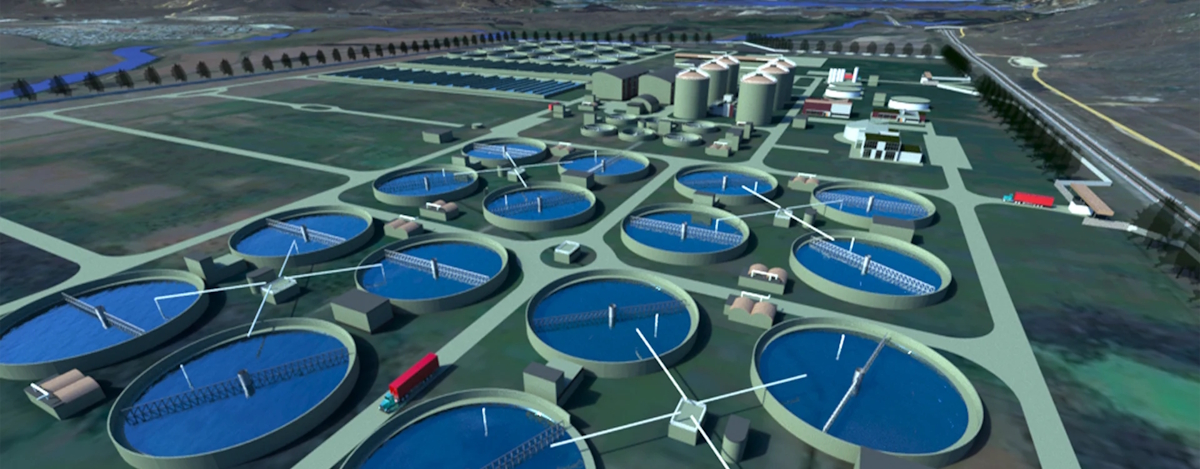
Sustainable water management in Colombia therefore requires a shift from a narrow utility model toward an integrated urban water governance framework. This means linking water policy with land-use regulation, ecosystem restoration, informal settlement upgrading, wastewater reuse, circular economy strategies, and social inclusion policies. Wastewater recycling, for instance, offers a major opportunity for industrial and agricultural reuse, reducing pressure on freshwater extraction while supporting metropolitan resilience.
Equally important is the incorporation of indigenous and local ecological knowledge into watershed management strategies. Communities that have historically managed land and water resources through ecosystem-based practices can contribute significantly to restoring hydrological balance, especially in regions where urban expansion intersects with ancestral territories and critical ecological corridors.
Ultimately, the future of Colombia’s major cities will depend on whether water is governed not merely as an economic input, but as a strategic urban commons that sustains health, productivity, territorial equity, and environmental stability. In the context of continued metropolitan expansion, climate variability, and persistent urban informality, water management must become one of the central pillars of urban transformation, shaping not only infrastructure investment but the very model of development through which Colombian cities imagine their future.