
Urban data platforms are the invisible intelligence infrastructure that enables cities to transform fragmented information into coordinated, predictive, and citizen-oriented services. Far beyond simple data storage, they constitute the strategic architecture through which mobility, utilities, public safety, environmental systems, and urban services can operate as an integrated Smart City ecosystem
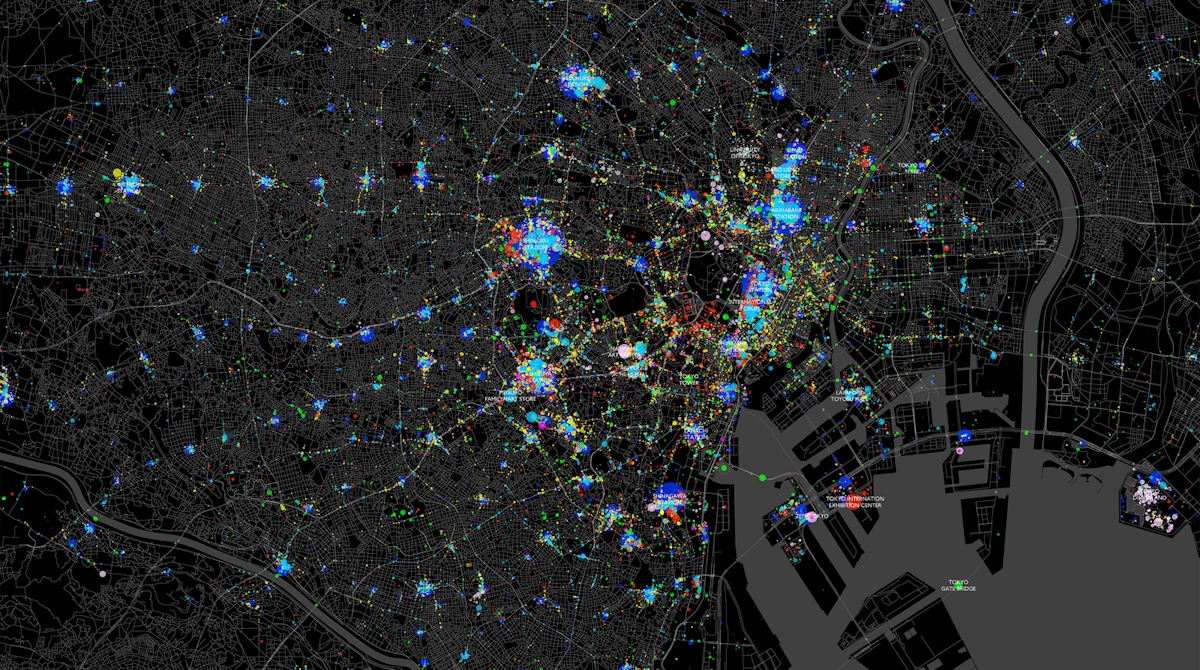
The transformation of an urban system into a truly intelligent Smart City component does not begin with the visible layer of dashboards, sensors, mobile applications, or isolated digital interfaces, however sophisticated these may appear. It begins, rather, with the construction of a coherent and strategically designed data architecture capable of connecting the multiple operational, institutional, and spatial dimensions of the city into a single intelligence framework. At the heart of this transformation lies the urban data platform, which functions as the invisible yet decisive infrastructure through which cities convert dispersed information into coordinated action, predictive governance, and long-term urban resilience. Whether the focus is mobility, energy, water, public safety, waste services, environmental monitoring, or citizen administration, the data platform is the foundational mechanism that allows an urban function to evolve from a reactive service into an adaptive, data-driven ecosystem embedded within the wider logic of the city.
The Strategic Role of the Urban Data Platform
Every contemporary city continuously generates extraordinary volumes of data through its infrastructures, services, and daily interactions with citizens, yet the existence of data alone does not produce intelligence. Traffic control systems generate movement and congestion data in real time; utility networks provide consumption, pressure, and maintenance metrics; citizen service platforms collect requests, complaints, and service satisfaction indicators; environmental stations monitor air quality, temperature, humidity, and noise levels; and urban assets, from streetlights to transport fleets, emit constant operational signals. However, in many municipalities, these information streams remain locked within departmental silos, outsourced vendor systems, and legacy databases that do not communicate with one another.
The strategic purpose of the urban data platform is to dissolve this fragmentation and create a unified intelligence layer where data converges, becomes interoperable, and can support coordinated decision-making across the entire municipal ecosystem. In practice, this means that the platform is not simply a storage system, but the operational brain of the Smart City.
A practical example can be observed in the transformation of urban mobility. In a traditional city, traffic management, public transport operations, road maintenance, and event management frequently operate as separate domains. In a Smart City environment, the platform integrates real-time traffic flow, GPS positions of buses and metro services, planned roadworks, weather forecasts, pedestrian density data, and even major event schedules. This integrated intelligence layer allows the city to move from reactive congestion management to predictive mobility orchestration. For instance, if a football match is expected to attract 70,000 people and weather forecasts indicate heavy rain, the system can anticipate transport overloads and dynamically adjust bus frequency, traffic lights, and emergency access routes.
Recent industry estimates suggest that global urban data volumes are growing by more than 25% annually, driven largely by IoT deployments and connected public infrastructure. In this context, the true strategic value lies not in collecting more data, but in designing the architecture capable of transforming data into urban foresight and better public outcomes.
Architectural Principles: From Fragmentation to Integration
One of the most decisive aspects of designing an urban data platform lies in its architectural principles. Many cities today suffer from the consequences of decades of incremental procurement, where each department acquired its own digital solutions independently, often resulting in incompatible systems, duplicated datasets, and fragmented workflows.
A Smart City platform must reverse this inherited logic by being designed from the outset around interoperability, modularity, scalability, resilience, and real-time responsiveness. This means that the architecture must be capable of ingesting and harmonizing data regardless of origin, technology provider, or institutional source.
In practical terms, this includes data flows from IoT devices, GIS systems, legacy municipal databases, citizen-facing applications, private utility operators, public transport companies, and open external datasets such as meteorological or demographic information. For example, in the transformation of waste management into a Smart City component, the platform should seamlessly integrate fill-level sensors installed in bins, GPS telemetry from collection vehicles, citizen reports regarding missed collections, route optimization engines, and environmental indicators such as wind conditions or temperature peaks that may accelerate organic waste decomposition.
This integration transforms waste management from a fixed-route operational service into an adaptive system capable of optimizing routes dynamically, reducing fuel consumption, and improving service quality. Studies from several European pilot cities have shown that smart route optimization supported by integrated urban data platforms can reduce collection costs by between 20% and 35%, while simultaneously lowering emissions.
The Data Ingestion Layer
At the base of the platform lies the ingestion layer, which is arguably one of the most technically demanding and strategically critical components of the entire architecture. This layer is responsible for capturing data from multiple systems in real time or near real time and ensuring that incoming information enters the platform in a reliable and structured way.
Depending on the urban domain being transformed, the ingestion layer may collect streaming sensor data, scheduled uploads from legacy databases, API feeds from service providers, geospatial layers, citizen-generated reports, and external datasets. In a smart water management scenario, for example, the platform may ingest pressure readings from the distribution network, flow measurements, leakage detection alerts, rainfall forecasts, maintenance tickets, and historical consumption patterns.
The challenge at this stage is not merely technical connectivity, but the creation of standardized data pipelines that can accommodate the diversity of urban information sources without compromising reliability or speed. This requires robust connectors, ETL pipelines, event-streaming frameworks such as Apache Kafka or MQTT-based architectures, and well-defined metadata standards.
Without a properly designed ingestion layer, the platform becomes structurally unstable from the beginning, because poor-quality inputs inevitably compromise every higher layer of intelligence.
The Integration and Normalization Layer
Raw urban data is almost never immediately usable. One department may record timestamps in UTC format, another in local time; one system may use latitude-longitude coordinates, another cadastral references; one database may classify incidents by district, another by postal code.
For this reason, the normalization layer is often the decisive point at which Smart City architecture either succeeds or fails. Its purpose is to transform fragmented, heterogeneous inputs into a common urban data model that can be interpreted coherently across services.
Consider the example of integrating mobility, environmental monitoring, and public safety data. If each system uses different geospatial references, the city may possess large volumes of information but remain unable to identify correlations, such as the relationship between congestion peaks, pollution hotspots, and accident frequency. Once normalized into a shared geospatial model, however, the platform can support far more advanced decision-making, including predictive interventions.
This semantic consistency is what allows cross-departmental intelligence to emerge. Without normalization, data remains information; with normalization, it becomes systemic intelligence.
Storage Architecture and Data Governance
The storage layer must be designed not only for volume, but for strategic usability. Different urban use cases require different storage logics. Real-time operational data may require time-series databases, historical analytics may rely on data lakes and warehouses, while spatial intelligence depends on robust geospatial repositories.
For example, in the transformation of public lighting into a smart infrastructure system, the city may need time-series storage for energy consumption and fault events, geospatial asset mapping for maintenance operations, and archival repositories for long-term performance benchmarking.
Yet storage architecture cannot be separated from governance. Data governance is not an administrative add-on; it is a structural component of platform design. Cities must clearly define ownership, access rights, retention periods, privacy protocols, compliance obligations, and ethical safeguards.
This is particularly relevant in domains such as public safety, where surveillance data, incident reports, and citizen-sensitive information demand strict governance frameworks aligned with regulations such as the GDPR in Europe.
Analytics and Decision Intelligence Layer
The real value of the platform emerges at the level of analytics and decision intelligence. This is the layer where data is transformed into operational insight, predictive capability, and strategic foresight.
Capabilities at this level typically include dashboards, anomaly detection, predictive analytics, AI-assisted recommendations, digital twin simulations, and scenario modeling. In a smart mobility system, this may include congestion forecasting, travel demand modeling, route optimization, and multimodal transport coordination.
A useful practical example comes from cities such as Barcelona, where urban mobility platforms increasingly combine transport, traffic, and environmental datasets to optimize flow and reduce emissions. By anticipating traffic bottlenecks before they occur, cities can reduce average travel times and improve air quality simultaneously.
A city becomes truly smart when it stops merely describing what has happened and begins anticipating what is likely to happen next.
API and Service Delivery Layer
An urban data platform must not remain confined to internal municipal analysis. Its intelligence must be distributed into the lived urban experience.
This is the function of the API and service delivery layer, through which intelligence is made available to citizen applications, departmental systems, emergency services, third-party providers, and regional governance platforms.
For instance, real-time public transport information can be simultaneously delivered to citizen mobile applications, traffic control centers, and multimodal journey planners. Similarly, predictive maintenance alerts can be sent automatically to operational teams and external contractors.
This layer is where data architecture becomes visible public value.
Strategic Design for Scalability
One of the most strategic design principles is scalability. Even if the immediate transformation focuses on a single domain, such as waste management or water resilience, the platform must be designed as a citywide foundation capable of integrating future services.
Mobility data may later connect with emissions policy, land-use planning, economic activity mapping, tourism flows, or emergency response logistics. This cumulative intelligence is what allows a city to evolve from isolated smart services toward a fully integrated Smart City ecosystem.
Scalability ensures that every transformed service becomes a building block of broader urban intelligence.
Cybersecurity and Digital Resilience
Given that the data platform becomes the operational core of the Smart City, resilience and cybersecurity are fundamental architectural principles.
This includes access controls, encryption, identity management, redundancy mechanisms, backup environments, disaster recovery systems, and incident response protocols. A failure in the data platform can directly affect mobility operations, emergency services, utility systems, and citizen-facing services.
For this reason, digital resilience is not simply a technical requirement but a matter of urban continuity and public trust.
The Platform as the Intelligence Core of the Smart City
Urban data platforms constitute the invisible architecture through which cities transform fragmented information into coordinated intelligence, predictive governance, and better public outcomes. To convert any urban function into a Smart City component, cities must design platforms capable of integrating ingestion, normalization, governance, analytics, service delivery, cybersecurity, and long-term scalability within a coherent strategic framework.
Ultimately, the Smart City is not built merely through sensors, dashboards, or applications, but through the invisible data architecture that turns information into foresight, coordination, and resilient urban transformation.