
What will cities look like in 2040? Beyond the futuristic images of flying cars and glass towers, the real transformation will be invisible, driven by data, algorithms, and interconnected systems that learn from us every second. Artificial intelligence is poised to become the operating system of urban life, orchestrating everything from transport and energy to governance and education. By 2040, the cities that embrace this transformation wisely will not only be more efficient but more humane, resilient, and intelligent in the truest sense.
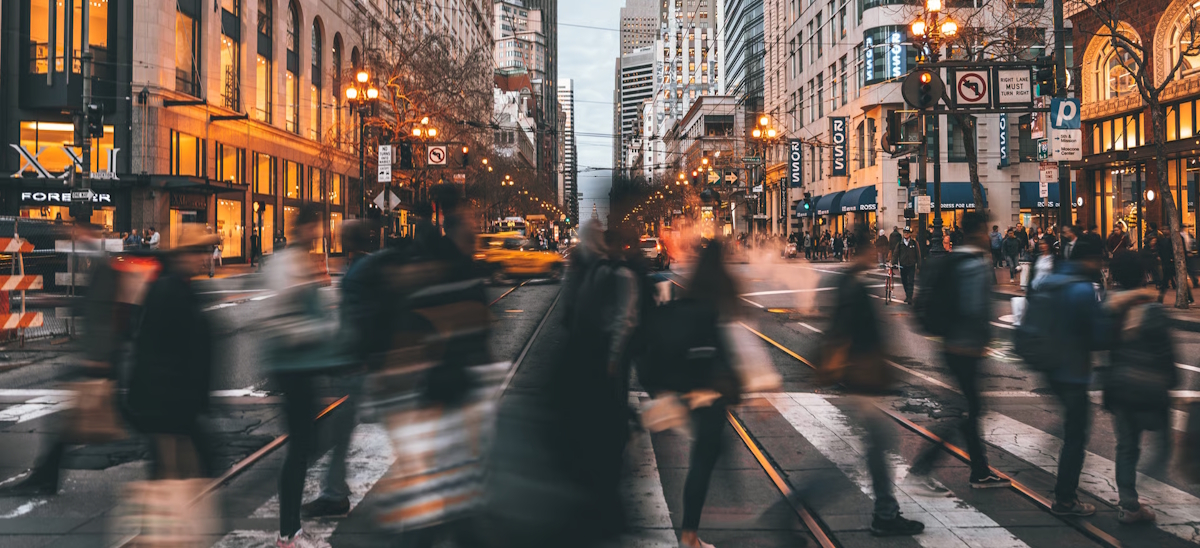
Imagine waking up in a city where everything, from your home to the street outside, adapts dynamically to your needs. The building automatically adjusts its temperature based on your sleep cycle and predicted weather patterns. As you step out, traffic lights sense your route and synchronize to reduce waiting time. Public transport vehicles reposition themselves where demand will rise, calculated hours in advance by AI-driven mobility networks. The entire urban system operates like a living organism, responding seamlessly to the rhythm of human life.
By 2040, artificial intelligence will be embedded in every layer of the urban fabric. Energy grids will forecast consumption and generate power exactly where and when it’s needed, integrating renewables in perfect balance. Water systems will monitor themselves for leaks or contamination. Waste will be sorted, recycled, and repurposed autonomously. These infrastructures, once managed reactively, will operate through continuous learning and self-correction. Cities will shift from being maintained to being self-managed ecosystems.
Governance will also be transformed. AI-driven data platforms will allow mayors and policymakers to make decisions based on real-time information rather than annual reports. Dashboards combining environmental, economic, and social indicators will guide immediate action.
But more importantly, citizens themselves will play a central role: through open data systems and participatory AI platforms, communities will influence planning decisions directly. Urban governance will become collaborative and transparent, turning democracy into a continuous process rather than a periodic event.
Education will evolve into a personalized learning ecosystem, where AI tutors adapt content and pace to each student. In healthcare, predictive models will prevent diseases by analyzing lifestyle data and environmental exposure. Public spaces will be designed with emotional intelligence, lighting, sound, and layout adjusting in real time to improve wellbeing and safety. The city of 2040 will not just function efficiently; it will feel alive.
Mobility will likely be one of the most visible transformations. Fully autonomous and connected transport networks will replace private car ownership. Streets once dominated by parking will become green corridors, social hubs, and pedestrian zones. Logistics will be handled by fleets of self-driving electric vehicles coordinated by AI, reducing congestion and emissions. Urban air quality, one of today’s most pressing challenges, could improve dramatically as mobility becomes clean, shared, and intelligent.
Yet the AI city of 2040 will also face profound ethical and social questions. Who controls the data that makes it function? How can transparency and privacy coexist in a system that knows almost everything about its inhabitants? If decisions about zoning, policing, or welfare are informed by algorithms, how do we ensure they remain fair, accountable, and human-centered? These questions will define the moral architecture of future cities as much as their physical design.
Inequality is another risk. If access to technology remains uneven, smart cities could deepen the divide between the digitally connected and the excluded. The challenge for policymakers will be to make intelligence universal, ensuring that the benefits of automation and data reach all citizens equally. Inclusion, not sophistication, will determine the true success of future cities.
Culturally, the relationship between people and their environment will change fundamentally. As AI automates routine functions, human attention will shift toward creativity, collaboration, and meaning. The city will become a canvas for experimentation, a place where technology amplifies imagination rather than replacing it. Public spaces will blend physical and digital realities, with augmented environments that host education, art, and social interaction in new forms.
By 2040, cities may also learn to adapt emotionally. Advances in affective computing, AI systems capable of recognizing and responding to human emotions, could enable environments that react to mood, stress, or community sentiment. A neighborhood feeling unsafe could trigger lighting adjustments or increase visible patrols; a population showing signs of stress might prompt the activation of wellness programs. The urban experience could become as intuitive and empathetic as a conversation.
Ultimately, the most advanced cities will not be those with the most sensors or data, but those that align intelligence with purpose. The urban revolution of 2040 will test our ability to combine technological power with ethical maturity, to design systems that serve people, not control them.
If we succeed, artificial intelligence will not only redefine how cities work; it will redefine what cities mean: living networks of care, creativity, and consciousness.
The question is not whether AI will change cities, it already is. The question is whether we can guide that change toward a future that is not only smarter, but wiser, fairer, and profoundly human.