
Research and scientific development articles on the concepts and themes that make up Institutional Cognition
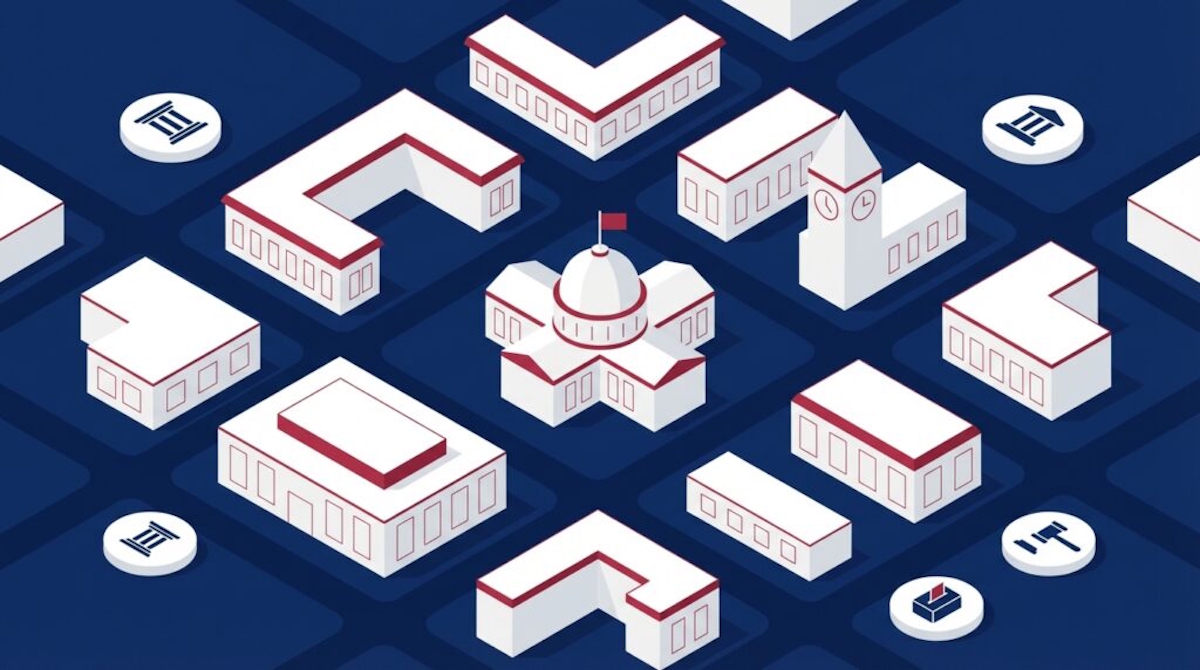
Why Complexity Changes Public Governance
For much of modern history, public governance operated on the assumption that societies could be understood by dividing them into manageable parts. Governments established specialised ministries, public agencies and administrative procedures designed to address individual policy areas such as healthcare, education, transport, taxation or environmental protection. This approach proved remarkably effective during periods when societal...
Read More
The Evolution of Institutions in the Age of Artificial Intelligence
A New Stage in Institutional Evolution Every era of human history has been shaped by institutions capable of responding to the dominant challenges of their time. Agricultural societies developed institutions that could organise land, resources and local communities. Industrial societies created bureaucratic administrations capable of governing increasingly complex states, managing expanding public services and coordinating...
Read More
How Institutions Think
Can institutions really think? Or are they simply a collection of processes and organisational structures that, on their own, have no greater capacity for evolution than the people who happen to be leading them at any given time? For centuries, thinking has been regarded as one of the defining characteristics of individual human beings. We...
Read More
From Organisations to Cognitive Institutions
Why organisations are no longer enough to sustain the process of growth and the structure required for the development of our society, and to ensure that we equip our organisations with inherent and permanent learning mechanisms to guarantee their future evolution and coherence For more than a century, organisations have been understood primarily as administrative...
Read More
Why Institutions Must Learn
Learning has become an imperative both for the people and for the organisational structures that make up today’s management and governance institutions For most of history, institutions have been designed around the principle of stability. Governments, courts, universities, public administrations and international organisations have derived much of their legitimacy from their ability to preserve continuity...
Read More
What Is Institutional Cognition?
We live surrounded by institutions that shape our lives, yet we rarely ask how they actually think Public institutions are often described through their legal powers, organisational structures or administrative responsibilities. Yet beneath these visible characteristics lies another dimension that is rarely discussed: their capacity to perceive reality, interpret complex information, preserve knowledge over time...
Read More