
Artificial intelligence is becoming an increasingly important component of future space missions. We examine the technological challenges that make greater onboard autonomy necessary and consider how this transformation may reshape not only space exploration but also the broader development of autonomous intelligent systems operating in extreme environments
Few technological endeavours illustrate the relationship between human ingenuity and engineering as clearly as the exploration of space. Every spacecraft ever launched embodies decades of scientific knowledge, extraordinary precision in engineering design and meticulous planning carried out by thousands of researchers working across multiple disciplines. Yet despite these remarkable achievements, space exploration has always remained constrained by a simple physical reality: the greater the distance between a spacecraft and the Earth, the more difficult it becomes for human operators to supervise its activities directly. What begins as a matter of milliseconds for satellites orbiting our planet gradually becomes a delay of several minutes when communicating with Mars and extends to many hours for missions exploring the outer reaches of the Solar System.
For much of the Space Age these communication constraints were accommodated through increasingly sophisticated planning. Mission control teams anticipated a wide range of possible situations, transmitted carefully prepared sequences of commands and relied upon highly reliable onboard systems capable of executing predefined operations with exceptional precision. This model proved extraordinarily successful, enabling some of the most ambitious scientific missions ever undertaken. Nevertheless, it also reflected an implicit assumption: although spacecraft could execute complex procedures autonomously, they remained fundamentally dependent upon human intelligence for interpreting unexpected situations and deciding how to respond when conditions diverged from prior expectations.
The growing integration of artificial intelligence into space systems suggests that this assumption is gradually beginning to change. Rather than viewing spacecraft simply as remote-controlled scientific instruments, engineers increasingly envisage them as autonomous scientific platforms capable of evaluating their own environment, identifying observations of particular interest, managing limited resources intelligently and adapting operational priorities according to circumstances that may never have been explicitly anticipated before launch. In this sense, artificial intelligence represents not merely another technological subsystem but an additional cognitive capability that allows spacecraft to function more effectively in environments where continuous human guidance is no longer practical.
Understanding this transformation requires looking beyond the understandable fascination surrounding artificial intelligence itself. The most significant question is not whether machines will eventually “take control” of space missions, but why the next generation of exploration increasingly demands systems capable of making limited, well-defined decisions independently while remaining fully aligned with the scientific objectives established by human researchers. It is within this broader evolution of space exploration that artificial intelligence begins to reveal its greatest potential, not as a replacement for mission control, but as an indispensable partner in extending humanity’s capacity to explore environments that lie ever further beyond our direct reach.
From Automated Spacecraft to Autonomous Exploration
Since the earliest days of space exploration, spacecraft have possessed a degree of operational autonomy. Long before artificial intelligence became part of the technological vocabulary, satellites, planetary probes and interplanetary missions routinely executed thousands of programmed operations without direct human intervention. They could stabilise their orientation, regulate onboard temperatures, deploy scientific instruments, correct their trajectory and protect themselves against certain categories of system failure through carefully engineered control algorithms. These capabilities were essential because the physical realities of space have always prevented continuous manual operation. Even the most successful missions depended upon spacecraft capable of functioning independently for extended periods while faithfully executing instructions prepared months or even years in advance.
The autonomy now being enabled by artificial intelligence, however, differs in both nature and ambition. Traditional spacecraft automation was designed to respond to predefined situations according to carefully specified rules established before launch. Contemporary AI systems introduce the possibility of a more adaptive form of behaviour, allowing spacecraft to interpret complex sensory information, distinguish between routine and scientifically significant events, allocate computational and energy resources dynamically and modify certain operational priorities according to changing environmental conditions. Rather than following only predetermined sequences, future missions may increasingly possess the capacity to evaluate multiple alternatives before selecting the most appropriate course of action within clearly defined operational boundaries.
This evolution is becoming particularly important as scientific missions pursue increasingly ambitious objectives. Future robotic explorers may investigate permanently shadowed lunar craters, navigate the fractured icy surfaces of Europa or Enceladus, explore subterranean lava tubes on Mars or operate within environments whose complexity cannot be completely anticipated before launch. Under such circumstances, every unexpected geological formation, atmospheric phenomenon or instrument reading may represent a valuable scientific opportunity. Waiting for instructions from Earth before responding could result in lost observations or missed discoveries, especially when communication delays make immediate human intervention impossible. Artificial intelligence therefore offers something that previous generations of onboard software could not easily provide: the capacity to recognise when the unexpected deserves attention and to respond intelligently within the scientific framework established by mission designers.
From this perspective, the increasing use of AI in space exploration should not be interpreted as an effort to reduce the importance of human scientists. On the contrary, it reflects the growing ambition of the missions themselves. As humanity extends its presence deeper into the Solar System and eventually beyond, the practical limits imposed by distance will require spacecraft capable not only of executing commands but also of contributing actively to the exploration process. Artificial intelligence thus becomes another stage in the long technological evolution through which space missions have progressively acquired greater operational independence while remaining firmly directed by human scientific purpose.
Why Deep Space Requires a Different Kind of Intelligence
One of the defining characteristics of space exploration is that distance imposes constraints unlike those encountered in almost any other technological domain. On Earth, digital infrastructures allow information to circulate almost instantaneously across continents, enabling human operators to supervise complex systems in real time. Space, however, is governed by the finite speed of light, a physical limitation that no technological advance can overcome. Signals travelling between Earth and Mars require several minutes to arrive even under favourable orbital conditions, while communications with spacecraft exploring the outer Solar System may involve delays measured in hours. These intervals transform what might appear to be a minor technical inconvenience into a fundamental operational challenge, making continuous human supervision increasingly impractical as missions venture farther from our planet.
Historically, mission planners addressed this constraint through meticulous preparation. Every significant operation was carefully designed, simulated and validated before commands were transmitted to the spacecraft, which would then execute its assigned sequence with remarkable reliability. This approach proved extraordinarily successful during an era in which missions followed relatively predictable scientific objectives and the pace of operations remained compatible with intermittent communication. Yet the ambitions of contemporary space exploration are steadily expanding beyond those traditional assumptions. Future missions are expected to operate in environments whose complexity cannot be fully characterised before arrival, where new scientific opportunities may emerge unexpectedly and where rapid adaptation may determine whether unique observations are successfully captured or irretrievably lost.
Artificial intelligence offers a response to this growing operational gap by providing spacecraft with the capacity to interpret situations locally rather than relying exclusively upon instructions generated on Earth. Instead of treating every unforeseen event as an anomaly requiring immediate human intervention, future onboard systems may increasingly evaluate changing circumstances, compare them against scientific priorities and determine whether a particular observation justifies modifying the planned sequence of activities. Such capabilities do not imply unrestricted autonomy; rather, they represent carefully bounded forms of adaptive behaviour designed to ensure that spacecraft continue pursuing human-defined scientific objectives even when immediate communication with mission control is impossible.
This distinction between remote control and local cognitive capability is likely to become progressively more important as space exploration extends beyond robotic probes towards more ambitious programmes involving permanent lunar infrastructure, sustained exploration of Mars and eventually missions reaching the outer Solar System or interstellar space. In these environments, artificial intelligence may become less a matter of technological convenience than one of operational necessity. The greater the distance from Earth, the more valuable onboard cognitive capabilities become, allowing exploration to proceed with a level of responsiveness and scientific flexibility that would otherwise remain unattainable.
Artificial Intelligence as a Scientific Partner
Although discussions surrounding artificial intelligence often emphasise navigation, autonomous control or fault management, one of its most promising contributions to future space exploration may lie elsewhere. Modern scientific spacecraft generate extraordinary quantities of information through increasingly sophisticated cameras, spectrometers, radar systems and environmental sensors capable of observing planetary surfaces, atmospheres and cosmic phenomena with unprecedented precision. Processing this wealth of information has become an enormous scientific challenge in its own right, one that grows steadily more demanding as missions become more ambitious and instruments more capable.
Traditionally, most of this information has been transmitted back to Earth, where teams of specialists analyse the collected data over periods that may extend from weeks to years. While this model has produced extraordinary scientific achievements, it also reflects practical limitations. Communication bandwidth remains finite, onboard storage is constrained by engineering requirements and opportunities for observation are often fleeting. Spacecraft therefore cannot transmit every measurement they obtain, nor can mission controllers always identify in advance which observations will ultimately prove the most scientifically valuable.
Artificial intelligence introduces the possibility of addressing this challenge by enabling spacecraft to participate more actively in the scientific process itself. Rather than functioning solely as instruments that collect information for later analysis, future missions may increasingly evaluate the significance of observations while they are still being acquired. A rover exploring the Martian surface, for example, might recognise an unusual mineral formation and decide to devote additional imaging resources before continuing its planned route. An orbiter studying an icy moon could identify unexpected surface activity and prioritise repeated observations while favourable orbital conditions persist. A deep-space telescope might distinguish between routine background signals and genuinely unusual astronomical events deserving immediate attention. In each of these examples, artificial intelligence would not replace scientific interpretation but would enhance the efficiency with which limited observational opportunities are used.
This evolution represents an important conceptual shift. Scientific instruments have traditionally been regarded as passive collectors of information, leaving interpretation entirely to researchers once the data reached Earth. AI-enabled spacecraft, by contrast, begin to blur the distinction between observation and preliminary scientific assessment. Human researchers continue to formulate hypotheses, establish scientific priorities and interpret the broader meaning of discoveries, but artificial intelligence increasingly assists in determining which observations deserve immediate attention and how limited mission resources can be deployed most effectively. As exploration extends into environments where communication delays become ever more restrictive, this form of scientific partnership may prove just as valuable as autonomous navigation itself.
Building the Foundations of Future Exploration
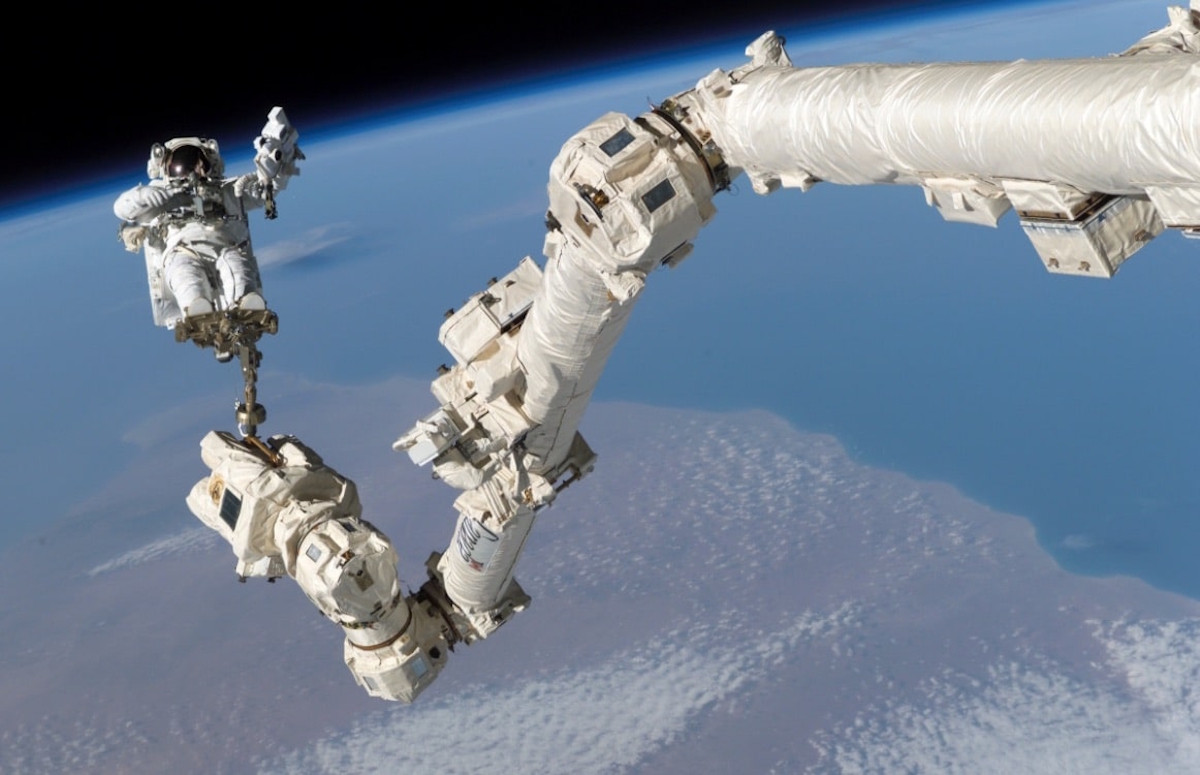
The technologies currently being incorporated into robotic space missions should not be viewed simply as solutions to present-day engineering challenges. They also constitute the foundations upon which future generations of exploration will depend. Space agencies around the world are already planning increasingly ambitious programmes that extend far beyond the operational assumptions of previous decades, including sustained human presence on the Moon, long-duration expeditions to Mars, robotic missions to the icy moons of the outer planets and concepts for spacecraft capable of operating autonomously for decades without direct intervention from Earth. Each of these objectives requires systems capable of functioning reliably under conditions where communication delays, environmental uncertainty and operational complexity become progressively more demanding.
Artificial intelligence is therefore emerging as one component within a broader transformation of space system architecture. Just as previous generations of exploration depended upon advances in propulsion, miniaturisation, materials science and digital computing, the next era may increasingly depend upon the development of cognitive capabilities that enable spacecraft to adapt intelligently to environments that cannot be fully anticipated before launch. This does not imply unrestricted independence or unrestricted decision-making, but rather a carefully engineered expansion of operational flexibility that allows missions to remain scientifically productive despite the inherent unpredictability of deep-space exploration.
Perhaps the greatest significance of this transformation lies in the fact that it reflects a broader evolution in humanity’s relationship with technology. Throughout history, increasingly sophisticated tools have extended our physical reach into environments that would otherwise remain inaccessible. Artificial intelligence now offers the possibility of extending not only our physical presence but also certain aspects of our cognitive presence, enabling distant spacecraft to respond intelligently to circumstances that unfold far beyond the practical limits of real-time human supervision. In doing so, AI does not replace human curiosity or scientific reasoning; instead, it amplifies their reach across distances that have always challenged our ability to explore.
For this reason, the current integration of artificial intelligence into space exploration should perhaps be understood less as an isolated technological innovation than as the natural continuation of a process that has accompanied the Space Age from its earliest beginnings. Every major advance has sought to increase the capability, resilience and independence of spacecraft operating ever farther from Earth. Artificial intelligence simply represents the next stage of that evolution, providing future missions with forms of adaptive cognition that may become as indispensable to deep-space exploration as onboard computers became during the second half of the twentieth century.
Challenges, Risks and Responsible Autonomy
As with every significant technological advance, the growing incorporation of artificial intelligence into space exploration brings with it a series of technical, scientific and ethical questions that deserve careful consideration. The prospect of spacecraft capable of adapting their behaviour autonomously is undeniably attractive from an operational perspective, yet it also requires engineers and mission designers to reconsider long-established principles concerning reliability, predictability and human supervision. Space remains one of the most unforgiving environments ever encountered by human technology, where even apparently minor software anomalies may have irreversible consequences for missions that have required decades of preparation and billions of dollars of investment.
For this reason, the concept of autonomy within space exploration should not be interpreted as unrestricted independence. Contemporary research is instead focused on what might be described as responsible autonomy, a design philosophy in which artificial intelligence operates within clearly defined operational boundaries established by mission planners before launch. Rather than allowing spacecraft to pursue entirely self-determined objectives, AI systems are expected to evaluate situations, prioritise alternatives and adapt predefined operational strategies while remaining aligned with the scientific goals, engineering constraints and safety requirements established by human teams. The objective is not to transfer responsibility from Earth to the spacecraft, but to provide missions with sufficient flexibility to respond intelligently when immediate communication is impossible.
Achieving this balance presents several important technical challenges. Artificial intelligence models intended for space applications must operate reliably under severe computational limitations, withstand the effects of radiation, function with limited energy resources and continue performing consistently over missions that may extend for many years. Unlike cloud-based AI systems operating on Earth, spacecraft cannot rely upon virtually unlimited computational infrastructure or frequent software updates. Every algorithm incorporated into a mission must therefore satisfy exceptionally demanding standards of robustness, validation and long-term stability before it can be entrusted with even relatively modest autonomous responsibilities. These engineering realities explain why the adoption of AI within space exploration is proceeding through carefully incremental stages rather than dramatic technological leaps.
Beyond these technical considerations lies a broader philosophical question concerning the nature of exploration itself. Humanity has always regarded scientific discovery as an expression of human curiosity and intellectual ambition. Artificial intelligence does not alter that fundamental motivation, but it does introduce a new category of scientific instrument capable of participating more actively in the exploratory process than any previous technology. Determining the appropriate balance between computational initiative and human oversight will therefore remain one of the defining questions as future missions venture ever further from our planet. The challenge is not whether spacecraft should become autonomous, but how that autonomy can be designed in ways that strengthen, rather than diminish, the scientific purpose that has always guided space exploration.
Looking Towards an Autonomous Solar System
Although the current generation of AI-assisted space missions represents only the beginning of this technological transition, it is already possible to glimpse the broader trajectory that may unfold over the coming decades. Space agencies and private aerospace organisations increasingly envisage an exploration architecture composed not of isolated spacecraft awaiting instructions from Earth, but of distributed networks of intelligent systems capable of cooperating across enormous distances while pursuing shared scientific objectives. Orbiters, landers, rovers, aerial vehicles and eventually autonomous construction systems may one day exchange information, coordinate activities and adapt collectively to changing circumstances with a level of responsiveness that would be impossible through direct human supervision alone.
Such a vision becomes particularly relevant when considering the long-term ambitions of planetary exploration. Permanent scientific installations on the Moon, future human settlements on Mars and robotic missions operating throughout the outer Solar System will inevitably depend upon technologies capable of functioning independently for extended periods while maintaining close alignment with human objectives. Artificial intelligence is likely to become one of the principal enabling technologies supporting this evolution, allowing geographically dispersed systems to operate with increasing resilience despite communication delays, environmental uncertainty and limited opportunities for direct intervention. In this sense, AI may contribute not simply to individual missions but to the emergence of an entirely new operational model for space exploration.
The implications extend even further when considering missions that lie beyond the practical horizon of continuous human communication. Future interstellar probes, should they eventually become technologically feasible, would operate across distances where communication delays extend from years to decades. Under such circumstances, no meaningful form of real-time control could exist. Scientific exploration would necessarily depend upon systems capable of interpreting unfamiliar environments, adapting to unforeseen circumstances and making locally informed operational decisions while remaining faithful to the scientific intentions established long before launch. Although such missions remain firmly within the realm of future planning, they illustrate with exceptional clarity why artificial intelligence is increasingly regarded as an essential component of humanity’s long-term presence beyond Earth.
Viewed in this broader historical context, the integration of AI into contemporary space missions represents only the first stages of a much longer technological evolution. Just as digital computing gradually transformed every aspect of spacecraft engineering during the second half of the twentieth century, artificial intelligence now appears poised to become another foundational capability upon which future generations of exploration will routinely depend. The transition is unlikely to occur suddenly, nor will it eliminate the central role of human scientists and engineers. Instead, it promises to extend their reach, allowing human knowledge and curiosity to operate effectively across distances and environments that have previously remained beyond the practical limits of direct human guidance.
So, in conclusion
The incorporation of artificial intelligence into space exploration marks an important moment in the continuing evolution of humanity’s relationship with technology, not because spacecraft are beginning to replace human decision-making, but because the scale and ambition of future missions increasingly require forms of cognitive capability that cannot rely exclusively upon continuous supervision from Earth. As exploration extends deeper into the Solar System and scientific objectives become progressively more demanding, the practical realities of distance, communication and environmental uncertainty make greater onboard autonomy not simply desirable but, in many cases, operationally essential.
Perhaps the most significant aspect of this transformation lies in the changing role that artificial intelligence assumes within the exploration process. Rather than functioning solely as an engineering tool for automation, AI is gradually becoming part of the scientific architecture of future missions, assisting spacecraft in interpreting complex environments, prioritising observations and adapting intelligently to circumstances that mission planners cannot entirely predict before launch. Human researchers continue to define scientific objectives, interpret discoveries and establish the broader conceptual frameworks that give exploration its meaning, while artificial intelligence increasingly contributes to the operational flexibility required to pursue those objectives across extraordinary distances.
This distinction reflects a broader pattern that extends well beyond the field of space exploration. Across many domains, artificial intelligence is evolving not as a substitute for human expertise but as a means of expanding its effective reach, enabling individuals and institutions to operate successfully within environments whose complexity exceeds the natural limits of unaided cognition. Space simply provides one of the clearest and most demanding demonstrations of this principle because it exposes, with exceptional clarity, the physical constraints that autonomous cognitive systems are uniquely positioned to overcome.
Whether future historians ultimately identify this period as the beginning of a new era of intelligent space exploration will depend upon developments that have yet to unfold. Nevertheless, the trajectory already appears increasingly clear. As spacecraft become more capable of understanding their surroundings, adapting to unforeseen situations and supporting scientific discovery independently, artificial intelligence will gradually become another essential instrument through which humanity extends its presence into the Universe. The exploration of space has always depended upon technologies that allowed us to go farther than before. Artificial intelligence now promises to ensure that, wherever we travel next, our capacity to observe, understand and discover can travel with us.