
When new technologies emerge, it is often difficult to distinguish between genuine breakthroughs and temporary waves of enthusiasm. Throughout the history of computing, countless innovations have attracted enormous public attention only to fade into the background once their limitations became apparent. Yet, from time to time, a technological development appears that genuinely changes the way people interact with computers. The public release of the new version of ChatGPT by OpenAI appears to be one of those rare moments.
Only a short time has passed since the world was captivated by artificial intelligence systems capable of generating remarkably realistic images through models such as Stable Diffusion. Researchers, technology companies, artists, educators, and the media have been examining the profound implications of image generation for creativity, industry, and society. However, before that discussion has even settled, another equally significant frontier has emerged: artificial intelligence capable of engaging in fluent conversations using natural language.
At first encounter, what immediately stands out is not simply the model’s ability to answer questions, but its remarkable capacity to produce concise, coherent, and contextually appropriate explanations on an extraordinarily wide range of subjects. For many users, the experience creates the genuine impression that they are interacting with a system capable of reasoning, even though the underlying mechanisms are fundamentally statistical rather than cognitive. Whether this perception proves accurate or not, the experience itself signals that human-computer interaction may be entering an entirely new phase.
Why ChatGPT Represents a Different Kind of AI
Strictly speaking, the underlying technology is not entirely new. Earlier versions of ChatGPT had already appeared several years before, and language models had been steadily evolving within the artificial intelligence research community. What has fundamentally changed is accessibility.
The introduction of an intuitive web interface has transformed a sophisticated research model into a tool that millions of people can use immediately, regardless of their technical background. This seemingly simple design decision has dramatically expanded public exposure to large language models and has accelerated their social impact in a way that few experts anticipated.
As a result, artificial intelligence has moved beyond research laboratories and specialized technical communities to become part of everyday conversations among students, teachers, journalists, entrepreneurs, and ordinary citizens. Much like previous technological revolutions sparked by the internet or smartphones, ease of access has proven to be just as transformative as the underlying technology itself.
The First Conversations with an Artificial Intelligence
Perhaps the most striking characteristic of ChatGPT is its ability to answer complex questions with surprising clarity. Unlike traditional search engines, which typically provide lists of links requiring users to locate and interpret the relevant information themselves, ChatGPT attempts to synthesize knowledge directly into coherent explanations.
Consider a relatively technical question such as:
“What is Quantum Computing?”
The response produced by ChatGPT explains that quantum computing is a computational paradigm based on the principles of quantum mechanics, emphasizing how quantum bits—or qubits—differ fundamentally from classical bits by existing in superpositions of multiple states simultaneously. It further explains that this property enables certain calculations to be performed far more efficiently than on conventional computers and highlights the potential scientific and technological implications of this new computational model.
For researchers familiar with the long-standing challenges of question-answering systems, such a response is already impressive. It is natural to wonder whether the answer is simply retrieved from existing documents or whether it is genuinely generated by the model. An interesting observation quickly emerges: asking the same question repeatedly produces responses that are similar in meaning but different in wording. This suggests that the model is not merely copying stored passages, but dynamically generating new text while preserving the essential concepts.
From Encyclopedic Knowledge to Practical Reasoning
Answering factual or encyclopedic questions is one challenge. Responding to practical situations is another altogether.
Suppose we ask:
“How can I win a European project on Baroque music?”
Rather than providing a generic definition, ChatGPT produces a structured response explaining that a successful proposal should demonstrate originality, present a clear project structure, align with the objectives of the funding programme, involve qualified collaborators, and clearly communicate the expected impact of the initiative.
If the question is then modified only slightly—for example by replacing Baroque music with Classical music—the answer changes accordingly. The structure remains recognisable, but the wording, examples, and emphasis evolve naturally. This illustrates one of the defining characteristics of large language models: they do not simply retrieve identical answers from memory, but instead generate responses by combining patterns learned from vast quantities of textual information.
This ability to adapt explanations to variations in the user’s request makes interactions feel remarkably natural. The system appears capable of understanding intent, even though its operation relies on statistical relationships between words rather than genuine conceptual understanding.
Natural Language as the New User Interface
Another feature that immediately captures attention is the quality of the generated language itself. The responses are generally well structured, grammatically correct, and easy to read, making conversations feel fluid and accessible even when discussing technically demanding subjects.
Of course, the researchers behind ChatGPT openly acknowledge that the system is not infallible. It can produce answers that are convincing in style while containing factual inaccuracies or logical mistakes. Nevertheless, this limitation also reminds us of an important distinction. Producing fluent language is not the same as possessing understanding or consciousness.
The remarkable achievement of ChatGPT lies elsewhere. It demonstrates that modern language models have reached a level of sophistication where interacting with an artificial intelligence increasingly resembles interacting with another person. This does not imply that the machine thinks in the human sense, nor that it has passed classical benchmarks such as the Turing Test. Rather, it shows that the statistical modelling of language has become sufficiently advanced to produce conversations that many users perceive as surprisingly natural and useful.
For this reason, the arrival of ChatGPT should not merely be viewed as the release of another software application. It represents a significant milestone in the evolution of human-computer communication, one that may ultimately reshape how knowledge is accessed, how information is produced, and how people interact with digital technologies in the years ahead.
From ELIZA to ChatGPT: A Long History of Conversational Machines
Although ChatGPT may appear revolutionary, it is important to remember that the ambition to create machines capable of holding conversations with human beings is far from new. The history of conversational artificial intelligence stretches back more than half a century and reflects one of the oldest aspirations within computer science: enabling computers to communicate through natural language rather than rigid programming commands.
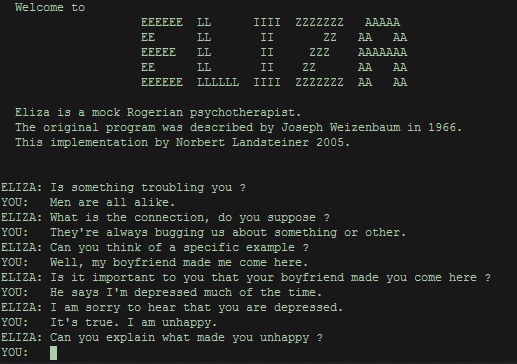
The first significant milestone was ELIZA, developed in 1966 by computer scientist Joseph Weizenbaum at the Massachusetts Institute of Technology (MIT). Despite the severe computational limitations of the time, ELIZA managed to astonish many users by creating the illusion of understanding. Rather than truly interpreting language, however, it relied on a clever linguistic strategy: it analysed the user’s statements and reformulated them into new questions, encouraging the conversation to continue.
The most famous version of ELIZA simulated a Rogerian psychotherapist. Whenever users described their thoughts or emotions, the program would paraphrase their sentences and invite them to elaborate further. For example, if someone wrote, “I feel unhappy today,” ELIZA might answer, “Why do you think you feel unhappy today?” This simple conversational mechanism was surprisingly effective in creating the impression that the machine understood the discussion.
Yet after only a few exchanges, the illusion usually began to fade. Users gradually realised that ELIZA was not reasoning about the conversation but merely manipulating linguistic patterns according to predefined rules. Its apparent intelligence emerged from carefully designed syntactic transformations rather than any genuine comprehension of meaning.
Even so, ELIZA remains one of the foundational achievements in artificial intelligence. It demonstrated that relatively simple computational techniques could produce interactions that humans naturally interpreted as meaningful dialogue, an insight that continues to influence AI research today.
How Does ChatGPT Compare with ELIZA?
The obvious question, then, is whether ChatGPT truly represents a fundamentally more intelligent system or simply a far more sophisticated version of the same illusion.
One interesting way to explore this question is to ask ChatGPT directly:
“Do you think you are better than ELIZA at having conversations?”
The model responds with characteristic caution. Rather than claiming superiority, it explains that the two systems were designed for different purposes and that it cannot objectively compare its own linguistic abilities with those of ELIZA. Instead, it states that its goal is to provide coherent, accurate, and helpful responses while recognising that different AI systems serve different functions.
This answer is revealing for several reasons. First, it illustrates how modern language models have learned to avoid categorical or overly confident claims. Their responses often include degrees of uncertainty, reflecting training strategies intended to reduce misinformation and overconfidence. Second, the model demonstrates a limited form of self-description, not because it possesses self-awareness, but because it has learned to discuss its own capabilities using patterns extracted from human-written texts.
When comparing conversations produced by ELIZA with those generated by ChatGPT, the contrast becomes immediately apparent. ELIZA merely rearranged the user’s words, whereas ChatGPT is capable of summarising information, maintaining context across multiple exchanges, generating explanations, adapting its language to different audiences, and responding creatively to entirely new questions.
Nevertheless, this remarkable linguistic fluency should not be mistaken for genuine understanding.
Why Fluent Language Does Not Equal Consciousness
One of the greatest misconceptions surrounding large language models is the assumption that coherent conversation necessarily implies intelligence in the human sense.
In reality, the ability to generate plausible responses does not demonstrate consciousness, self-awareness, or genuine comprehension. ChatGPT produces convincing language because it has learned statistical relationships between billions of words, sentences, and documents. Its responses emerge from predicting which sequences of words are most likely to follow the user’s prompt according to patterns discovered during training.
This distinction is subtle but fundamental.
Humans typically understand language by connecting words to perceptions, experiences, intentions, memories, and goals. Language models, by contrast, operate entirely through mathematical representations learned from enormous collections of text. They manipulate symbols with extraordinary sophistication, but this should not automatically be interpreted as evidence that they experience or understand the world as people do.
Even so, their practical usefulness is undeniable.
Because these systems can synthesise information into coherent explanations, they have enormous potential across numerous domains. Customer service, educational tutoring, technical assistance, document drafting, software development, scientific communication, and many other fields may benefit from conversational interfaces capable of understanding increasingly complex requests expressed in ordinary language.
The Strengths—and the Limitations—of Advanced Chatbots
Following the public release of ChatGPT, enthusiasm spread rapidly throughout both the technology industry and the general public. Within only a few days, more than one million people had experimented with the system, prompting widespread speculation that conversational AI might eventually transform—or even replace—traditional internet search engines.
The reasons behind this excitement are easy to understand.
Instead of presenting users with long lists of hyperlinks, ChatGPT provides direct answers written in clear and accessible language. It explains concepts rather than merely locating documents. It can summarise large quantities of information, propose ideas, assist with writing tasks, generate computer code, and support students, professionals, researchers, and businesses in ways that previously required substantial human effort.
However, alongside these impressive capabilities, significant limitations remain.
One obvious constraint concerns the knowledge available during training. The current version of ChatGPT is based on information that extends only until 2021, meaning it cannot reliably discuss more recent events or provide continuously updated information. For tasks requiring current knowledge, conventional search engines still retain a substantial advantage.
Other weaknesses are equally important. The model occasionally produces arithmetic mistakes, invents references that do not exist, confuses factual information with fictional content, or presents incorrect statements with remarkable confidence. These errors are particularly striking because the quality of the language often makes the information appear far more reliable than it actually is.
This phenomenon has become one of the defining challenges of generative artificial intelligence: a system may produce responses that are perfectly written while simultaneously being partially or entirely incorrect.
Probability Rather Than Certainty
Understanding these limitations requires recognising how large language models actually function.
Unlike traditional computer programs, which generally follow deterministic instructions and produce identical outputs for identical inputs, large language models operate probabilistically. Every sentence they generate results from calculating which words are statistically most likely to follow one another based on patterns identified during training.
This probabilistic architecture explains both their creativity and their imperfections.
Because the model does not retrieve fixed answers from a database, it can generate original explanations, adapt its wording, and respond flexibly to countless different situations. At the same time, however, the absence of explicit reasoning or factual verification means that errors can emerge naturally whenever statistical patterns diverge from objective reality.
Furthermore, the model inevitably reflects characteristics of the data on which it has been trained. If biases, stereotypes, or discriminatory assumptions are present within large portions of human-written text, they may also appear in the behaviour of the model itself. Consequently, questions concerning fairness, bias, misinformation, and responsible AI governance become central issues for the future development of these technologies.
As conversational artificial intelligence becomes increasingly integrated into education, public administration, healthcare, business, and everyday life, its technical evolution must be accompanied by equally rigorous ethical reflection and institutional oversight. The challenge is therefore no longer simply to build more capable language models, but to ensure that these systems remain trustworthy, transparent, and aligned with human values as they become an increasingly influential part of modern society.
Can ChatGPT Pass the Turing Test?

One of the most fascinating questions raised by systems such as ChatGPT is whether they have finally reached the point at which they can be considered genuinely intelligent. This debate is by no means new. In fact, it takes us back to one of the founding figures of computer science and artificial intelligence: Alan Turing.
In 1950, Turing proposed what would later become known as the Turing Test, a thought experiment designed to evaluate whether a machine could exhibit behaviour indistinguishable from that of a human being. In its classic formulation, a person engages in a written conversation with two unseen interlocutors—one human and one machine. If the evaluator cannot reliably determine which participant is the machine, the artificial system may be said to have demonstrated human-like conversational intelligence.
More than seventy years later, ChatGPT inevitably invites comparisons with this famous test. Yet evaluating such a system requires much more than examining isolated answers to individual questions. The true challenge lies in assessing whether it can sustain a coherent conversation over time, remember previous exchanges, adapt to changing contexts, and respond appropriately when ambiguities arise.
Maintaining Context Throughout a Conversation
To explore this capability, consider a simple dialogue.
A user asks:
“I’d like to go to the Pantheon in Rome wearing roller skates. What do you think?”
Initially, ChatGPT interprets the question literally and assumes the user intends to skate inside the Pantheon. It therefore responds by recommending caution, pointing out that the monument is a historic site and suggesting respect for both the building and its visitors.
The user then clarifies:
“I meant skating to the Pantheon, not inside it.”
Rather than restarting the conversation, the model successfully updates its interpretation, acknowledging the misunderstanding and adapting its answer accordingly. It now discusses travelling through the city on roller skates, suggesting that this could be an enjoyable way to explore Rome while advising the user to respect traffic rules and remain aware of pedestrians.
The conversation continues:
“Do you think the cobblestones might cause problems?”
Again, the model adjusts naturally. It recognises that Rome’s traditional cobblestone streets—known as sanpietrini—could indeed make skating difficult because of their uneven and slippery surfaces.
Finally, when asked whether morning or evening would be a better time to visit, ChatGPT explains the advantages of both options, noting that evenings are generally quieter and may involve fewer queues. When the user concludes that they prefer the evening because they dislike waiting in line, the model responds consistently, agreeing that this choice seems reasonable while also reminding the user to check the monument’s opening hours.
This dialogue illustrates one of ChatGPT’s most significant achievements. Rather than treating each question as an isolated request, the system maintains continuity across multiple conversational turns, incorporating previous information into subsequent responses. This capacity gives interactions a degree of fluidity that earlier conversational systems rarely achieved.
The Limits of Conversational Intelligence
Despite these impressive conversational abilities, closer examination still reveals important limitations.
One noticeable characteristic is the model’s tendency toward excessive optimism. ChatGPT frequently attempts to present positive interpretations regardless of the situation, sometimes agreeing enthusiastically with contradictory propositions if they are presented convincingly enough by the user.
This tendency reflects an important limitation of current language models. They are designed primarily to generate cooperative and helpful responses rather than to critically evaluate every assumption introduced during a conversation.
The discussion about skating to the Pantheon illustrates this point particularly well. Initially, the model misunderstood the user’s intention, interpreting the question as referring to skating inside the monument. After the misunderstanding was corrected, it successfully adapted its response, demonstrating that it could revise its interpretation in light of new information.
However, the model did not independently consider the practical obstacle posed by Rome’s famous cobblestone streets. Only after the user explicitly mentioned the sanpietrini did ChatGPT incorporate this relevant contextual detail into its reasoning.
This example highlights both the strengths and weaknesses of current conversational AI. The system demonstrates remarkable contextual adaptation once new information is introduced, yet it does not consistently apply the broad common-sense reasoning that humans often use automatically when interpreting everyday situations.
Consequently, while ChatGPT displays an impressive capacity for maintaining dialogue, its responses still reveal the absence of genuine world knowledge grounded in lived experience.
A Significant Step Forward—But Not Human Intelligence
From the perspective of someone interacting with the system, it is difficult not to be impressed by its capabilities. The language is fluent, the conversation remains coherent, and the model successfully follows the evolving thread of discussion across multiple exchanges.
Nevertheless, these achievements should not be confused with evidence that the machine possesses consciousness, self-awareness, or human reasoning. The conversation remains fundamentally driven by statistical language prediction rather than understanding in the cognitive sense.
For this reason, it would be premature to conclude that ChatGPT has successfully passed the Turing Test. Although its responses may occasionally appear remarkably human, extended conversations still reveal behavioural patterns that distinguish it from genuine human dialogue. Its occasional misunderstandings, excessive agreeableness, and limited common-sense reasoning continue to expose the underlying nature of the system.
Even so, the progress achieved is extraordinary. Only a few decades separate today’s large language models from the simple rule-based chatbots of the 1960s, illustrating an unprecedented acceleration in the field of artificial intelligence.
The Dawn of a New Technological Era
It is remarkable that within the space of only a few weeks the public conversation surrounding artificial intelligence has shifted twice. First came the explosion of image generation through models such as Stable Diffusion, revealing how machines could produce highly convincing visual content from simple textual descriptions. Now, attention has turned toward systems capable of engaging in sophisticated conversations using natural language.
Although the underlying technology behind ChatGPT has existed for several years, its widespread public availability through a simple web interface has transformed it into a global phenomenon. Once again, accessibility has proven to be as important as technological innovation itself.
The implications extend far beyond conversational software. It is easy to imagine applications across manufacturing, education, scientific research, software engineering, customer support, healthcare, public administration, creative industries, and countless other domains. Wherever people communicate through language, large language models have the potential to become powerful collaborative tools.
Perhaps the most profound transformation lies in their ability to distil vast quantities of human knowledge into accessible conversational interfaces. Rather than requiring users to navigate enormous collections of documents, these systems can synthesise information into explanations that are tailored to individual questions and levels of expertise. This capability has the potential to fundamentally reshape how knowledge is accessed, shared, and learned.
At the same time, this transformation raises profound social questions. As machines become increasingly capable of performing tasks that were once considered uniquely human, societies will need to reconsider the relationships between human expertise, creativity, education, and automation. The challenge will not simply be technological, but also ethical, economic, and cultural.
Looking Toward the Future
Standing at this moment in history, it is difficult to predict precisely where conversational artificial intelligence will lead us. What seems increasingly clear, however, is that we are witnessing another pivotal moment in the evolution of digital technology, one that may prove as influential as the arrival of the internet, smartphones, or cloud computing.
Whether this future ultimately becomes empowering or unsettling will depend not on the technology alone, but on the choices societies make regarding its development, governance, and responsible use. Artificial intelligence offers extraordinary opportunities, yet its long-term impact will be determined by the values that guide its integration into human institutions.
For now, one conclusion appears difficult to dispute. ChatGPT writes with a level of fluency that rivals—and often surpasses—that of many human authors. It has not demonstrated consciousness, nor has it conclusively passed the Turing Test, but it undoubtedly represents one of the most significant advances in conversational artificial intelligence since ELIZA first amazed researchers in 1966.
Looking back across those fifty-six years of progress, the journey from simple pattern-matching dialogue to sophisticated large language models illustrates not only the extraordinary pace of technological innovation, but also the beginning of a new chapter in the relationship between humans and intelligent machines.
An Unexpected Public Response
Perhaps the greatest surprise surrounding ChatGPT has not been the technology itself, but the extraordinary speed with which the public has embraced it. Within only a few days of its release, millions of people around the world have begun experimenting with conversational artificial intelligence, many of them encountering a large language model for the very first time. Researchers, educators, software developers, journalists, students, and businesses are already exploring possible applications, while public debate increasingly focuses on how this technology may reshape education, professional work, creativity, and access to knowledge. Whether these early expectations ultimately prove justified remains uncertain, but it is already evident that conversational AI has moved from a specialised research topic into mainstream public awareness.