Why Artificial Intelligence May Bring Education Back to Its Oldest Teaching Tradition
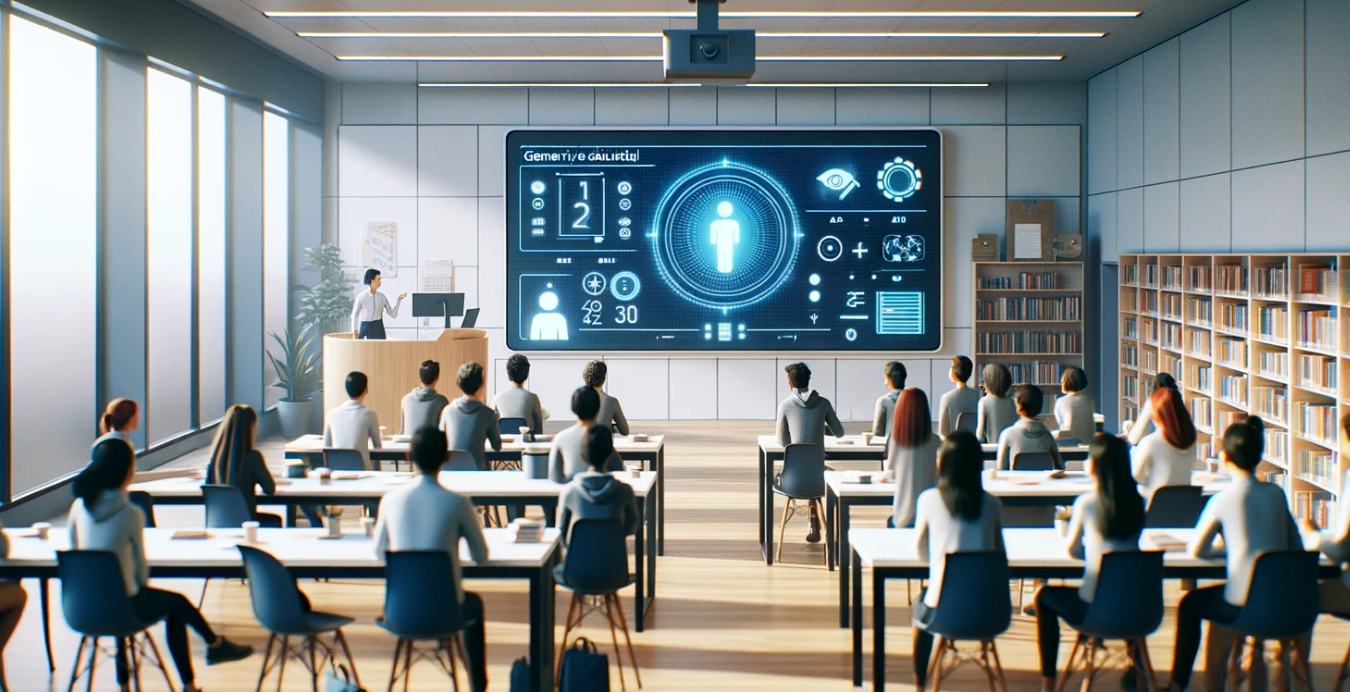
The arrival of artificial intelligence in education is often presented as a technological revolution, but it is equally a pedagogical one. Every major technological innovation that has transformed society, from the printing press to calculators, personal computers, and the internet—has eventually found its way into the classroom. History consistently shows that when a technology significantly improves human productivity, education does not reject it; instead, it adapts to it. The emergence of ChatGPT and other generative AI systems represents the latest chapter in this long process of educational transformation, raising profound questions not only about how students learn, but also about what knowledge and learning should mean in the age of intelligent machines.
A New Generation of Artificial Intelligence
As educators continue searching for teaching methods capable of engaging students who are increasingly surrounded by digital distractions, technological progress continues to accelerate at a pace that often outstrips the education system’s ability to respond. New methodologies, digital platforms, and innovative classroom practices frequently require years to design and implement, yet entirely new technologies emerge before those innovations have even become widespread.
This reality became especially clear on November 30, 2022, when OpenAI, the artificial intelligence research company founded in 2015, released ChatGPT to the public. Built upon large language models (LLMs) trained on enormous collections of text, ChatGPT demonstrated an unprecedented ability to interact with users through natural language. Within seconds it could summarize lengthy reports, translate documents, answer complex questions, write essays, compose poetry, generate computer code, prepare lesson plans, or produce entirely original stories.
The public response was extraordinary. ChatGPT reached one million users in just five days, making it one of the fastest-growing consumer technologies ever introduced. Its success highlighted not simply the popularity of conversational AI, but also the beginning of a new relationship between humans and information.
Beyond Search Engines: From Finding Information to Producing Knowledge
To understand why ChatGPT represents such an important technological milestone, it is useful to compare it with internet search engines.
Search engines such as Google transformed access to knowledge by allowing anyone to retrieve information from millions of web pages almost instantly. However, they still required users to perform the intellectual work themselves. People had to compare sources, distinguish reliable information from misinformation, organize ideas, interpret evidence, and ultimately reach their own conclusions.
Generative AI changes this process fundamentally. Rather than simply directing users toward information, it actively synthesizes knowledge into coherent responses. It organizes concepts, connects ideas drawn from multiple sources, adapts explanations to different audiences, and presents complete answers instead of collections of links.
This represents a profound shift. For the first time, many routine cognitive tasks associated with researching, summarizing, drafting, and explaining information can be partially delegated to artificial intelligence. The technology is not merely retrieving information; it is transforming it into accessible knowledge.
Current Limitations and the Extraordinary Pace of Progress
Despite its remarkable capabilities, ChatGPT is far from perfect. Like all current large language models, it has important limitations that users must understand.
Most importantly, AI systems do not truly “know” whether the information they generate is factually correct. They predict the most statistically probable sequence of words rather than reasoning about truth in the human sense. Consequently, they may confidently generate inaccurate facts, fabricate references, or produce convincing but incorrect explanations—a phenomenon now widely known as AI hallucination.
When ChatGPT was first introduced, its knowledge was also limited to information available up to 2021. Although modern versions now have access to much more recent information and, in some cases, can retrieve live data through internet connectivity, the broader lesson remains unchanged: artificial intelligence should be understood as an assistant rather than an unquestionable authority.
As Professor Michael Wooldridge of the Alan Turing Institute once observed, the amount of text contained within these systems is so immense that it would take thousands of human lifetimes to read everything on which they have been trained. If these early systems already produce such impressive results, one can only imagine how capable future generations will become as models continue improving through larger datasets, more advanced architectures, multimodal capabilities, and increasingly sophisticated reasoning techniques.
The Challenge Facing Education
These developments inevitably raise fundamental questions about education itself.
For decades, teachers have asked students to search for information, write essays, summarize books, prepare reports, and answer questions designed to demonstrate understanding. Today, many of those same tasks can be completed by artificial intelligence within seconds.
This situation resembles an earlier debate surrounding calculators. Once electronic calculators became widely available, educators had to reconsider how much classroom time should be devoted to manual arithmetic versus mathematical reasoning. Generative AI extends this dilemma far beyond mathematics, reaching virtually every discipline based on reading, writing, analysis, and communication.
The challenge therefore shifts from asking “Can students produce an answer?” to asking “Do students genuinely understand the answer they are presenting?”
The End of Traditional Plagiarism?
Until recently, identifying plagiarism was relatively straightforward. Teachers could often detect copied material through internet searches, plagiarism detection software, or similarities with previously published texts.
Generative AI changes this landscape entirely.
Every response produced by ChatGPT is generated specifically for the individual request, meaning that the resulting text is original in its wording even though it draws upon patterns learned from vast quantities of existing information. Consequently, traditional plagiarism detection becomes far less effective because there may be no original document to compare against.
Furthermore, AI systems frequently write with remarkable fluency, grammatical accuracy, and stylistic sophistication—sometimes exceeding the writing abilities of many students. As these systems continue evolving, they will also become increasingly creative, adaptable, and personalized in the content they produce.
The educational challenge therefore becomes less about detecting whether students used AI and more about ensuring that they genuinely understand, evaluate, and critically engage with the information AI helps them generate.
Artificial Intelligence as an Educational Partner
None of this necessarily represents a threat to education. On the contrary, it may become one of its greatest opportunities.
Throughout history, educators have repeatedly incorporated new technologies into learning. Books did not eliminate teachers. Calculators did not eliminate mathematics. Computers did not eliminate critical thinking. The internet did not eliminate research.
Similarly, artificial intelligence is unlikely to replace education; instead, it will reshape what education emphasizes.
Rather than memorizing large amounts of factual information that AI can retrieve instantly, students may increasingly focus on higher-order cognitive abilities such as critical thinking, creativity, ethical reasoning, systems thinking, communication, problem-solving, and interdisciplinary analysis. These are precisely the human capabilities that remain difficult to automate and become even more valuable in a world where information itself is abundant.
The Return of the Socratic Method
Paradoxically, the widespread adoption of artificial intelligence may lead education back to one of its oldest teaching traditions: the Socratic method.
More than two thousand years ago, Socrates taught not by delivering lectures but by asking carefully constructed questions that forced his students to explain their reasoning, defend their arguments, recognize contradictions, and refine their understanding through dialogue.
This ancient approach may become increasingly relevant in the age of AI.
If students can use intelligent systems to gather information, summarize documents, or draft essays, assessment may increasingly depend on what happens afterwards. Can they explain the ideas in their own words? Can they defend their conclusions? Can they answer unexpected questions? Can they critically evaluate the strengths and weaknesses of the information presented?
Face-to-face discussion, oral examinations, debates, presentations, and collaborative problem-solving may therefore regain importance as reliable ways of assessing genuine understanding rather than simple information retrieval.
Artificial Intelligence as an Extension of Human Intelligence
Ultimately, artificial intelligence should not be viewed as a substitute for human intelligence but as an extension of it. Just as calculators amplify our mathematical capabilities and computers extend our ability to process information, generative AI has the potential to enhance human creativity, productivity, and learning.
However, technology does not eliminate the need for judgment. It cannot replace curiosity, ethical responsibility, wisdom, or the ability to ask meaningful questions. Those qualities remain fundamentally human and will become even more valuable as intelligent systems become increasingly capable.
The true educational objective should therefore not be to prevent students from using artificial intelligence, but to teach them how to use it responsibly, critically, and intelligently. Students must learn when to trust AI, when to question it, how to verify its answers, and how to integrate its capabilities into their own reasoning rather than becoming dependent upon it.
In this sense, the future of education may not belong to those who can simply obtain answers, but to those who know how to ask better questions. Artificial intelligence can generate information at extraordinary speed, but only human beings can determine which questions are worth asking in the first place.
For that reason, as education enters the era of artificial intelligence, the enduring wisdom of Socrates may prove more relevant than ever before.