
South Korea is expanding its global smart city strategy by deploying AI-driven pilot projects across five Southeast Asian countries, focusing on mobility, urban safety, water management, and disaster resilience. This initiative reflects a broader shift in which cities are evolving from infrastructure-based models toward intelligent urban operating systems powered by real-time data and artificial intelligence
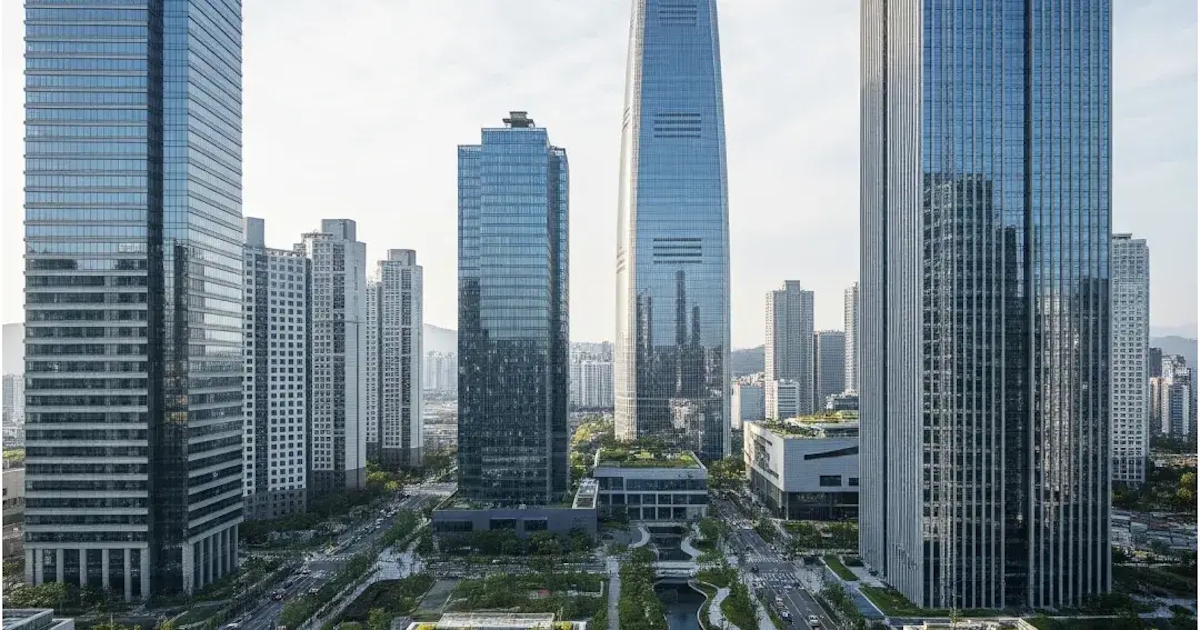
South Korea is accelerating its global urban innovation strategy through a new series of pilot projects that will test artificial intelligence-driven smart city technologies across five countries in Southeast Asia, in what represents one of the most significant examples of technology-enabled urban diplomacy and international urban cooperation in recent years. Announced by the Ministry of Land, Infrastructure and Transport (MOLIT), this initiative forms part of the K-City Network 2026 program, a government-backed framework designed not only to export Korean technological capabilities but also to position South Korea as a strategic global partner in the transformation of rapidly urbanizing cities.
This initiative should be understood within a broader geopolitical and economic context. Over the last decade, South Korea has emerged as one of the world’s most advanced nations in the deployment of smart urban infrastructure, integrating artificial intelligence, IoT sensor systems, real-time data platforms, digital mobility ecosystems, and predictive urban management tools into its own metropolitan environments, particularly in cities such as Seoul and Busan. The internationalization of this expertise now reflects a strategic ambition that goes beyond technology exports, aiming instead to create long-term urban governance partnerships capable of shaping the next generation of intelligent cities across Asia.
Southeast Asia offers a particularly fertile environment for such initiatives. The region is experiencing one of the fastest urbanization processes in the world, with cities expanding at extraordinary speed, often under significant pressure from congestion, environmental stress, infrastructure deficits, and climate-related vulnerabilities. According to projections from international urban development agencies, urban populations in several ASEAN countries are expected to continue growing substantially throughout the next decade, increasing demand for more efficient transport systems, resilient infrastructure, and data-driven public services.
AI as the Operating System of the Contemporary City
What makes this initiative especially significant is that it moves beyond the earlier generation of Smart City models centered primarily on physical infrastructure and isolated digital services. The new approach increasingly treats artificial intelligence as the operational intelligence layer of the city itself, capable of continuously analyzing urban conditions, predicting disruptions, and dynamically coordinating responses across multiple sectors.
This evolution reflects a wider transformation in global urban governance. Whereas earlier smart city projects often focused on installing sensors, cameras, or standalone digital platforms, the current generation emphasizes integrated urban operating systems in which AI functions as a decision-support and automation engine.
In practical terms, this means that traffic flows, emergency responses, water systems, structural safety monitoring, and even disaster management protocols can increasingly be governed through real-time data ecosystems that continuously learn from the city’s own behavior.
For rapidly growing cities, this transition is particularly valuable because it allows public authorities to move from reactive governance models to predictive and adaptive systems. Instead of responding to congestion after it has already occurred, AI systems can forecast traffic build-ups in advance. Instead of waiting for structural failures in aging buildings, intelligent monitoring systems can detect abnormal vibration patterns and issue alerts before risks escalate.
Transforming Urban Mobility in Vietnam and the Philippines
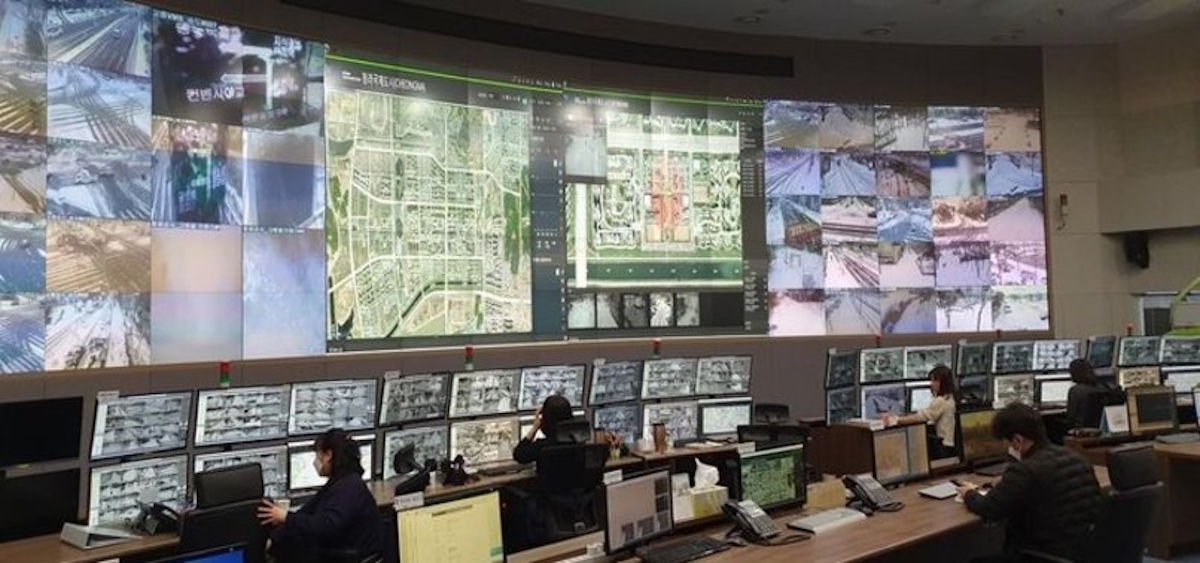
One of the most strategically important dimensions of the pilot projects lies in urban mobility, which remains one of the most pressing challenges across Southeast Asian metropolitan regions.
In Ho Chi Minh City, the introduction of AI- and big data-based demand-responsive transport systems could become a practical model for addressing one of the defining issues of rapidly expanding cities: the mismatch between fixed-route public transport and constantly evolving mobility demand.
Demand-responsive transport (DRT) systems use AI algorithms to dynamically optimize routes based on real-time passenger demand, traffic conditions, and service efficiency. Rather than relying exclusively on fixed schedules, vehicles can adapt routes and frequencies according to actual usage patterns.
A practical example helps illustrate its significance. During peak commuting hours, certain districts may generate sudden spikes in demand due to office concentration, school schedules, or commercial activity. Through machine learning models trained on historical and live mobility data, the system can automatically increase service frequency, redirect vehicles, and minimize waiting times.
In large metropolitan environments, this can produce measurable operational improvements. Studies from comparable intelligent transport systems in Asia and Europe have shown that AI-enabled dynamic routing can reduce average waiting times by 20% to 35%, while simultaneously improving vehicle occupancy rates and lowering operational inefficiencies.
Similarly, in Can Tho, the use of AI anomaly detection combined with intelligent traffic control introduces a critical safety dimension, particularly at complex intersections where accident risks tend to be concentrated.
Meanwhile, in Bacoor, Philippines, real-time AI traffic management and traffic light optimization may significantly improve urban circulation. Adaptive traffic signal control systems have already demonstrated substantial performance improvements in multiple international pilots, in some cases reducing average intersection delays by 15% to 30%.
Penang and the Rise of Real-Time Visual Urban Intelligence
The project in George Town, centered on AI-enabled surveillance cameras, represents another important frontier of smart urban governance: computer vision as an instrument of real-time city management.
Unlike traditional CCTV systems that require human operators to manually interpret images, AI-enhanced systems use computer vision models to automatically identify congestion patterns, traffic incidents, accidents, and abnormal vehicle behavior. This is particularly relevant in dense urban environments where road incidents can quickly cascade into citywide mobility disruptions.
For example, if an accident blocks a critical corridor during peak hours, AI systems can instantly detect the event, classify its severity, and trigger traffic re-routing protocols in real time, while simultaneously notifying emergency services. This significantly reduces response times and improves coordination between transport authorities and public safety agencies.
Brunei: AI for Water Management and Disaster Resilience
The Brunei pilot project is especially significant because it extends the smart city concept beyond mobility into the domain of urban resilience and environmental infrastructure.
Water management is becoming an increasingly critical challenge for cities facing climate variability, flooding risks, and pressure on public utilities. An integrated AI-based smart city platform can monitor reservoir levels, drainage capacity, rainfall intensity, and flood-prone zones in real time, allowing authorities to anticipate risks before they become emergencies.
A practical example can be found in flood early warning systems. By integrating weather forecasts, hydrological sensor data, and predictive AI models, cities can issue location-specific alerts hours before severe flooding occurs, significantly reducing both economic damage and public safety risks. This is particularly relevant in Southeast Asia, where monsoon-related flooding and extreme weather events increasingly affect urban populations.
Thailand and the Smart Safety of Aging Buildings
In Surin, the focus on older building safety introduces another critical dimension of intelligent urban management: AI-supported structural resilience.
Many cities in the region contain significant stocks of aging buildings that were not originally designed to contemporary seismic, environmental, or occupancy standards. By combining damping technologies with AI-based structural monitoring systems, authorities can continuously track stress patterns, material fatigue, and abnormal vibrations.
This has substantial practical implications. For example, in older public buildings such as schools, hospitals, and municipal offices, AI systems can identify early warning signals of structural degradation that would otherwise remain invisible during periodic inspections. This not only improves public safety but also creates a scalable model for preventive urban asset management.
From Pilot Projects to Strategic Urban Diplomacy
Perhaps the most important dimension of this initiative lies in its strategic significance. South Korea is not merely exporting technology; it is exporting an urban governance model.
By embedding Korean AI and smart city frameworks into rapidly growing foreign urban systems, the country is positioning itself as a key global actor in the future of urban transformation. This model combines technological leadership, public-private industrial strategy, and international cooperation, creating an ecosystem in which smart city innovation becomes both a policy instrument and an export industry.
As Kim Hyo-jung, Director of Urban Policy at MOLIT, rightly noted, cities are evolving beyond physical infrastructure into intelligent, self-regulating systems where artificial intelligence increasingly acts as the cognitive layer of urban management. What is being tested across Southeast Asia today may well become a reference model for the next phase of Smart City development globally.