Da Nang’s ambitious metropolitan transformation represents one of the most significant urban development projects currently emerging in Southeast Asia, combining territorial integration, smart infrastructure, logistics expansion, and ecological sustainability within a single long-term strategic vision. Through its merger with the former Quang Nam province, the city is positioning itself to become a major regional hub for innovation, finance, maritime trade, and high-value tourism
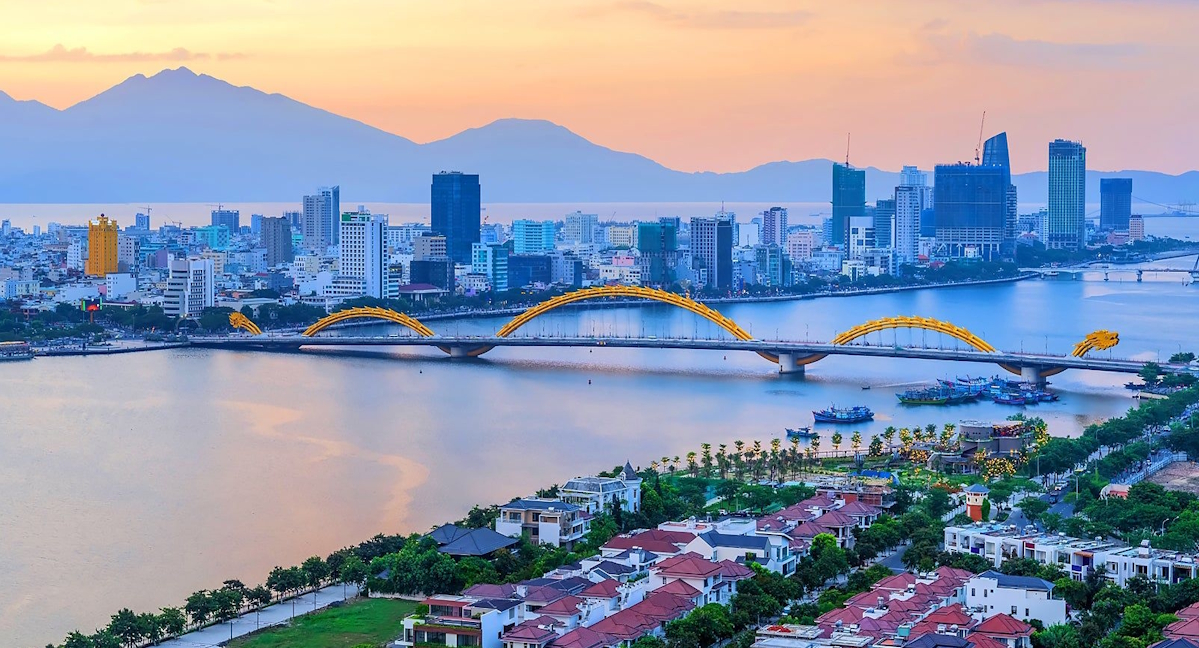
The transformation of Da Nang into one of Southeast Asia’s most ambitious metropolitan development projects represents far more than a conventional urban expansion strategy, because what is currently being designed is a long-term territorial, economic, environmental, and technological vision that seeks to reposition the city as a global eco-city, an international logistics gateway, and a model of smart urban development by the middle of the twenty-first century and beyond. Situated in central Vietnam and historically recognized as one of the country’s most dynamic coastal cities, Da Nang is now entering a new phase in which the merger with the former Quang Nam provincial territory becomes the structural foundation for a much larger metropolitan ecosystem capable of competing with leading urban hubs across Asia.
What makes this transformation particularly significant is that it combines territorial integration, green urbanism, digital infrastructure, advanced logistics, financial services, tourism development, and environmental conservation within a single strategic framework, something that increasingly defines the new generation of smart and sustainable cities worldwide. In many ways, Da Nang’s vision reflects the broader evolution from the traditional smart city model toward a more integrated eco-metropolitan and cognitive urban paradigm, where growth is measured not only in economic output, but also in resilience, livability, biodiversity, and long-term strategic adaptability.
A Long-Term Vision: From Smart City to Global Eco-City
The approved master plan for the 2050–2075 horizon outlines an exceptionally ambitious urban future in which Da Nang is expected to become a smart, livable, and innovation-driven metropolitan center by 2050, while progressively evolving into a globally recognized eco-city and premier international destination by 2075. This long-term vision is particularly relevant in the context of rapidly urbanizing Southeast Asia, where cities are increasingly competing to attract investment, talent, advanced industries, and sustainable tourism flows.
What distinguishes Da Nang’s roadmap is the way in which it links technological modernization with ecological positioning. Rather than presenting digital transformation and environmental sustainability as separate agendas, the city’s strategic framework integrates both dimensions into a unified development model. Smart infrastructure, AI-driven urban services, logistics optimization, and green territorial planning are conceived as mutually reinforcing systems, enabling a city that is both economically competitive and environmentally resilient.
This reflects a global trend visible in cities such as Singapore, Seoul, and Copenhagen, where smart urban transformation increasingly depends on the ability to combine data intelligence with sustainability goals, carbon reduction strategies, and citizen-centered quality of life indicators.
The Metropolitan Merger: A New Urban Geography
One of the most transformative aspects of this strategy is the planned administrative and territorial merger between Da Nang and the former Quang Nam province, a move that fundamentally alters the scale and governance logic of the metropolitan area. With a projected total surface of 11,859.59 square kilometers, the new metropolitan entity will become one of the largest centrally administered urban territories in Vietnam.
This expansion is not merely geographic; it represents the creation of a polycentric urban system, in which multiple nodes perform complementary economic and cultural functions. The enlarged metropolitan structure includes central Da Nang as the technological and administrative core, Hoi An as a heritage and tourism center, Tam Ky as an emerging urban node, Dien Ban as a culturally rich urban zone, and Chu Lai as a major industrial and logistics corridor.
From an urban planning perspective, this polycentric model is strategically important because it reduces excessive pressure on a single urban core while enabling distributed economic specialization. This is increasingly considered a best practice in metropolitan governance, as seen in large urban regions such as Shanghai and Tokyo, where multiple sub-centers enhance resilience and economic efficiency.
The projected capacity for up to six million inhabitants further positions Da Nang as a future megaregional hub, capable of serving as a strategic bridge between domestic growth and international connectivity.
Logistics as the Backbone of Economic Transformation
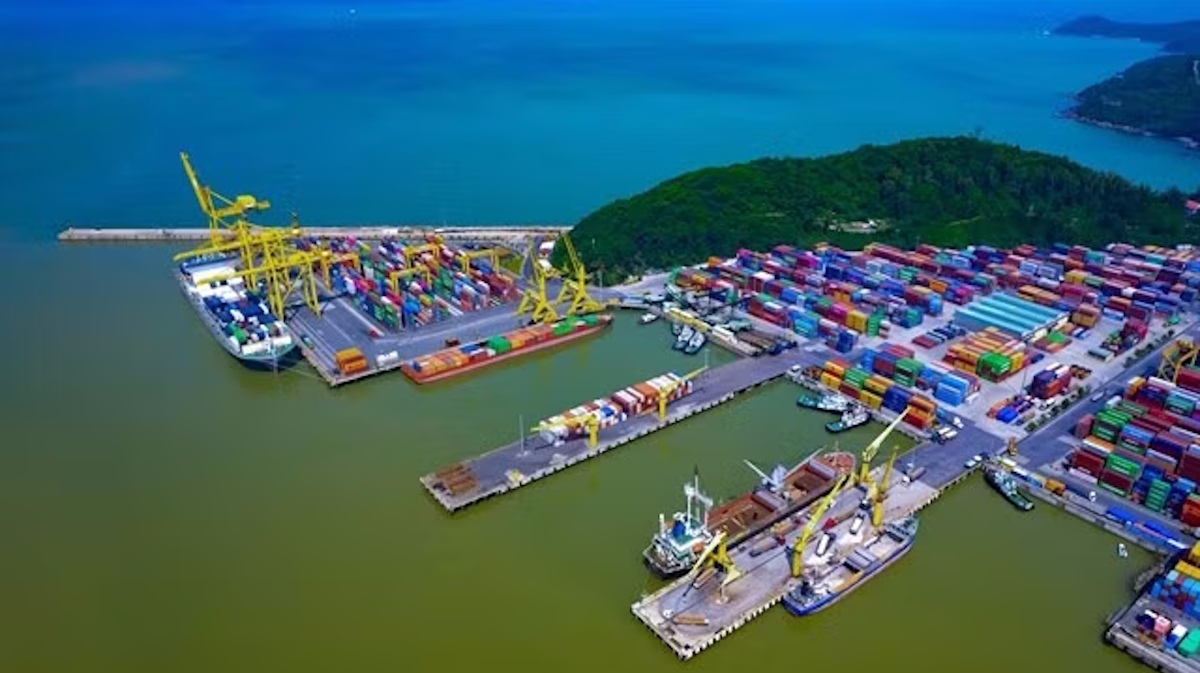
A central pillar of the new Da Nang vision lies in its ambition to become a major international logistics and maritime gateway for Southeast Asia. The city is leveraging its coastal geography and multimodal connectivity to establish itself as a regional logistics powerhouse.
The development of the Lien Chieu deep-water port, expected to include 22 berths, is one of the most important infrastructure projects in this transformation. Once fully operational, the port is expected to function as Vietnam’s third major international gateway port, following Lach Huyen Port and Cai Mep–Thi Vai Port.
Its strategic relevance extends beyond Vietnam itself, because the port is designed to connect with the East-West Economic Corridor 2, a regional trade route linking Thailand, Myanmar, Laos, and Vietnam. This creates a powerful logistics ecosystem capable of facilitating trade flows across mainland Southeast Asia.
A practical example of the economic impact of such infrastructure can be seen in freight operations linked to electronics manufacturing and semiconductor supply chains. A semiconductor producer operating in the future Chu Lai industrial zone, for instance, could transport high-value components via road and rail directly to Lien Chieu Port, significantly reducing export times to markets in Japan, South Korea, and Singapore. This integration of port, rail, airport, and industrial zones is a defining characteristic of successful global logistics cities such as Rotterdam and Dubai.
The Financial and Technological Dimension
Another decisive layer of Da Nang’s transformation is the creation of the International Financial Center of Da Nang (IFC Da Nang), which signals the city’s intention to move beyond logistics and tourism into high-value financial and innovation services.
The establishment of a financial center, supported by international institutions such as JPMorgan Chase, Deutsche Bank, and United Overseas Bank, is strategically aligned with the city’s ambition to attract investment into AI, semiconductors, fintech, blockchain infrastructure, and advanced digital services. Particularly significant is the objective of developing at least five fintech companies generating more than 1 trillion VND annually, equivalent to roughly US$40 million each per year. This target reflects the city’s intention to position itself within Asia’s fast-growing digital finance ecosystem.
From a smart city perspective, this financial and technological infrastructure could support urban innovation through digital payment ecosystems, intelligent public services, blockchain-based land registries, and AI-driven municipal decision systems.
For example, Da Nang could deploy citywide AI-powered urban finance dashboards capable of integrating real-time tax revenues, infrastructure expenditures, logistics flows, and tourism performance indicators, enabling predictive governance models.
Tourism, Heritage, and Cultural Economy
The city’s development strategy also intelligently leverages its extraordinary cultural and heritage assets. The inclusion of Hoi An Ancient Town and My Son Sanctuary, both UNESCO World Heritage Sites, provides Da Nang with a strong foundation for high-value cultural tourism.
This is especially important because tourism in advanced urban economies increasingly shifts from volume-based models toward experience-driven, high-spending, and culturally differentiated tourism ecosystems. A practical example would be the integration of smart tourism platforms powered by AI, where visitors receive real-time itinerary recommendations based on crowd density, weather, heritage site availability, and personal preferences.
This could optimize visitor flows to Hoi An and My Son while reducing congestion and protecting heritage assets, a model already being explored in cities such as Kyoto and Barcelona.
Environmental Protection and the Eco-City Model
Perhaps the most strategically distinctive dimension of Da Nang’s future vision is its commitment to environmental preservation as a central element of urban identity. The metropolitan area includes approximately 500,000 hectares of protected natural areas, including national parks and reserves that host critically endangered species such as the Saola and the Asian elephant.
This ecological dimension is essential to the credibility of the eco-city concept. A true eco-city is not simply a city with green branding, but a metropolitan system in which biodiversity, natural capital, climate resilience, and urban expansion are strategically balanced.
For example, smart environmental monitoring systems based on IoT sensors and satellite imagery could be used to track forest health, biodiversity corridors, air quality, and flood risks in real time. This becomes especially important in the context of climate change, rising sea levels, and coastal resilience challenges affecting many Asian cities.
A Regional Benchmark for Future Cities
Ultimately, Da Nang’s transformation project should be understood as one of the most ambitious examples of integrated metropolitan planning currently emerging in Asia. It combines the scale of a megaregional merger with the sophistication of smart city infrastructure, logistics-driven growth, financial modernization, tourism development, and ecological conservation.
If successfully implemented, Da Nang could become a benchmark case study for how emerging economies can leapfrog traditional urban development models and move directly toward a next-generation sustainable metropolitan ecosystem, one capable of competing globally while preserving local cultural and environmental identity.