
Buildings are more than structures; they are living environments where people work, learn, and rest. Yet globally, the building sector accounts for nearly 40% of total energy consumption and a third of greenhouse gas emissions. As cities aim for sustainability and carbon neutrality, the challenge is not only to construct new efficient buildings but to transform how we design, manage, and adapt them. Artificial intelligence is emerging as one of the most powerful tools for this task, optimizing building design for both energy efficiency and human comfort.
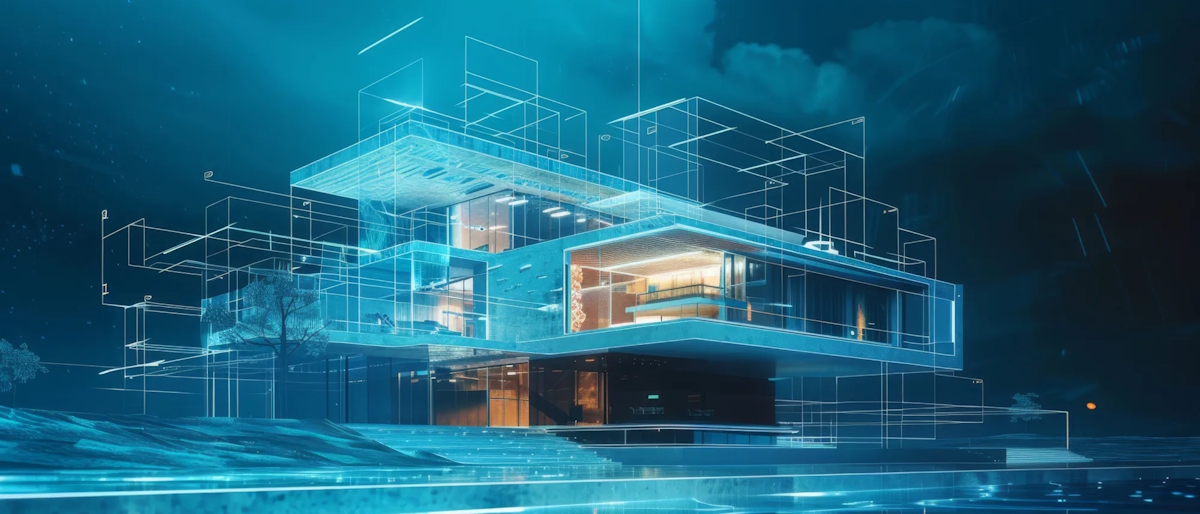
Traditionally, architectural design relies on simulation software and experience-based intuition to balance factors like light, temperature, ventilation, and material use. AI adds a new dimension by processing enormous datasets, from energy models and climate data to occupant behavior, to generate designs that perform better under real-world conditions. Through machine learning and generative design algorithms, architects and engineers can explore thousands of design options simultaneously, finding solutions that maximize performance while minimizing environmental impact.
Generative design works by defining objectives and constraints, for example, reducing energy use, maximizing natural light, or ensuring thermal comfort, and then allowing the AI to “evolve” countless variations of building layouts. Each iteration is tested virtually against environmental simulations, and the system learns which combinations of form, orientation, and materials achieve the best results. The outcome is not a single “perfect” design but a range of data-informed possibilities, enabling architects to make creative and sustainable choices grounded in evidence.
AI also enhances building performance optimization after construction. Once a building is operational, sensors collect real-time data on temperature, humidity, occupancy, and energy use. Machine learning models analyze this data to fine-tune heating, ventilation, and air conditioning (HVAC) systems dynamically. By predicting demand and adjusting operations accordingly, these systems reduce energy consumption by up to 30% without compromising comfort.
In this sense, the building becomes a self-learning organism, continuously improving its own efficiency.
Lighting systems are another area of transformation. AI-powered controls can balance natural and artificial lighting, adjusting intensity and color temperature based on occupancy, time of day, or external conditions. This not only saves energy but also improves wellbeing by aligning indoor environments with human circadian rhythms. Similarly, smart window systems use predictive algorithms to optimize shading and daylight access, reducing cooling loads while maintaining visual comfort.
The integration of AI with Building Information Modeling (BIM) is accelerating these advancements. BIM provides a detailed digital representation of a building’s physical and functional characteristics; AI uses this data to simulate long-term performance scenarios, from material aging and maintenance costs to carbon footprint across the lifecycle. This predictive capability helps designers and facility managers make holistic decisions that extend beyond aesthetics, embracing durability and sustainability as core design principles.
Retrofitting existing buildings, which make up the vast majority of urban infrastructure, offers even greater potential. AI can analyze energy consumption patterns across entire building portfolios, identifying which structures would benefit most from upgrades and what measures would yield the highest returns. Thermal imaging, drone inspections, and predictive analytics work together to create precise action plans for renovation, often achieving dramatic efficiency improvements without full reconstruction.
Beyond energy and efficiency, AI contributes to comfort and wellbeing, which are central to the human-centered city. By learning from occupant feedback and behavioral data, AI systems can personalize environmental conditions, adjusting lighting, temperature, and ventilation according to individual preferences or predicted needs. This creates spaces that are not only efficient but emotionally attuned to their users.
However, the integration of AI in building design raises critical questions about data privacy and autonomy. Sensors that monitor occupancy or personal preferences must handle information ethically and transparently. Users should know what data is collected and how it is used to influence building systems. The success of smart buildings ultimately depends on trust, ensuring that automation enhances comfort rather than invading privacy.
Economic accessibility is another factor. While AI-driven design tools are becoming more affordable, their adoption remains concentrated in large-scale projects and wealthy regions. Democratizing access to these technologies will be essential for making energy efficiency a universal urban right rather than a luxury of advanced economies.
Looking ahead, the convergence of AI, IoT, and digital twins will allow entire neighborhoods, not just individual buildings, to be optimized as unified energy ecosystems. Buildings will communicate, share surplus power, and adapt collectively to climate and usage patterns.
In this vision, architecture transcends static design and becomes a living dialogue between technology, nature, and human wellbeing.
Artificial intelligence does not replace the architect; it expands their horizon. It transforms buildings from passive energy consumers into active participants in the urban ecosystem, structures that think, adapt, and care for the people inside and the planet around them.