
A Smart City Master Plan serves as the strategic foundation for sustainable long-term urban growth, transforming isolated technological initiatives into an integrated and scalable urban vision. More than a planning document, the master plan is a framework of urban intelligence and resilience, capable of guiding the evolution of a city over the coming decades
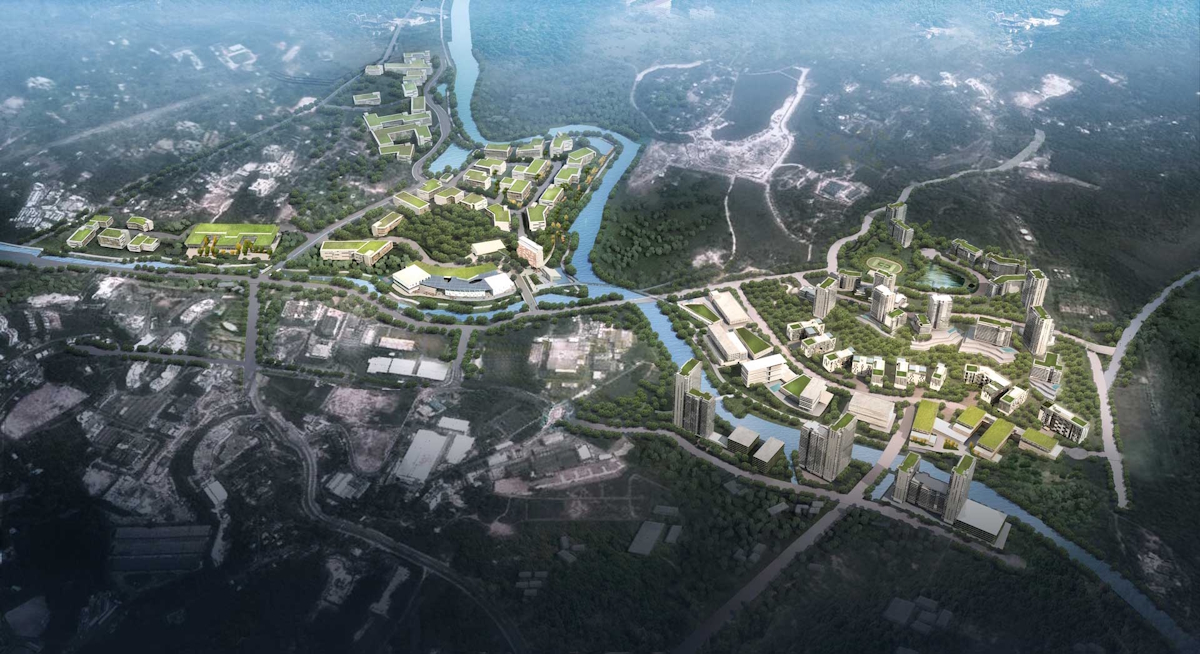
The transformation of an urban system into a truly intelligent city cannot be achieved through isolated technological interventions, short-lived innovation pilots, or fragmented infrastructure upgrades that respond only to immediate operational pressures. Rather, it requires a coherent, long-term strategic architecture capable of integrating urban growth, governance reform, digital infrastructure, environmental resilience, and citizen well-being into a single evolutionary framework. In this sense, the Smart City Master Plan must be understood not merely as a planning document, but as a strategic instrument of urban foresight, through which present-day decisions are aligned with the structural needs of the city over the coming decades.
Far beyond the deployment of sensors, platforms, or data systems, such a master plan serves as the mechanism through which one specific urban domain—whether mobility, energy, water management, public safety, housing, or digital administration—can be progressively transformed into an intelligent, scalable, and resilient component of the wider city ecosystem. A Smart City does not emerge from technology alone; it emerges from planned intelligence, institutional continuity, and the capacity to anticipate future urban complexity before it materializes.
Establishing the Strategic Planning Horizon
The first and perhaps most decisive step in designing a Smart City Master Plan lies in defining an adequate temporal horizon for transformation. Traditional urban plans have historically been constrained by political cycles, frequently spanning four, six, or eight years, which often limits their capacity to address structural challenges whose effects unfold over much longer periods. However, when the objective is long-term urban growth, the planning horizon must expand to ten, fifteen, or even twenty years, because the systems being designed—transport networks, utility grids, digital governance platforms, environmental monitoring systems, and urban districts—constitute foundational layers of future city life.
This long-range perspective is essential because urban growth is not linear, and neither are the pressures associated with it. Demographic expansion, migration flows, climate stress, shifts in economic activity, technological disruption, and changes in patterns of work and mobility all reshape the city over time. For this reason, the master plan must be built upon robust forecasting models that combine demographic data, land-use projections, infrastructure capacity studies, and environmental risk scenarios.
A practical example can be found in the case of urban mobility planning. If a metropolitan area currently experiences congestion levels of 30 minutes of average peak-hour delay per commuter, and population projections indicate a 20% increase over the next fifteen years, then a mobility-focused Smart City Master Plan cannot merely optimize existing traffic lights. It must anticipate future modal shifts, the integration of electric and autonomous vehicles, the expansion of multimodal corridors, remote work trends, and decarbonization commitments aligned with climate targets. According to data from the International Energy Agency, transport accounts for nearly a quarter of global energy-related CO₂ emissions, which makes long-term mobility planning a critical strategic dimension of urban resilience.
Defining the Transformation Scope
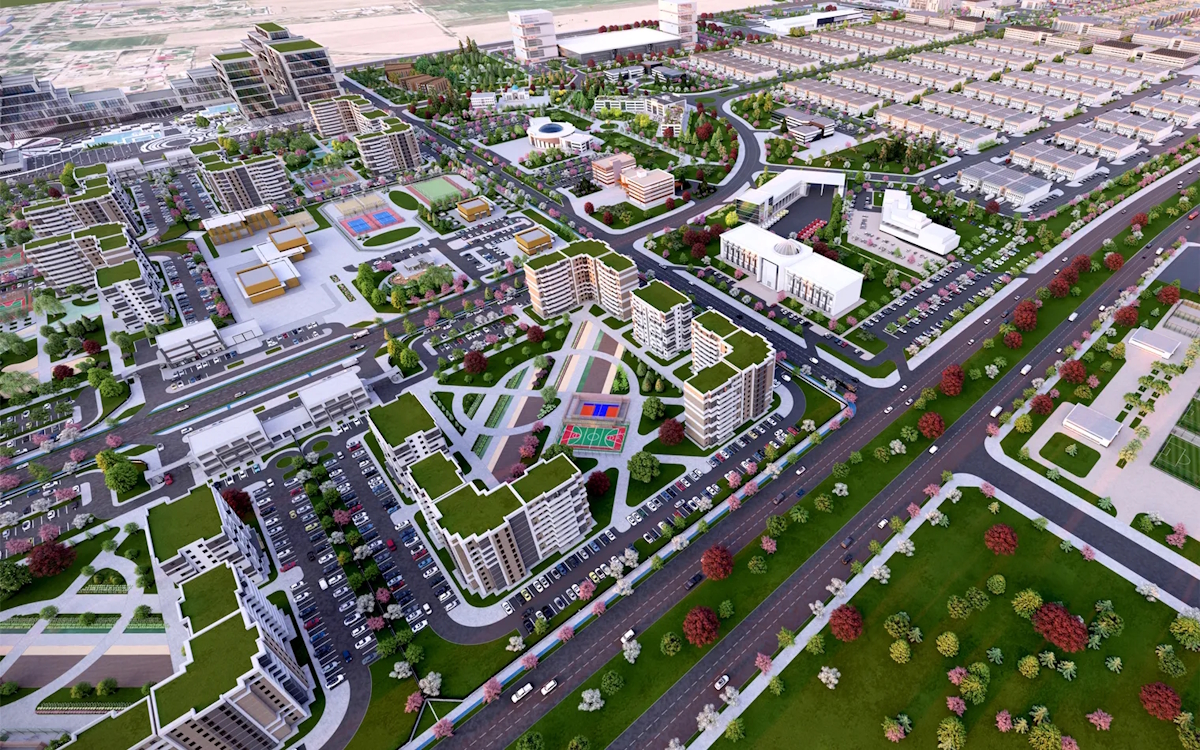
A Smart City Master Plan must begin with an exceptionally precise definition of the transformation scope, because strategic ambiguity at this stage tends to produce fragmented execution later. Scope, in this context, means clearly identifying the urban system that will be transformed, its operational boundaries, the physical and digital assets involved, the institutions responsible for governance, and the long-term performance indicators that will determine success.
For example, if the chosen domain is public lighting, the transformation must be conceived as far more than the replacement of conventional lamps with LED systems. The true scope includes the entire infrastructure ecosystem associated with lighting as an urban intelligence layer: energy consumption patterns, maintenance workflows, safety correlations, environmental performance, pedestrian behavior, and connectivity requirements for sensor-based systems.
A city such as Barcelona offers a particularly illustrative example, having integrated smart street lighting systems that adjust brightness according to pedestrian and traffic flow, thereby reducing energy consumption while improving urban safety and operational efficiency. Such systems may achieve energy savings of 50% to 70% compared with traditional lighting infrastructure, while simultaneously generating real-time urban data that can be integrated into wider city platforms.
This stage is crucial because scope defines strategic coherence. Without a rigorous delimitation of what is being transformed and why, the master plan risks becoming overly conceptual and detached from implementation realities.
Linking Urban Growth with Smart Infrastructure
Long-term urban growth inevitably places mounting pressure on infrastructure systems. Roads, water networks, energy grids, public spaces, digital services, and administrative systems all face increased demand as population density rises and economic activity intensifies. The purpose of the Smart City Master Plan is therefore not simply to expand infrastructure, but to ensure that infrastructure evolves in intelligence as well as capacity.
This requires a fundamental shift in planning logic. The central question is no longer merely how much infrastructure is needed, but rather how infrastructure can become adaptive, predictive, and responsive as the city grows.
Consider water management as an example. A conventional plan might focus on increasing reservoir capacity or extending distribution networks. By contrast, a Smart City Master Plan integrates sensor-based leak detection, predictive maintenance systems, consumption analytics, climate risk modelling, and digital twins capable of simulating demand under different growth scenarios. Studies in advanced urban utilities have shown that smart water monitoring systems can reduce water loss through leakage by up to 20–30%, a highly significant figure in climate-vulnerable cities.
A city that grows without intelligent infrastructure multiplies inefficiencies; a city that grows through a smart planning framework multiplies resilience.
Embedding Data Architecture as Core Urban Infrastructure
One of the defining differences between conventional urban planning and Smart City planning lies in the treatment of data as infrastructure. In a traditional framework, data is often considered a support mechanism for management. In a Smart City Master Plan, however, data must be conceived as a strategic urban layer in its own right, comparable in importance to roads, utilities, and governance institutions.
This means defining from the outset the architecture of data flows: sources, interoperability standards, ownership models, cybersecurity protocols, privacy frameworks, and analytics capabilities. Every future investment must be aligned with this shared digital ecosystem.
For instance, in the transformation of waste management, the plan should specify how data from smart bins, route optimization systems, vehicle tracking, citizen reporting apps, and environmental indicators will interact within a single operational platform. Without such integration, technological solutions remain isolated and difficult to scale.
A relevant example is the city of Singapore, whose Smart Nation strategy integrates multiple urban data streams into centralized decision platforms, allowing city managers to optimize transport, environmental systems, and public services in real time.
Phased Implementation Strategy
No city-scale transformation can be effectively executed as a single-stage intervention. The Smart City Master Plan must therefore translate long-term vision into a phased implementation pathway that balances ambition with operational feasibility.
The first stage is typically a foundation phase, focused on infrastructure audits, regulatory alignment, stakeholder mapping, pilot identification, and baseline data collection. This is followed by an expansion phase in which technologies are deployed at scale, systems are integrated, and institutional processes are adapted. Finally, an optimization phase introduces advanced analytics, predictive models, artificial intelligence, and service personalization.
A practical example in public transport might begin with sensor deployment across bus fleets and stations, continue with real-time fleet optimization systems, and evolve toward AI-driven predictive routing and eventually a citywide mobility digital twin capable of simulating demand and disruption scenarios.
This phased model is essential because it reduces investment risk while maintaining strategic continuity.
Governance, Funding, and Institutional Continuity
A Smart City Master Plan that neglects governance and finance remains purely aspirational. Long-term urban growth requires transformation mechanisms capable of surviving political cycles, administrative changes, and economic fluctuations.
This demands the creation of governance frameworks that clearly define decision-making authority, interdepartmental coordination structures, procurement models, performance oversight, and accountability systems. In parallel, the financial architecture must combine public investment with diversified funding mechanisms, including municipal budgets, regional and national grants, international development funds, and public-private partnerships.
The European context offers strong opportunities in this regard, particularly through programs associated with European Commission urban innovation funds and climate transition financing instruments, which many cities are already using to support smart mobility, energy transition, and digital governance projects.
Citizen-Centered Long-Term Planning
A city may become technologically sophisticated and still fail as an urban system if transformation is not centered on human experience. For this reason, the Smart City Master Plan must define long-term citizen outcomes as core performance objectives.
This includes measurable improvements such as reduced travel times, lower pollution exposure, better access to public services, improved safety, increased digital inclusion, and higher levels of trust in public institutions.
For example, if the focus is digital public services, success cannot be measured solely by administrative efficiency. It must also be evaluated through usability, accessibility, transparency, and inclusiveness, particularly for elderly populations, low-income communities, and digitally vulnerable groups.
Long-term urban intelligence must therefore be human-centered as much as infrastructure-centered.
Resilience and Future-Proofing
Perhaps the most strategic dimension of the Smart City Master Plan is its capacity to remain effective under uncertainty. Cities evolve within environments shaped by climate disruption, economic volatility, migration trends, technological change, and shifting social behaviors.
For this reason, the plan must be conceived as an adaptive framework rather than a rigid blueprint. Scenario planning, resilience metrics, modular technological standards, and scalable governance structures must all be embedded from the beginning.
The lesson from recent global disruptions is clear: the cities that adapt fastest are not necessarily those with the most technology, but those whose systems were designed to remain flexible under uncertainty.
Planning Intelligence for the City of the Future
Designing a Smart City Master Plan for long-term urban growth is ultimately an exercise in strategic foresight, systemic integration, and institutional resilience. To transform any aspect of a city into an intelligent urban component, it is not enough to deploy technology in the present; transformation must be embedded within a long-term framework that aligns infrastructure, governance, finance, data, and citizen well-being across time.
A truly intelligent city is not merely one that innovates quickly, but one that plans with enough depth, flexibility, and foresight to ensure that today’s decisions continue to generate value decades into the future. In this sense, the Smart City Master Plan is the bridge between immediate urban challenges and the resilient, adaptive, human-centered city of tomorrow.