
For much of its history, the relationship between artificial intelligence and military affairs has been portrayed through the lens of autonomous weapons, robotic systems and increasingly sophisticated combat technologies. Public discussion has therefore tended to focus on the prospect of machines replacing human operators on the battlefield, often overlooking a transformation that is arguably far more significant and which is already taking place across several of the world's most advanced defence organisations
Throughout history, military organisations have often served as early adopters of technological innovations that later became deeply embedded within civilian society. From satellite navigation and the internet to advanced communications, radar technologies and global positioning systems, numerous developments originally created to address defence requirements eventually transformed everyday life, reshaping commerce, scientific research, transportation and public administration. This pattern has rarely reflected a uniquely military interest in technology itself, but rather the reality that defence institutions frequently operate in environments where the ability to process information more rapidly, coordinate complex operations and respond effectively to uncertainty can carry profound strategic consequences.
Artificial intelligence now appears to be following a similar trajectory. While public attention has frequently centred upon autonomous drones, robotic platforms or speculative discussions surrounding autonomous weapons, a quieter but potentially more consequential transformation has been unfolding within military planning systems. Increasingly, AI is being incorporated not as a substitute for commanders or strategic decision-makers, but as a computational layer capable of assisting them in understanding situations whose complexity has expanded far beyond what traditional analytical methods can comfortably accommodate. In this context, the most significant contribution of artificial intelligence lies less in making decisions than in organising the enormous volumes of information upon which those decisions ultimately depend.
The recent announcement by the United States Army concerning the expanded use of artificial intelligence within battlefield planning should therefore be understood within this broader technological evolution. Modern military operations involve the continuous integration of information originating from satellites, airborne surveillance platforms, radar systems, electronic intelligence, logistics networks, weather forecasting, communications infrastructure and countless additional sources, all of which evolve simultaneously and often under severe time constraints. The challenge confronting military planners is no longer merely obtaining information but transforming overwhelming quantities of fragmented data into coherent situational understanding before critical decisions must be made. Artificial intelligence offers precisely this form of computational capability, enabling analysts and commanders to identify relevant patterns, evaluate alternative courses of action and explore multiple operational scenarios far more rapidly than conventional analytical processes alone would permit.
Seen from this broader perspective, the growing incorporation of artificial intelligence into military planning is not primarily a story about warfare. It represents one example of a much wider transformation affecting complex organisations across numerous sectors, where decision-makers increasingly rely upon computational systems capable of expanding their ability to perceive, interpret and manage highly dynamic environments. The battlefield simply provides one of the most demanding settings in which these technologies can be observed, offering valuable insight into how artificial intelligence may progressively reshape decision-making throughout many other institutional domains in the years ahead.
From Information Superiority to Cognitive Superiority
For much of modern military history, strategic advantage has frequently been associated with the ability to acquire more accurate information than one’s opponent. Success often depended upon superior reconnaissance, more reliable intelligence, faster communications or more effective coordination between geographically dispersed units. Although technological progress continuously improved each of these capabilities, the fundamental objective remained remarkably consistent: reducing uncertainty by increasing the quantity and quality of information available to military commanders before decisions were made. In an era where information itself was relatively scarce, achieving what military theorists commonly described as information superiority represented an important source of operational advantage.
The strategic landscape of the twenty-first century, however, has altered this equation in a fundamental way. Advances in sensing technologies, satellite constellations, autonomous surveillance platforms and digital communications have transformed many operational environments into ecosystems characterised not by insufficient information but by an unprecedented abundance of it. Contemporary military organisations routinely receive continuous streams of imagery, signals intelligence, logistical data, environmental observations and operational reports generated across multiple domains simultaneously. Rather than struggling to obtain relevant information, commanders increasingly confront the opposite challenge: identifying what truly matters within an informational environment whose scale and velocity exceed the natural limits of human cognitive processing.
It is precisely within this context that artificial intelligence has begun to assume a strategically significant role. Machine learning systems possess the capacity to integrate heterogeneous sources of information, recognise emerging patterns, identify anomalies, estimate probabilities and generate structured representations of rapidly evolving situations in a manner that would be extraordinarily difficult to achieve through manual analysis alone. Importantly, these systems are not expected to replace military judgement or strategic reasoning. Their principal contribution lies in transforming immense quantities of fragmented observations into forms of knowledge that human decision-makers can meaningfully interpret within the limited time available to them. Artificial intelligence therefore functions less as an autonomous decision-maker than as a mechanism for increasing what might more appropriately be described as cognitive superiority: the ability of an organisation to understand complex situations more rapidly, more coherently and with greater analytical depth than would otherwise be possible.
This distinction has implications that extend well beyond military affairs. Many contemporary institutions now operate within similarly information-rich environments in which the principal obstacle is no longer data collection but cognitive integration. Healthcare systems, emergency response organisations, financial institutions, critical infrastructure operators and public administrations increasingly face comparable challenges as the volume of available information continues to grow far more rapidly than the human capacity to analyse it. The military adoption of artificial intelligence therefore reflects a broader organisational transition in which computational systems are becoming essential partners in the management of complexity itself, offering an early indication of how institutional decision-making may continue to evolve across a wide range of domains during the coming decades.
Artificial Intelligence as a Cognitive Infrastructure
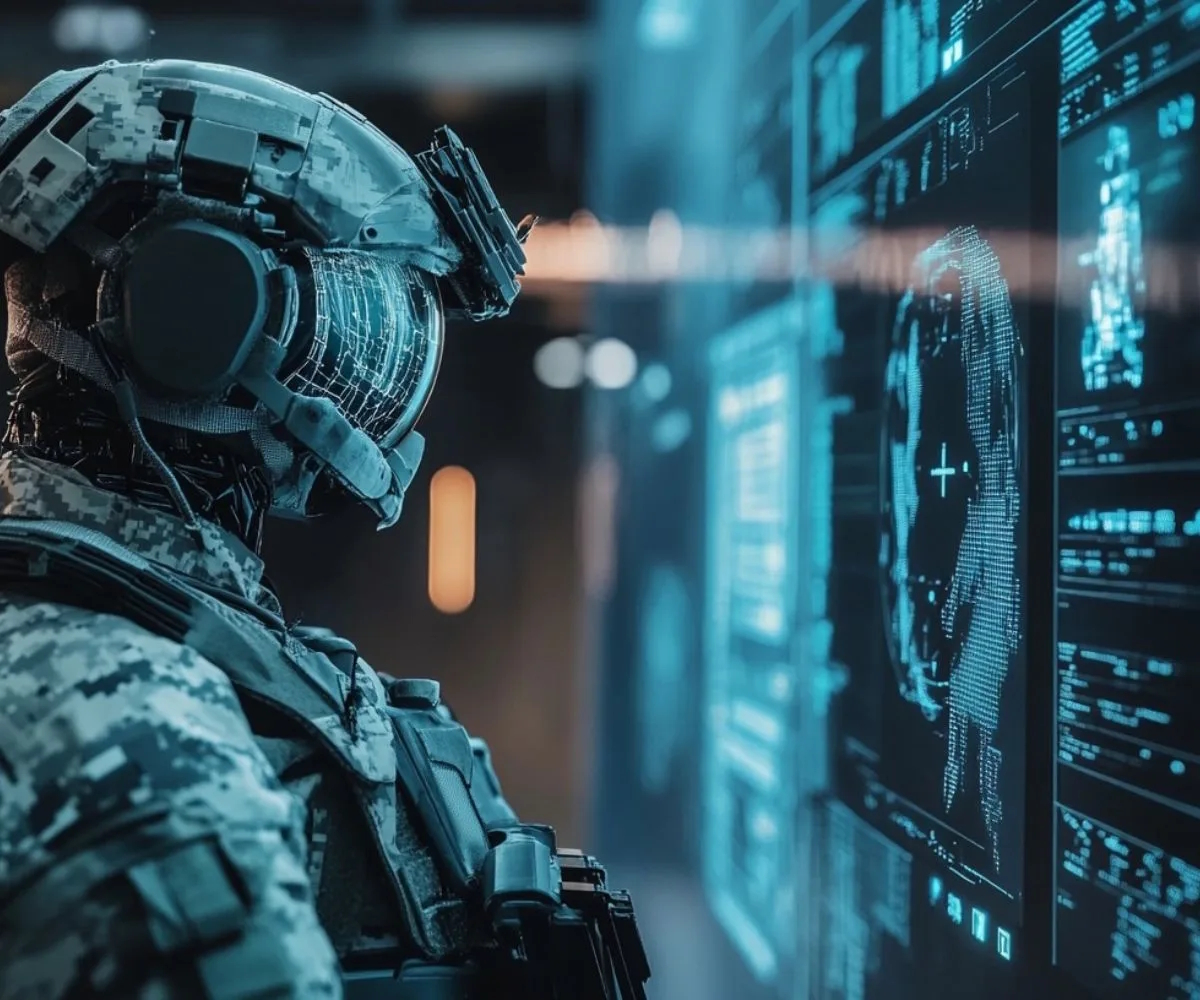
One of the most significant conceptual shifts introduced by artificial intelligence lies in the fact that its principal contribution increasingly consists not in performing isolated tasks more efficiently, but in reshaping the informational environment within which human decisions are made. This distinction may initially appear subtle, yet it represents a profound transformation in the role that computational systems occupy inside complex organisations. Traditional software was generally designed to automate clearly defined procedures according to predetermined rules. Contemporary AI systems, by contrast, are progressively becoming capable of integrating heterogeneous sources of information, identifying relationships across multiple domains and presenting structured interpretations that assist human operators in understanding situations whose complexity would otherwise remain extremely difficult to comprehend in real time.
Within military planning, this capability acquires particular importance because operational decisions rarely depend upon a single variable. A commander preparing an operation may simultaneously need to evaluate intelligence reports, logistical constraints, weather forecasts, satellite imagery, troop movements, communications reliability, terrain analysis, civilian activity and the likely behaviour of an adversary whose own actions continue to evolve throughout the decision-making process. None of these information streams exists in isolation; rather, each interacts continuously with the others, producing a dynamic environment in which the significance of any individual observation often depends upon countless contextual relationships. Artificial intelligence offers a means of organising this complexity into coherent analytical frameworks that support, rather than replace, human judgement.
It is for this reason that many researchers have begun to describe AI less as an autonomous decision-making system than as a cognitive infrastructure. Just as physical infrastructures such as transport networks or communication systems enable institutions to function more effectively without determining the objectives they pursue, cognitive infrastructures provide the informational architecture through which decisions can be formed more rapidly and with greater situational awareness. The value of artificial intelligence therefore lies not in transferring responsibility away from human decision-makers, but in enhancing their capacity to perceive connections, anticipate possible developments and evaluate alternative courses of action within increasingly complex operational environments.
Although military organisations provide one of the clearest examples of this transformation, the underlying principle extends far beyond defence. Similar forms of cognitive infrastructure are gradually emerging within healthcare, where clinicians integrate diagnostic information from multiple sources; within emergency management, where authorities coordinate responses to rapidly evolving crises; and within public administration, where governments increasingly rely upon data-intensive systems to support planning and resource allocation. In each of these contexts, artificial intelligence contributes less by producing decisions than by creating a richer and more coherent informational landscape within which informed human judgement can operate. The battlefield therefore serves not as an isolated application of AI, but as one of the earliest and most demanding environments in which this broader technological evolution can be observed.
The Human-in-the-Loop Principle
As artificial intelligence becomes increasingly capable of analysing information and generating sophisticated recommendations, one question inevitably emerges at the centre of public debate: who ultimately remains responsible for the decisions that follow? This issue has become particularly prominent in military contexts because the consequences of operational decisions may involve matters of life, security and international stability. Yet the question itself extends far beyond defence, reflecting one of the defining governance challenges associated with the broader deployment of artificial intelligence across contemporary institutions.
For this reason, many defence organisations have consistently emphasised the principle commonly described as human-in-the-loop, according to which artificial intelligence may assist, inform or recommend possible courses of action, but responsibility for consequential decisions continues to reside with appropriately authorised human operators. While the precise implementation of this principle varies according to operational context and technological capability, its underlying objective remains clear: ensuring that human judgement, accountability and ethical responsibility remain integral components of decision-making even as computational systems become increasingly sophisticated.
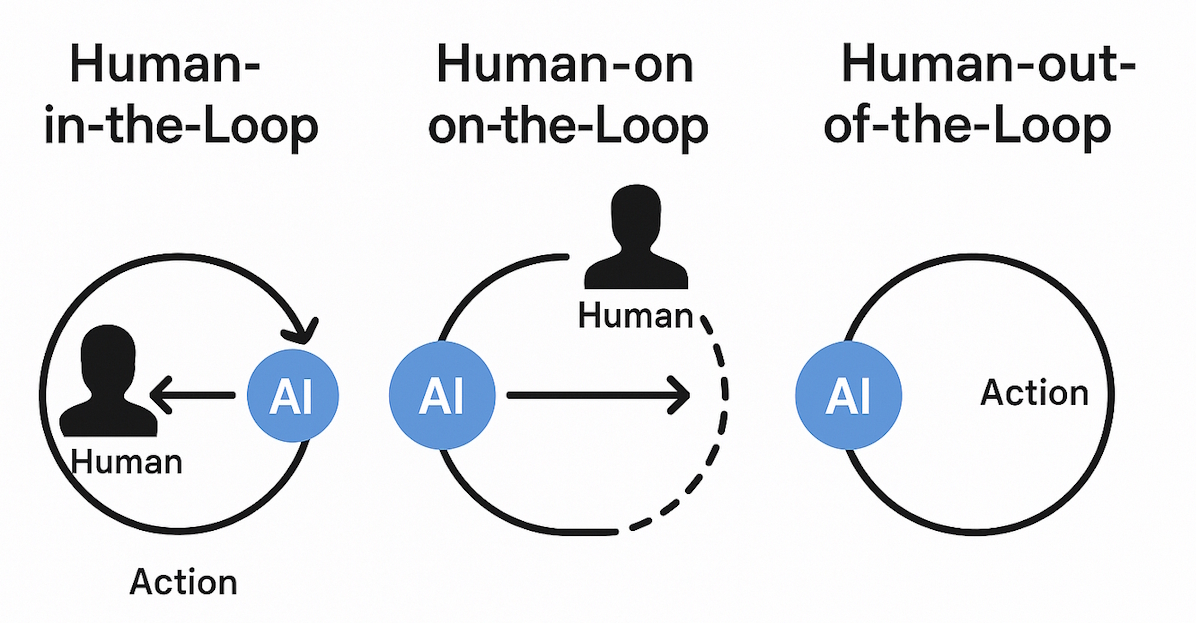
Maintaining meaningful human oversight, however, involves considerably more than simply requiring a person to approve an AI-generated recommendation. Effective supervision depends upon the ability of decision-makers to understand the basis upon which recommendations have been produced, recognise the limitations of the underlying models and retain sufficient situational awareness to challenge computational outputs whenever necessary. Human oversight therefore becomes a dynamic cognitive activity rather than a symbolic procedural step. The greater the analytical capability of artificial intelligence becomes, the more important it is that those responsible for final decisions possess both the expertise and the institutional authority required to evaluate AI-generated analyses critically rather than accepting them automatically.
This observation reveals a broader truth about the future relationship between humans and artificial intelligence. The central challenge is unlikely to consist simply in determining which tasks should remain under human control and which may be delegated to computational systems. Instead, institutions will increasingly need to design decision architectures in which human expertise and machine intelligence complement one another in ways that preserve accountability while exploiting the strengths of both forms of cognition. Military planning illustrates this challenge with exceptional clarity because of the gravity of its decisions, but similar considerations are already emerging across healthcare, aviation, financial regulation and many other sectors where artificial intelligence is progressively becoming embedded within critical organisational processes.
Beyond Defence: The Emergence of AI-Augmented Decision Systems
Although military applications often attract the greatest public attention, the technological principles underlying these developments are far from unique to defence. In reality, the incorporation of artificial intelligence into battlefield planning forms part of a much broader transformation affecting organisations whose effectiveness increasingly depends upon their ability to interpret vast and rapidly changing informational environments. The technologies being developed for military planning therefore offer valuable insight into a wider organisational evolution that is already extending across numerous areas of public administration, industry and scientific research.
Modern healthcare provides one particularly illustrative example. Hospitals routinely combine diagnostic imaging, laboratory results, patient histories, genomic information and continuously updated physiological data when making clinical decisions. Individually, each source contributes valuable information; collectively, they create an informational landscape whose complexity often exceeds the analytical capacity of any individual clinician working under significant time constraints. Artificial intelligence increasingly assists by integrating these diverse inputs, highlighting clinically relevant patterns and identifying possible diagnoses or treatment pathways that physicians subsequently evaluate within their broader professional judgement. The objective is not to automate medicine, but to strengthen the cognitive environment in which medical expertise operates.
Comparable developments are becoming visible throughout critical infrastructure management, disaster response, transportation networks and public governance. Emergency management agencies increasingly combine meteorological data, satellite observations, traffic information, communications networks and population movement patterns when responding to natural disasters. Energy operators integrate enormous streams of operational information to maintain stability across increasingly complex electrical grids. Financial institutions analyse global economic indicators, market behaviour and regulatory developments in real time. Across all these examples, the underlying technological pattern remains remarkably consistent: artificial intelligence functions as a system for organising complexity, allowing human decision-makers to navigate environments characterised by continuous change and extraordinary informational density.
This broader perspective suggests that military planning should perhaps be understood less as a specialised exception than as an early manifestation of a general organisational trend. Institutions of every kind are gradually moving towards forms of decision-making in which artificial intelligence serves as an additional cognitive layer supporting human expertise rather than replacing it. The battlefield simply represents one of the most demanding operational contexts in which this transformation has become visible, offering an opportunity to observe challenges and opportunities that many other sectors are likely to encounter as AI continues its gradual integration into increasingly complex institutional environments.
Governance, Ethics and Institutional Responsibility
As artificial intelligence becomes progressively integrated into systems that support strategic decision-making, technological capability alone can no longer be regarded as the principal measure of success. The effectiveness of these systems will increasingly depend upon the institutional frameworks within which they operate, the quality of the governance mechanisms that oversee them and the degree to which organisations are able to preserve accountability while benefiting from unprecedented computational capabilities. This observation is particularly evident in military environments, where decisions may carry profound humanitarian, legal and geopolitical consequences, but the underlying principle applies equally to every domain in which artificial intelligence assists human judgement under conditions of significant uncertainty.
One of the most important governance challenges concerns the question of trust. Decision-makers must be sufficiently confident in the analytical capabilities of artificial intelligence to incorporate its recommendations into their reasoning, yet they must simultaneously retain the professional independence required to question, reject or reinterpret those recommendations whenever circumstances demand it. Excessive scepticism may result in valuable analytical insights being ignored, whereas excessive confidence risks encouraging forms of cognitive dependence in which human oversight gradually becomes little more than a procedural formality. Designing institutions capable of maintaining this delicate balance is therefore emerging as one of the central organisational questions of the AI era.
Closely related to this issue is the growing importance of transparency and explainability. As computational models become increasingly sophisticated, ensuring that human operators understand the basis upon which recommendations are generated becomes progressively more difficult, particularly when advanced machine learning systems identify statistical relationships that are not immediately intuitive to their users. While complete interpretability may not always be technically achievable, institutions deploying artificial intelligence within high-consequence environments will need to develop governance mechanisms capable of ensuring that responsibility never becomes obscured behind algorithmic complexity. The objective is not merely to produce accurate recommendations, but to preserve decision processes that remain auditable, contestable and consistent with the legal and ethical principles governing the institutions in which they are deployed.
These considerations reveal that the future of artificial intelligence will depend as much upon institutional design as upon advances in computational capability. The organisations that derive the greatest benefit from AI are unlikely to be those that pursue the highest degree of automation, but rather those that successfully construct governance models capable of integrating machine-assisted analysis with human expertise, ethical judgement and organisational accountability. Military planning therefore provides an especially valuable illustration of challenges that many other institutions are likely to encounter as artificial intelligence continues its gradual incorporation into increasingly important domains of public and organisational decision-making.
Looking Beyond the Battlefield
It is often tempting to interpret technological developments through the specific circumstances in which they first emerge. Military applications, by their very nature, attract considerable public attention because they involve issues of national security, geopolitical competition and the potential use of force. Yet history repeatedly demonstrates that the broader significance of many technological innovations frequently lies not within their initial application, but in the underlying principles that subsequently reshape a far wider range of human activities. Artificial intelligence appears increasingly likely to follow this familiar historical trajectory.
The integration of AI into battlefield planning illustrates a challenge that extends well beyond defence: how can human organisations continue to make effective decisions when the quantity, diversity and speed of available information exceed the natural limits of human cognition? This question is no longer confined to military institutions. Governments responsible for managing increasingly interconnected societies, healthcare systems coordinating millions of patients, energy operators supervising complex infrastructure networks and emergency services responding to rapidly evolving crises all confront comparable forms of informational complexity. Although the operational contexts differ profoundly, the cognitive challenge remains remarkably similar. Decisions must be made quickly, responsibly and on the basis of information that no individual can realistically process without computational assistance.
Artificial intelligence therefore appears to be evolving into something more fundamental than a collection of specialised software tools. It is gradually becoming part of the cognitive architecture through which complex institutions perceive their operational environment, organise knowledge and support informed decision-making. This transformation does not diminish the importance of human expertise; if anything, it increases the value of experienced professionals capable of interpreting computational analyses within broader institutional, ethical and societal contexts. The more sophisticated artificial intelligence becomes, the greater the need for organisations capable of integrating technological capability with sound governance and responsible leadership.
From this perspective, the recent developments within the United States Army should not be understood primarily as an isolated military innovation, but as an early indication of a much broader institutional evolution that is likely to unfold across many sectors during the coming decade. Defence organisations simply provide one of the first environments in which these technologies are being deployed at significant scale under conditions of extreme complexity, allowing researchers, policymakers and society more generally to observe both the opportunities and the challenges associated with AI-supported decision-making before similar systems become commonplace elsewhere.
A work in progress
The incorporation of artificial intelligence into military planning represents a significant milestone in the broader evolution of AI, not because it signals the emergence of autonomous decision-making, but because it illustrates a more subtle and potentially more enduring transformation in the way complex organisations manage knowledge, interpret information and support human judgement. Behind the immediate headlines lies a deeper shift in which artificial intelligence is progressively becoming part of the cognitive infrastructure through which institutions understand rapidly changing environments and navigate levels of complexity that would otherwise remain beyond the reach of unaided human analysis.
What makes this development particularly noteworthy is that it reflects a departure from many of the assumptions that have traditionally shaped public discussion surrounding artificial intelligence. Rather than replacing human expertise, contemporary AI increasingly demonstrates its greatest value when operating alongside experienced professionals, organising information, revealing meaningful relationships and expanding the range of possibilities available for informed decision-making. The role of the human decision-maker is therefore not diminished but transformed, evolving from that of a processor of information towards that of an interpreter, evaluator and ultimately accountable authority within an increasingly sophisticated cognitive ecosystem.
This distinction is likely to become increasingly relevant as artificial intelligence continues its integration into other sectors characterised by high levels of organisational complexity. Healthcare, emergency management, scientific research, public governance, transportation and critical infrastructure are already beginning to experience similar transformations, each confronting the challenge of combining computational capability with institutional responsibility. Although the operational circumstances differ, the underlying question remains remarkably consistent: how can organisations use artificial intelligence to enhance human judgement without weakening the accountability, transparency and ethical foundations upon which responsible decision-making ultimately depends?
Whether viewed from the perspective of defence, governance or technological innovation, the recent expansion of AI within military planning should therefore be understood as part of a much wider evolution in the relationship between humans and intelligent computational systems. The defining contribution of artificial intelligence may ultimately prove not to be its ability to make decisions on our behalf, but its capacity to create richer, more coherent and more navigable cognitive environments within which human beings are able to make better decisions themselves. If this trajectory continues, the most enduring legacy of artificial intelligence will not be the automation of judgement, but the emergence of a new form of institutional intelligence in which human reasoning and computational analysis operate together as complementary elements of an increasingly integrated decision ecosystem.