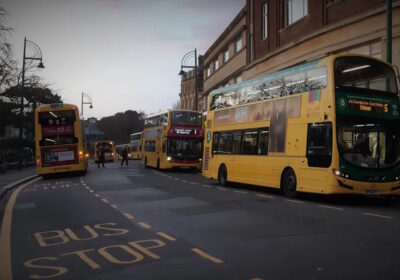
Public transportation has always been a delicate balance between efficiency, reliability, and simplicity. Fixed routes and timetables have historically provided predictability for passengers and operators alike, but they also impose rigidity on systems that operate within increasingly complex and fast-changing urban environments. Modern cities no longer follow uniform daily patterns: commuting hours vary, remote work alters peak demand, tourism fluctuates seasonally, and cultural or sporting events can transform mobility needs in a matter of hours. Yet in many cities, bus networks still operate as if…
Public transportation is the backbone of urban life. Every day, millions of people depend on buses, trams, metros, and trains to move through the complex arteries of the city. Yet, managing that flow efficiently has always been one of the biggest challenges in urban planning. Demand fluctuates with the hour, the weather, the economy, and even social events. Traditional forecasting models, based on historical averages or linear trends, can no longer capture this dynamic reality. This is where deep learning comes in, bringing unprecedented precision…
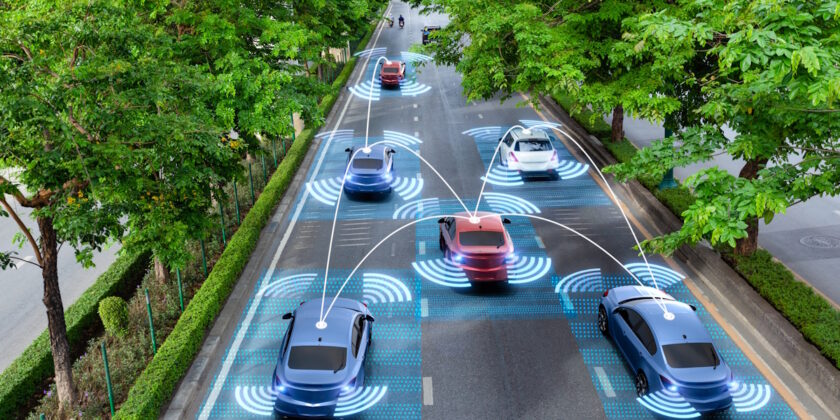
The evolution of urban mobility within the framework of smart cities is undergoing a paradigm shift—one that is increasingly driven by data and powered by the exponential capabilities of artificial intelligence (AI). Traditional urban planning models, largely reactive and infrastructure-centric, are being replaced by data-informed, proactive systems capable of not only identifying and interpreting mobility patterns, but also of projecting future demand, optimizing existing infrastructure, and informing inclusive and sustainable public policies. AI emerges not merely as a tool but as a strategic enabler…
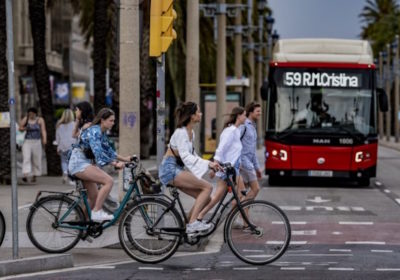
As the world embraces a new era of urban transformation, the bicycle has reemerged as a key player in the transition toward sustainable, inclusive, and human-centered mobility. Its ecological footprint is minimal, its infrastructure cost-effective, and its societal benefits substantial—from mitigating traffic congestion to fostering healthier lifestyles. In the context of smart cities, where digital technologies increasingly orchestrate urban life, the bicycle embodies a convergence of environmental responsibility and technological innovation. Yet, as cities modernize and cycling becomes more widespread, a persistent challenge remains:…
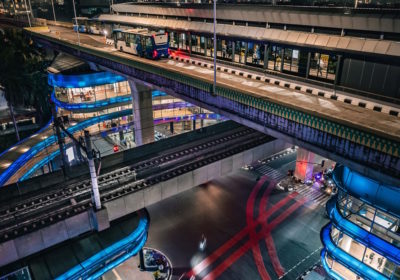
In an era marked by rapid urbanization, demographic expansion, and accelerating economic growth, cities are becoming increasingly complex ecosystems. These dynamics have intensified the demand for efficient, sustainable, and inclusive transportation systems. As the volume of both people and goods circulating through urban environments grows, the infrastructure that supports mobility becomes not only more critical but also more vulnerable to obsolescence. The evolution of transport technologies—ranging from rail to aviation—has rendered many traditional structures outdated, underutilized, or altogether abandoned. However, within this cycle of redundancy…
En los últimos años, la entrega ultrarrápida en entornos urbanos ha pasado de ser una novedad a convertirse en una expectativa cotidiana para millones de consumidores. Este fenómeno, impulsado por la expansión del comercio electrónico, la digitalización del consumo y el auge de plataformas logísticas altamente optimizadas, ha transformado radicalmente la dinámica del transporte de mercancías en las ciudades. Comestibles, medicamentos, artículos de tecnología, comidas preparadas y todo tipo de productos pueden ahora llegar a los hogares en menos de una hora, gracias a una…
En las primeras décadas del siglo XXI, las ciudades del mundo enfrentan un desafío sistémico en torno a la movilidad urbana: el colapso progresivo de los sistemas de transporte urbano derivados de la combinación de un crecimiento poblacional acelerado, una expansión urbana desordenada y un modelo de movilidad centrado en el automóvil particular. Las consecuencias de esta dinámica son múltiples y acumulativas: aumento exponencial de la congestión vial, incremento sostenido de accidentes graves y fatales, deterioro ambiental por emisiones contaminantes del parque automotor, y reproducción…