
Few scientific challenges illustrate the complexity of the natural world more clearly than the study of Earth’s climate. Unlike many physical systems that can be examined in relative isolation, the climate emerges from the continuous interaction of countless processes operating simultaneously across the atmosphere, oceans, land surfaces, ice sheets, biological ecosystems and human societies. Changes occurring within any one of these domains frequently propagate throughout the others, producing effects that may only become fully apparent months, years or even decades later. Understanding such a system therefore requires not only vast quantities of observational data but also the ability to recognise relationships whose scale and complexity extend well beyond the limits of direct human intuition.
Over the past several decades, remarkable progress in climate science has been driven by increasingly sophisticated numerical models capable of simulating the behaviour of the Earth’s atmosphere and oceans with extraordinary levels of detail. These models have become indispensable tools for understanding long-term climatic trends, evaluating future scenarios and informing public policy. At the same time, however, advances in Earth observation technologies have transformed the quantity of environmental information available to researchers. Satellites continuously monitor atmospheric composition, ocean temperatures, vegetation cover, glacier dynamics, soil moisture, cloud formation and countless additional variables, while ground-based sensor networks, weather stations, marine buoys and airborne instruments generate an uninterrupted stream of measurements that collectively describe the changing state of the planet in unprecedented detail. The challenge confronting climate science today is therefore no longer limited to acquiring information, but increasingly concerns how such immense volumes of heterogeneous data can be integrated into coherent scientific understanding.
It is within this context that artificial intelligence has begun to play an increasingly significant role. Rather than replacing the physical principles upon which climate science is founded, AI provides researchers with powerful new methods for analysing environmental information, accelerating computational workflows and identifying complex relationships that might otherwise remain hidden within extraordinarily large datasets. The rapid evolution of machine learning has opened possibilities that extend from improving weather prediction and monitoring ecosystem change to supporting the optimisation of renewable energy systems and enhancing the early detection of natural hazards. Artificial intelligence is therefore becoming less a substitute for climate science than a new scientific instrument through which the behaviour of an exceptionally complex planetary system can be explored with greater depth and precision.
Understanding the significance of this transformation requires moving beyond the familiar question of whether artificial intelligence can solve climate change. Such a formulation, while attractive from a public communication perspective, oversimplifies both the nature of AI and the character of the climate challenge itself. A more meaningful question concerns how intelligent computational systems can expand humanity’s capacity to observe, understand and respond to planetary processes whose complexity continues to exceed the analytical capabilities of traditional methods alone. It is this broader evolution in scientific understanding, rather than any promise of technological salvation, that defines the growing relationship between artificial intelligence and the future of climate research.
Why the Climate Is One of the Most Complex Systems We Study
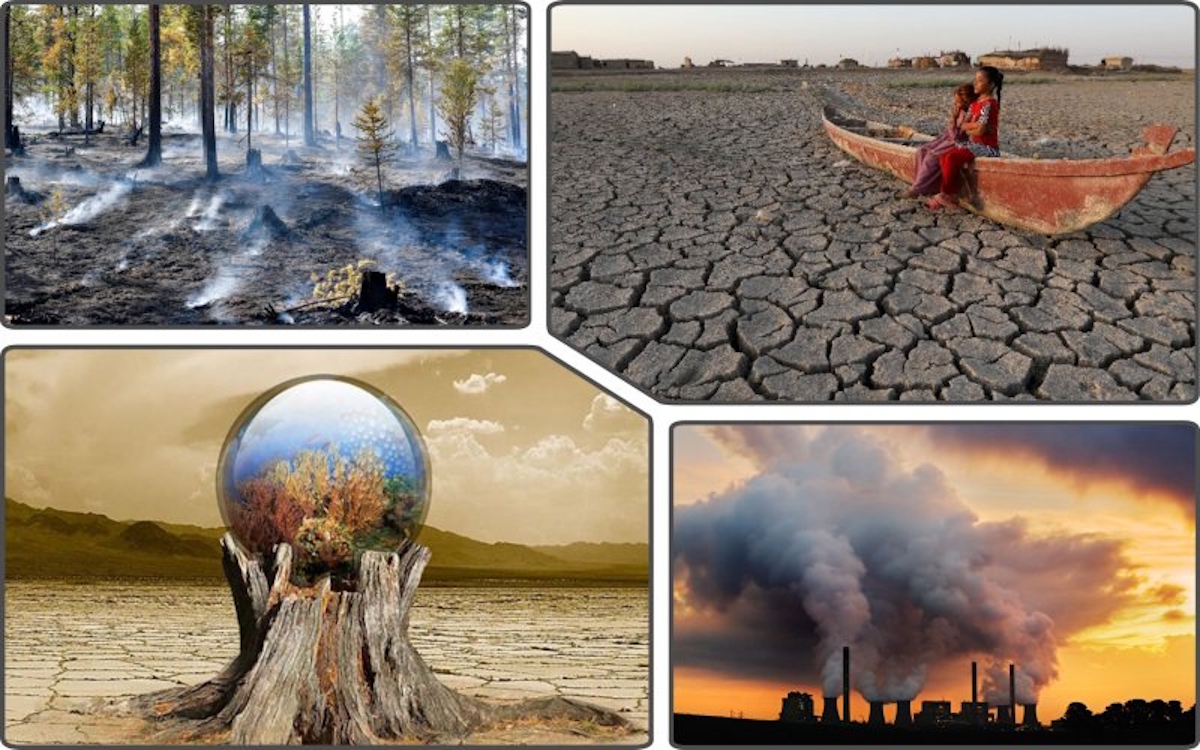
The Earth’s climate has often been described as a global system, yet this expression only begins to capture the extraordinary complexity that climate scientists confront in their daily work. Unlike many scientific problems that can be investigated by isolating individual variables under controlled conditions, the climate emerges from the continuous interaction of countless interconnected processes operating across multiple physical scales. Atmospheric circulation influences ocean currents, ocean temperatures affect cloud formation, vegetation modifies carbon exchange, polar ice alters planetary reflectivity and human activities increasingly reshape the composition of the atmosphere itself. Each component both influences and responds to the others, producing feedback mechanisms whose cumulative behaviour frequently defies simple intuition.
Adding further complexity, these interactions unfold across vastly different temporal horizons. Certain atmospheric processes evolve within hours, while changes affecting ocean circulation may develop over centuries. Seasonal variations overlap with long-term climatic oscillations, volcanic eruptions introduce sudden disturbances and human-induced greenhouse gas emissions gradually modify the underlying energy balance of the entire planet. Distinguishing meaningful long-term trends from natural variability therefore requires analysing immense quantities of observational data collected over extended periods, often combining information originating from satellites, weather stations, oceanographic measurements, geological records and increasingly sophisticated Earth observation systems.
For decades, numerical climate models have represented the principal scientific framework through which researchers have attempted to understand these interactions. Built upon the fundamental laws of physics, chemistry and fluid dynamics, these models simulate the behaviour of the Earth’s climate by solving extraordinarily complex mathematical equations that describe energy transfer, atmospheric circulation, ocean dynamics and numerous additional processes. The accuracy of these simulations has improved continuously as computational power has increased, yet they remain among the most demanding scientific calculations performed anywhere in the world. Even the largest supercomputers must make carefully considered approximations because the complete behaviour of the Earth’s climate cannot be represented at infinite resolution.
Artificial intelligence enters this landscape not by replacing these physical models but by complementing them in ways that have only recently become possible. Machine learning systems excel at identifying subtle statistical relationships across immense multidimensional datasets, allowing researchers to detect emerging patterns, accelerate certain computational processes and improve the interpretation of environmental observations generated by modern monitoring systems. In this sense, AI contributes a different form of scientific capability. Whereas traditional climate models explain how the Earth’s physical processes evolve according to established scientific principles, artificial intelligence assists researchers in navigating the overwhelming complexity of the information those processes continuously generate. Together, these complementary approaches are beginning to provide an increasingly detailed and dynamic understanding of one of the most intricate systems humanity has ever attempted to study.
From Climate Models to AI-Augmented Prediction
For more than half a century, numerical climate models have provided the scientific foundation upon which much of our understanding of climate change has been built. These models represent one of the most remarkable achievements of modern computational science, bringing together the laws of atmospheric physics, ocean dynamics, thermodynamics, radiation transfer and numerous additional scientific disciplines within highly sophisticated mathematical frameworks capable of simulating the evolution of the Earth’s climate across decades or even centuries. Their development has required continuous advances in both scientific understanding and computational capability, enabling researchers to investigate increasingly complex questions concerning the future behaviour of the planet under different environmental and socioeconomic scenarios.
Yet despite their extraordinary sophistication, traditional climate models inevitably face practical limitations. The climate system contains an almost unimaginable number of interacting processes, many of which occur at spatial or temporal scales too small to be represented directly within global simulations. Clouds, turbulence, vegetation dynamics, urban environments and countless other phenomena frequently require carefully designed approximations that balance physical realism against computational feasibility. As observational technologies continue to generate ever larger quantities of environmental data, another challenge has also become increasingly apparent: integrating this expanding body of information rapidly enough to improve both climate projections and shorter-term forecasting has become a task of exceptional analytical complexity.
Artificial intelligence is now beginning to complement these established modelling approaches in several important ways. Rather than replacing physical simulation, machine learning techniques are increasingly being used to accelerate computationally demanding calculations, improve the representation of processes that remain difficult to model directly and identify relationships within observational datasets that may not be immediately apparent through conventional analytical methods. In recent years, AI-assisted weather prediction systems have demonstrated impressive improvements in both speed and forecasting accuracy for certain applications, while hybrid approaches combining physical models with machine learning are beginning to emerge as a particularly promising direction for future climate research. The objective is not to substitute scientific understanding with statistical prediction, but to combine the explanatory power of physics with the pattern-recognition capabilities of modern artificial intelligence.
This convergence represents an important methodological evolution within climate science. Traditionally, researchers relied primarily upon models that attempted to reproduce the behaviour of the Earth’s climate by explicitly describing the physical processes involved. Artificial intelligence introduces an additional analytical perspective, capable of extracting useful information from enormous observational datasets while remaining grounded in the broader scientific framework established through decades of physical research. The result is a progressively richer form of environmental modelling in which computational intelligence and scientific theory reinforce one another, expanding humanity’s capacity to anticipate climatic change with greater precision than either approach could achieve independently.
Artificial Intelligence as a Planetary Observation System
If climate models provide humanity with a framework for understanding how the Earth’s climate behaves, observation provides the empirical foundation upon which that understanding depends. Over the past few decades, advances in satellite technology have transformed our ability to monitor the planet continuously, generating an unprecedented volume of information concerning atmospheric composition, ocean temperatures, ice sheet dynamics, forest cover, agricultural activity, cloud formation, sea-level change and countless additional environmental indicators. Never before has humanity possessed such a comprehensive view of the Earth’s changing systems, yet never before has the challenge of interpreting this information been so demanding.
Every day, Earth observation satellites collect enormous quantities of imagery and sensor data whose scientific value extends far beyond simple visual representation. Subtle variations in infrared radiation reveal changing surface temperatures, radar measurements monitor glacier movement with extraordinary precision, multispectral imagery detects vegetation health and atmospheric instruments identify the concentration of gases associated with both natural processes and human activity. Collectively, these observations form one of the largest scientific datasets ever assembled, continuously documenting the dynamic behaviour of the planet at a level of detail that would have been unimaginable only a generation ago. Extracting meaningful knowledge from this immense stream of information, however, increasingly requires analytical capabilities that extend beyond conventional methods of manual interpretation.
Artificial intelligence has emerged as a particularly valuable tool within this observational landscape because of its remarkable ability to analyse large collections of heterogeneous environmental data while identifying subtle spatial and temporal patterns that might otherwise remain unnoticed. Machine learning algorithms now assist researchers in detecting illegal deforestation, monitoring glacier retreat, identifying methane emissions, mapping wildfire progression, estimating crop productivity, observing coral reef degradation and analysing countless additional environmental processes across regional and global scales. In many cases, AI enables these analyses to be performed not only with greater speed but also with a level of consistency that would be extremely difficult to achieve through manual examination alone. Rather than replacing satellite observation, artificial intelligence expands its scientific usefulness by transforming vast quantities of raw environmental information into structured knowledge capable of informing both research and public policy.
Perhaps the most significant consequence of this evolution is that planetary observation is gradually becoming increasingly continuous, integrated and intelligent. Instead of analysing isolated environmental phenomena independently, researchers are beginning to combine multiple streams of observational data into unified representations of the Earth’s changing systems. Artificial intelligence plays a central role in this integration, helping scientists connect atmospheric conditions with ecosystem dynamics, hydrological processes, land use patterns and human activities in ways that reveal the complex interdependencies characteristic of the climate system itself. In doing so, AI contributes not only to more efficient environmental monitoring but also to a progressively more holistic understanding of the planet as an interconnected and continuously evolving system.
Supporting Better Decisions Across Society
The scientific advances enabled by artificial intelligence acquire their greatest significance when they begin to influence the practical decisions through which societies respond to environmental change. Improved climate understanding is valuable in its own right, yet its broader importance lies in the fact that governments, businesses, infrastructure operators and local communities increasingly depend upon reliable environmental information when planning investments, managing resources and preparing for future risks. Artificial intelligence therefore occupies an increasingly important position at the intersection between scientific knowledge and practical decision-making, helping transform complex environmental observations into information that can support more effective action across multiple sectors.
One of the clearest examples can be found within modern energy systems. The global transition towards renewable energy sources introduces new operational challenges because electricity generated from solar and wind resources depends upon continuously changing weather conditions. Maintaining stable and efficient electrical grids therefore requires increasingly accurate forecasts of cloud cover, wind intensity, seasonal demand and energy production across large geographical areas. Artificial intelligence is already contributing to these efforts by improving forecasting accuracy, optimising the operation of electrical networks and supporting more efficient integration of renewable energy into existing infrastructures. Similar developments are taking place within water resource management, where AI assists in predicting reservoir levels, monitoring drought conditions and supporting irrigation strategies that make more efficient use of increasingly scarce freshwater resources.
Agriculture represents another domain in which artificial intelligence is beginning to complement traditional environmental expertise. Farmers have always relied upon detailed knowledge of weather, soil conditions and seasonal cycles, but modern precision agriculture increasingly combines satellite imagery, environmental sensors, climate forecasts and machine learning algorithms to support decisions concerning irrigation, fertiliser application, crop selection and disease monitoring. These technologies cannot eliminate the uncertainties associated with agriculture, particularly as climate variability increases, but they can provide more detailed and timely information that enables producers to adapt more effectively to changing environmental conditions while reducing unnecessary resource consumption.
Across all these examples, a common principle becomes increasingly apparent. Artificial intelligence does not directly alter the Earth’s climate, nor does it eliminate the need for political decisions, technological innovation or international cooperation. Its principal contribution lies instead in improving humanity’s capacity to understand complex environmental systems and to make better-informed decisions within them. In this sense, AI functions less as a technological solution to climate change than as an increasingly sophisticated instrument for supporting the countless decisions through which societies seek to respond to one of the most complex challenges of the modern era.
The Limits of Artificial Intelligence in Addressing Climate Change

The growing enthusiasm surrounding the application of artificial intelligence to climate research has understandably encouraged a wide range of expectations concerning its future potential. As AI systems continue to demonstrate remarkable capabilities across scientific modelling, environmental monitoring and resource optimisation, it can become tempting to regard these technologies as a comprehensive solution to the climate crisis itself. Such an interpretation, however, risks misunderstanding both the nature of artificial intelligence and the fundamental character of climate change. The challenges associated with a changing climate do not arise primarily from a lack of computational capability or insufficient environmental data. Rather, they emerge from the complex interaction of physical processes, economic systems, political decisions, technological transitions and patterns of human behaviour that extend far beyond the domain of any single technological innovation.
Artificial intelligence can undoubtedly improve many aspects of climate science and environmental management, yet it cannot by itself reduce atmospheric concentrations of greenhouse gases, construct renewable energy infrastructure, transform industrial production or negotiate international agreements concerning emissions and resource use. Every meaningful response to climate change ultimately depends upon choices made by governments, businesses, scientific institutions and societies as a whole. AI may contribute valuable analyses, improve forecasting accuracy and identify more efficient strategies for managing environmental systems, but the implementation of those strategies remains fundamentally a matter of governance, investment and collective decision-making. The distinction is important because it reminds us that better information, however valuable, does not automatically translate into effective action.
There are also practical limitations associated with artificial intelligence itself that deserve careful consideration. Training and operating advanced AI systems requires substantial computational resources, large-scale data infrastructures and significant quantities of electrical energy. Although continuing improvements in hardware efficiency and algorithm design are gradually reducing the environmental footprint of machine learning, the expansion of AI must itself be managed responsibly if it is to contribute positively to broader sustainability objectives. Researchers are therefore increasingly exploring methods for developing more energy-efficient models, improving data centre performance and integrating artificial intelligence into infrastructures powered by renewable energy sources. In this respect, AI becomes not only part of the solution but also part of the broader environmental system whose sustainability it seeks to improve.
Perhaps the most important limitation, however, concerns the distinction between prediction and decision. Artificial intelligence can estimate future climatic conditions with increasing sophistication, identify emerging environmental risks and simulate the probable consequences of alternative policy choices. Yet it cannot determine which societal priorities should take precedence, how competing economic interests ought to be balanced or what ethical responsibilities current generations owe to those that will inherit the long-term consequences of climate change. These remain fundamentally human questions that belong within the domains of democratic governance, scientific judgement and public deliberation. Artificial intelligence may strengthen the quality of the information available to decision-makers, but responsibility for acting upon that information ultimately continues to reside with human institutions.
Towards Planetary Decision Intelligence
As climate science, environmental monitoring and artificial intelligence continue to evolve together, a broader transformation gradually begins to emerge. Increasingly, the objective is no longer simply to collect more environmental data or to construct more sophisticated predictive models in isolation. Instead, researchers are moving towards integrated systems capable of combining observation, prediction and decision support within coherent analytical frameworks that assist societies in responding more effectively to planetary-scale challenges. Artificial intelligence occupies a particularly important position within this evolution because of its ability to connect information originating from multiple scientific disciplines while supporting the interpretation of relationships that extend across environmental, economic and social systems simultaneously.
This emerging capability may be understood as the development of what could be described as planetary decision intelligence: the capacity to integrate vast quantities of environmental knowledge into forms that support more informed and timely decisions at local, national and global scales. Such an approach recognises that climate change cannot be understood through atmospheric science alone, nor through economics, ecology or engineering considered independently. Rather, it requires continuous interaction between multiple forms of expertise, each contributing complementary perspectives to a problem whose complexity transcends traditional disciplinary boundaries. Artificial intelligence does not replace this diversity of knowledge; instead, it provides new mechanisms through which these different perspectives can be analysed together within increasingly comprehensive representations of the Earth’s changing systems.
Examples of this transition are already becoming visible. Environmental monitoring platforms increasingly integrate satellite observations with ground-based sensors, oceanographic measurements, biodiversity assessments and socioeconomic indicators. Energy planning combines climate projections with infrastructure modelling, consumption forecasts and technological innovation. Agricultural management increasingly draws upon meteorological predictions, soil analysis, hydrological data and ecological monitoring simultaneously. Across each of these domains, artificial intelligence contributes not by generating environmental policy independently but by helping institutions navigate levels of informational complexity that continue to expand as our scientific understanding of the planet grows more detailed. The result is a gradual evolution from isolated analytical tools towards integrated decision environments capable of supporting more coherent responses to environmental change.
Looking further ahead, the significance of this evolution may extend well beyond climate research itself. Humanity increasingly faces global challenges characterised by deep interdependence, including biodiversity loss, freshwater management, food security, public health and the resilience of critical infrastructure under changing environmental conditions. Each of these domains involves complex interactions across natural and human systems, making them particularly well suited to analytical approaches that combine scientific modelling with advanced computational intelligence. Artificial intelligence therefore appears likely to become one of the principal instruments through which societies develop a more integrated understanding of planetary processes, enabling institutions to respond not simply with greater speed, but with greater coherence and foresight.
In Summary
The relationship between artificial intelligence and climate science illustrates one of the most significant characteristics of the current technological era: the growing capacity of intelligent computational systems to assist humanity in understanding forms of complexity that increasingly exceed the limits of conventional analytical approaches. The Earth’s climate represents one of the most intricate systems ever studied, shaped by countless interacting physical, biological and human processes whose behaviour unfolds across multiple spatial and temporal scales. Artificial intelligence does not simplify this complexity, nor does it eliminate the uncertainty that inevitably accompanies scientific investigation. Instead, it provides researchers with new methods for observing, analysing and interpreting an extraordinary volume of environmental information, thereby expanding the scientific tools available for understanding our changing planet.
Perhaps the most important lesson emerging from this evolution is that artificial intelligence derives its greatest value not from replacing established scientific methods but from complementing them. Numerical climate models grounded in physical principles remain indispensable for explaining the mechanisms governing the Earth’s climate, while observational systems continue to provide the empirical foundation upon which scientific understanding depends. Artificial intelligence strengthens both of these pillars by accelerating analysis, identifying subtle patterns and supporting increasingly integrated forms of environmental research that would have been difficult to achieve through traditional approaches alone. Its contribution is therefore not one of substitution but of augmentation, enriching humanity’s capacity to investigate planetary processes with greater depth and precision.
At the same time, the growing sophistication of AI should not obscure the broader reality that climate change remains, above all, a societal challenge rather than a purely technological one. Scientific understanding, however advanced, acquires practical significance only when translated into effective governance, responsible policy, technological innovation and sustained international cooperation. Artificial intelligence may significantly improve the quality of the knowledge upon which such decisions are based, but it cannot determine the collective choices through which societies respond to environmental change. The responsibility for those decisions remains firmly within the human domain.
Viewed from this broader perspective, the role of artificial intelligence in climate science should perhaps be understood less as an attempt to solve the climate crisis than as part of a much longer historical process through which humanity has continually developed more sophisticated instruments for observing and understanding the natural world. Telescopes expanded our knowledge of the cosmos, microscopes revealed previously invisible biological structures and satellites transformed our ability to monitor the Earth as a single interconnected system. Artificial intelligence now joins this lineage as another scientific instrument that extends not our physical senses alone, but also our capacity to interpret the immense complexity of the planet we inhabit. If the decades ahead are to require wiser environmental decisions, they will also require deeper understanding, and it is precisely within that domain that artificial intelligence may make one of its most enduring contributions.