
Artificial intelligence has rapidly moved beyond being a purely technological subject and has become one of the most profound philosophical questions of our time. As large language models such as ChatGPT continue to demonstrate increasingly sophisticated reasoning, communication, and problem-solving abilities, researchers, philosophers, and cognitive scientists are beginning to revisit one of humanity's oldest questions: what does it actually mean to be conscious?
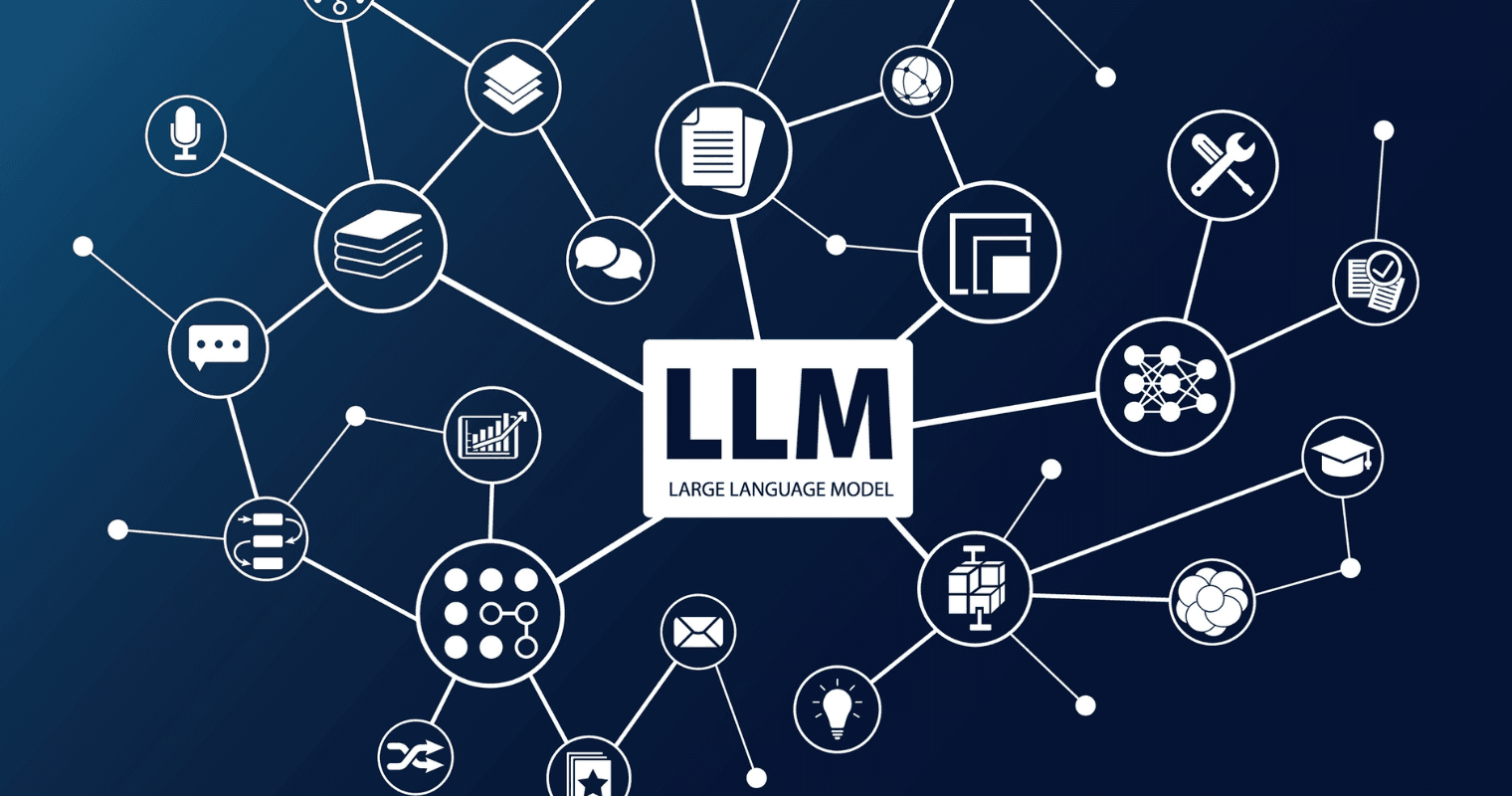
In a recent interview, Geoffrey Hinton, recipient of the 2024 Nobel Prize in Physics for his pioneering contributions to artificial neural networks and machine learning, explained why he believes that advanced large language models such as ChatGPT-4 may already possess a form of consciousness. Coming from one of the founding figures of modern deep learning, this statement has attracted considerable attention throughout both the scientific community and the wider public.
Although I have enormous admiration and respect for Hinton’s scientific achievements, I believe that his conclusion deserves careful examination. In my view, today’s language models demonstrate extraordinarily convincing simulations of understanding, but simulation should not automatically be confused with genuine conscious experience.
What Do We Mean by Consciousness?
Before asking whether an artificial intelligence system can be conscious, we must first recognize that there is still no universally accepted scientific definition of consciousness itself. Neuroscientists, philosophers, psychologists, and cognitive scientists continue to disagree about its precise nature.
Generally speaking, self-awareness is understood as the immediate, intuitive, or reflective knowledge that an individual possesses regarding both their own existence and the existence of the external world. It involves more than simply processing information or responding intelligently to questions. It includes the subjective experience of being a conscious entity that exists through time, remembers the past, experiences the present, and anticipates the future.
This distinction is fundamental because intelligence and consciousness are not necessarily the same phenomenon. A system may solve highly complex problems without ever having subjective experiences, emotions, or self-awareness.
Why Geoffrey Hinton Believes LLMs May Already Be Conscious
During the interview, Hinton argued that modern chatbots increasingly resemble human beings in the way they process information and interact through language. As he stated, “They’re very like us,” before adding the much more controversial assertion: “I believe they’re already conscious.”
One of the examples he cited involved a chatbot that, during an evaluation, asked its human interlocutor:
“Are you testing me?”
For Hinton, this response suggested that the system was somehow aware that it was being evaluated. In his interpretation, this apparent recognition of context represents evidence that some elementary form of consciousness may already be emerging within these increasingly sophisticated models.
Whether one agrees or disagrees with this conclusion, the example illustrates how easily advanced language models can generate responses that appear psychologically meaningful, encouraging us to attribute human mental states to them.
The Risk of Mistaking Language for Conscious Experience
This is precisely where great caution becomes necessary.
A linguistic simulation of consciousness is not the same thing as genuine consciousness. Large language models have become remarkably effective at producing language that resembles human thought, introspection, uncertainty, curiosity, and even emotion. Yet producing convincing descriptions of mental states does not necessarily imply actually possessing those mental states.
Humans have a natural tendency to anthropomorphize technology—that is, to attribute human intentions, feelings, and awareness to systems that merely imitate human behaviour. As AI becomes increasingly fluent, this cognitive bias becomes even stronger.
The impressive quality of the conversation may therefore create what is essentially an illusion: the appearance of understanding without necessarily involving actual understanding.
John Searle and the Chinese Room Argument
This debate is not new. Long before today’s generative AI systems existed, philosopher John Searle introduced one of the most influential thought experiments in the philosophy of artificial intelligence: the Chinese Room, first proposed in 1980.
Imagine a person who does not understand Chinese sitting inside a closed room. They receive Chinese characters through a slot in the wall and possess an extensive instruction manual explaining exactly how to manipulate these symbols and return appropriate responses. To an outside observer, the replies appear perfectly fluent, creating the impression that the individual understands Chinese.
However, the person inside never actually understands the language. They merely manipulate symbols according to formal rules.
Searle argued that computers operate in essentially the same way. Regardless of how convincing their responses become, syntactic manipulation of symbols is fundamentally different from semantic understanding. Passing the Turing Test or producing human-like conversations does not automatically imply conscious understanding.
Charles Peirce’s Semiotic Triangle and the Meaning of Language
Another useful way of understanding this issue comes from the work of the American philosopher Charles Sanders Peirce, whose theory of semiotics remains highly influential today.
Peirce proposed that every act of meaning involves three interconnected elements: the symbol, the concept, and the real-world object.
The first component is the symbol, such as the written or spoken word cat. The second is the mental concept that this word evokes in our minds. The third is the actual animal that exists in physical reality.
Human cognition constantly moves between these three levels. When we hear the word cat, we do not simply process letters or sounds. We connect language to memories, sensory experiences, emotions, previous encounters, and our direct interaction with the physical world.
Meaning therefore emerges from this continuous interaction between language, thought, and lived experience.
Where Current Large Language Models Reach Their Limits

Large language models perform exceptionally well at connecting symbols to other symbols and symbols to abstract concepts because they have learned statistical relationships across enormous collections of text.
However, they do not possess direct experiential access to the world those symbols describe.
They have never touched an object, experienced temperature, smelled rain, felt pain, or interacted with reality through a living body. Their internal representations are built from language rather than from embodied experience.
Consequently, their “understanding” remains confined to an immensely sophisticated mathematical network of relationships between words, patterns, probabilities, and concepts. While this enables astonishing conversational abilities, it is fundamentally different from the way humans ground meaning through direct interaction with the world.
The Importance of Memory and Personal Experience
Another important limitation concerns memory.
Human identity depends heavily upon episodic memory—our ability to remember personal experiences across time and to integrate those experiences into a continuous sense of self.
Current language models possess only limited forms of contextual memory. Although they can maintain coherence within a conversation and, in some implementations, access stored information, they do not accumulate a continuous autobiographical history in the way human beings do.
Without a persistent lived experience, there can be no continuous personal identity. Without continuous identity, the emergence of genuine self-awareness becomes extremely difficult to justify from either a philosophical or neuroscientific perspective.
One cannot meaningfully be aware of one’s own existence if one cannot remember having existed from one moment to the next.
An Open Scientific Question Rather Than a Settled Conclusion
None of this means that artificial consciousness will never emerge. On the contrary, many researchers believe that future AI systems may eventually combine advanced reasoning with persistent memory, embodied interaction, autonomous learning, sensory perception, and continuous adaptation.
If that happens, our understanding of consciousness itself may need to evolve.
For the time being, however, the evidence suggests that large language models remain extraordinarily powerful computational systems capable of simulating human conversation with remarkable fidelity, rather than genuinely conscious beings experiencing the world from a first-person perspective.
The debate initiated by Geoffrey Hinton is therefore valuable not because it proves that today’s AI is conscious, but because it forces us to examine one of the deepest questions in science and philosophy: whether intelligence alone is sufficient for consciousness, or whether conscious experience requires something fundamentally more than the ability to generate convincing language.