Cities are increasingly living on the edge. Climate change, rapid urbanization, and fragile infrastructure have made natural and human-made disasters more frequent and more destructive. Floods, heatwaves, wildfires, earthquakes, and pandemics now test the resilience of urban systems on a regular basis. While traditional risk management relies on historical data and reactive planning, artificial intelligence introduces a new paradigm: learning before the next disaster happens. By combining prediction, simulation, and adaptive decision-making, AI is turning resilience from an emergency response strategy into a continuous learning process.
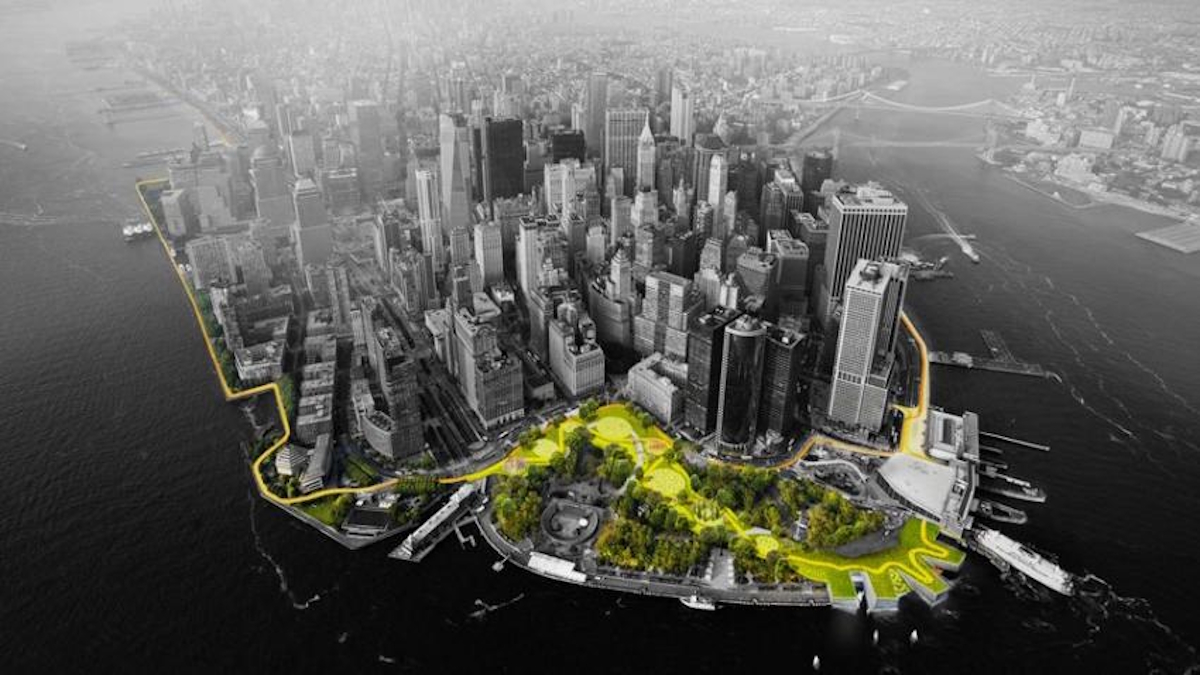
Resilience begins with foresight. Machine learning algorithms can process enormous volumes of environmental, social, and infrastructural data to identify early warning signals. For instance, AI models trained on meteorological and hydrological datasets can forecast floods days in advance, predicting not only when and where water will rise but how it will spread through the city’s drainage systems. This information allows authorities to prepare evacuation routes, deploy barriers, and alert vulnerable populations proactively, turning reaction time into preparation time.
Similarly, climate analytics powered by AI help cities anticipate extreme heat or air quality events by correlating temperature trends, vegetation density, and pollution data. In wildfire-prone regions, satellite imagery combined with deep learning can detect heat anomalies and vegetation dryness, allowing intervention before flames reach urban boundaries. The goal is not only to forecast disasters but to understand the interconnected vulnerabilities that amplify their impact: poverty, population density, poor infrastructure, and lack of green space.
The concept of urban digital twins is becoming a cornerstone of AI-driven resilience. These virtual replicas of the city integrate real-time sensor data with predictive models to simulate potential crises, from flooding to traffic disruption or energy failure. Urban planners can test “what if” scenarios safely in digital space: What if a river overflowed after 48 hours of rain? How would hospitals, roads, and power lines respond? Which neighborhoods would need the fastest assistance? These simulations help refine emergency plans and infrastructure design long before any real event occurs.
AI also enhances real-time disaster management once an event begins. During earthquakes or building collapses, drones equipped with computer vision can map damage, locate survivors, and relay data to command centers instantly. Machine learning models analyze this visual information to prioritize rescue operations where chances of survival are highest. In hurricanes or power outages, AI-driven logistics platforms optimize the allocation of resources, from ambulances to generators, ensuring that help reaches the right places at the right time.
Beyond physical resilience, AI strengthens social resilience by identifying at-risk communities before disaster strikes. Predictive analytics can reveal patterns of vulnerability based on income, housing type, age demographics, and access to healthcare. These insights allow policymakers to design targeted preparedness programs, such as cooling centers in low-income districts or early evacuation support for elderly populations. By combining social and environmental data, cities can respond to crises in ways that are both efficient and equitable.
However, as with all technologies, the use of AI for resilience must be guided by ethical and governance principles. Predictive models rely on massive amounts of data, some of which can be sensitive, such as health or mobility records. Clear privacy standards, anonymization protocols, and community consent are essential to ensure that risk intelligence does not turn into surveillance. Transparency in how algorithms assess vulnerability and prioritize resources builds trust among citizens and institutions alike.
Interoperability and collaboration are also key. Disasters rarely respect administrative boundaries, yet data systems often do. Cities need to develop shared resilience platforms that allow regional, national, and even international coordination. AI thrives on data diversity, the more connected the datasets, the more accurate the predictions. Partnerships between governments, research institutions, and private firms can accelerate learning and innovation across borders.
Training and human capacity remain essential. AI can process signals, but it is human judgment that gives them meaning. Urban resilience depends not only on algorithms but on people who know how to interpret and act on them. Continuous training of emergency managers, planners, and decision-makers ensures that technology strengthens, rather than replaces, institutional expertise.
The promise of AI-driven resilience is not to eliminate disaster, that will never be possible, but to transform how cities experience it. Instead of being shocked by each new crisis, intelligent cities can learn, adapt, and recover faster every time. They evolve through experience, using data as memory and AI as foresight.
In doing so, they embody the essence of resilience: the ability to endure, to learn, and to grow stronger with every challenge.
In the coming decades, the most resilient cities will not necessarily be the wealthiest or most technologically advanced, but those that combine intelligence with empathy, foresight with inclusion.
Because the true strength of a city is not measured by how it withstands disaster, but by how wisely it prepares for it.