
Urban waste is one of the fastest-growing challenges of modern cities, straining infrastructure, budgets, and the environment. As volumes increase and sustainability goals become more urgent, traditional waste management models are no longer sufficient. Artificial intelligence is enabling a new approach, one that transforms waste collection, sorting, and recycling into intelligent, data-driven systems capable of adapting to how cities actually generate and manage waste
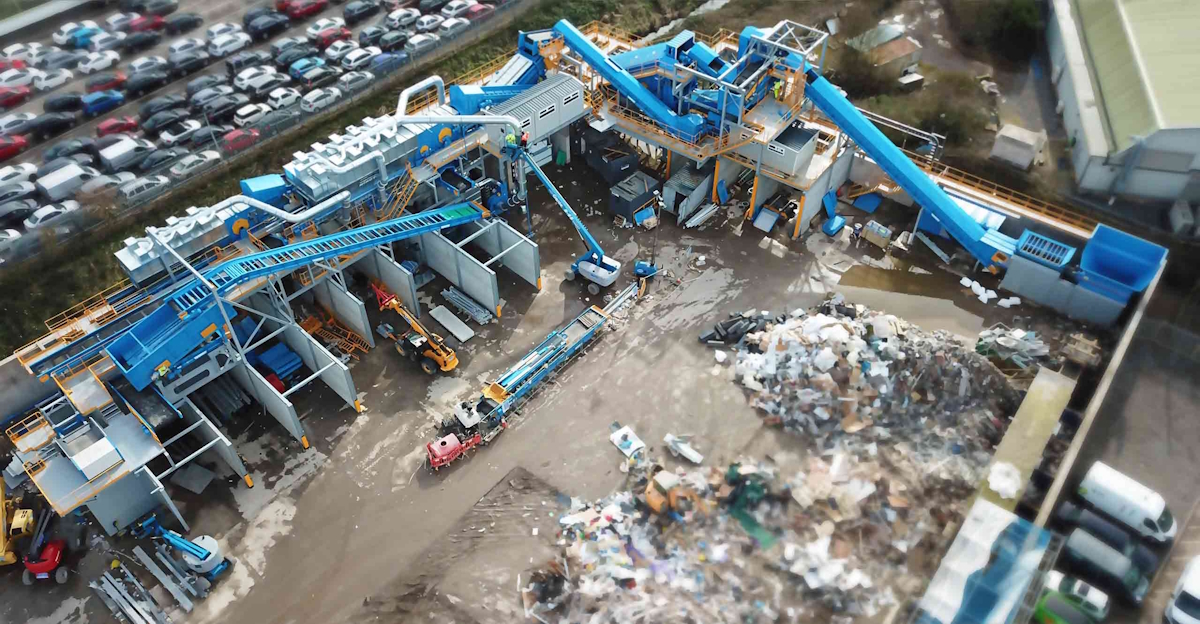
Modern cities are generating more waste than at any other point in history. Population growth, rising consumption, urban densification, and increasingly complex product lifecycles have turned waste management into one of the most pressing operational and environmental challenges facing cities today. According to the World Bank, urban areas worldwide produce more than two billion tons of solid waste annually, a figure projected to increase by up to 70 percent by 2050 if current trends continue. Left unmanaged, this growing volume of waste threatens public health, strains municipal budgets, and accelerates environmental degradation.
As artificial intelligence becomes embedded across urban systems, a new paradigm is emerging: Waste Management 4.0. In this model, waste is no longer treated as a passive byproduct to be collected and disposed of, but as a dynamic flow of materials that can be measured, predicted, optimized, and reintegrated into the urban economy. Through the combination of data, sensors, connectivity, and machine learning, waste management evolves into an intelligent, adaptive system aligned with sustainability and circular economy objectives.
Traditional waste management systems are largely reactive. Collection routes follow fixed schedules, containers are emptied regardless of their actual fill levels, and problems such as overflowing bins or illegal dumping are often addressed only after complaints are received. This approach leads to inefficient use of vehicles and personnel, unnecessary fuel consumption, higher emissions, and inconsistent service quality across neighborhoods. Artificial intelligence introduces predictive intelligence into this process. By analyzing data from smart containers, GPS-enabled collection trucks, weather forecasts, historical generation patterns, and citizen reports, machine learning algorithms can determine precisely when and where waste needs to be collected, optimizing routes and resources in near real time.
At the heart of this transformation lies the smart waste bin. Equipped with sensors that measure fill levels, temperature, vibration, and in some cases material composition, these containers continuously transmit data to centralized management platforms. AI systems aggregate and analyze this information to identify patterns of waste generation across districts and time periods. Over weeks and months, the system learns how different neighborhoods behave, detecting peaks after weekends, holidays, or major public events. Collection schedules are then adjusted dynamically, reducing unnecessary trips, preventing overflows, and improving overall cleanliness. The outcome is a more efficient service with fewer trucks on the road, lower operating costs, reduced emissions, and visibly cleaner public spaces.
Artificial intelligence is also reshaping recycling and sorting facilities, where automation and computer vision are dramatically improving efficiency and accuracy. Advanced vision systems use cameras, hyperspectral sensors, and deep learning models to identify materials based on shape, color, texture, and chemical signature. These systems can classify waste items in milliseconds, directing robotic arms to separate plastics, metals, glass, paper, and organic matter with a level of speed and consistency that far exceeds manual sorting. This reduces contamination in recycling streams, increases material recovery rates, and improves the economic viability of recycling operations.
In more advanced facilities, AI models are being trained to recognize complex and composite materials, such as multilayer packaging or mixed-material products, which have traditionally been difficult to recycle. By identifying these materials accurately, AI enables the development of new recovery processes and supports innovation in material reuse. The data generated by AI-powered sorting systems also feeds back into municipal decision-making, allowing authorities to track recycling performance, detect systemic weaknesses, and design targeted policy interventions or public awareness campaigns.
Beyond physical infrastructure, artificial intelligence is playing a growing role in citizen engagement and behavioral change. Smart city platforms and digital assistants can provide residents with personalized reminders about collection days, guidance on how to sort specific items, and real-time feedback on their recycling performance. Some cities use AI-driven chatbots to answer common questions such as where to dispose of hazardous waste or how to recycle electronics. Others experiment with incentive-based systems that reward sustainable behavior, using gamification to encourage participation and long-term habit formation. By reducing confusion and increasing convenience, AI helps close the gap between infrastructure capacity and citizen behavior.
Despite its promise, the transition to AI-driven waste management comes with challenges that must be addressed thoughtfully. Implementing smart waste systems requires significant investment in sensors, connectivity, data platforms, and system integration. Moreover, waste-related data, while seemingly innocuous, can still reveal patterns about household behavior or commercial activity. Robust data governance frameworks are essential to ensure anonymization, secure storage, and transparent usage. Public trust depends on clear communication about what data is collected, how it is used, and who has access to it.
Equally important is the social dimension of automation. While robotics and AI can take over repetitive, dirty, and hazardous tasks, they should not displace human workers without a transition strategy. Human expertise remains essential for system supervision, maintenance, data interpretation, and community engagement. The most resilient waste management systems are those that combine automated efficiency with human oversight, retraining workers to take on higher-value roles rather than removing them from the system.
The environmental benefits of AI-driven waste management are already becoming tangible. Optimized routing reduces fuel consumption and carbon emissions, real-time monitoring helps prevent illegal dumping and contamination, and improved recycling efficiency conserves raw materials and energy. Over time, these incremental improvements compound into significant sustainability gains. As cities commit to climate neutrality and circular economy strategies, artificial intelligence provides the analytical backbone needed to measure progress and continuously improve outcomes.
In the long term, Waste Management 4.0 represents more than a technological upgrade; it signals a shift in how cities perceive and govern waste. By treating waste as data, cities can understand its sources, flows, and transformation pathways. With AI as a partner, waste becomes predictable, recoverable, and increasingly avoidable. The intelligent city of the future will not only manage waste more efficiently, but will also learn from it, using insight and feedback to reduce generation at the source and move closer to a truly circular urban system.