

The IDHUS Institute is developing the Smart City Cohesive Model (SCCM), a framework for transforming our urban environments into Smart Cities using the most disruptive technologies and integration and development mechanisms. The aim is to enable our cities to provide a high quality of life, be environmentally friendly, and optimize the resources necessary for all who inhabit and use them.
 Disruptive Technologies and Intelligent Management Systems for Urban Transformation
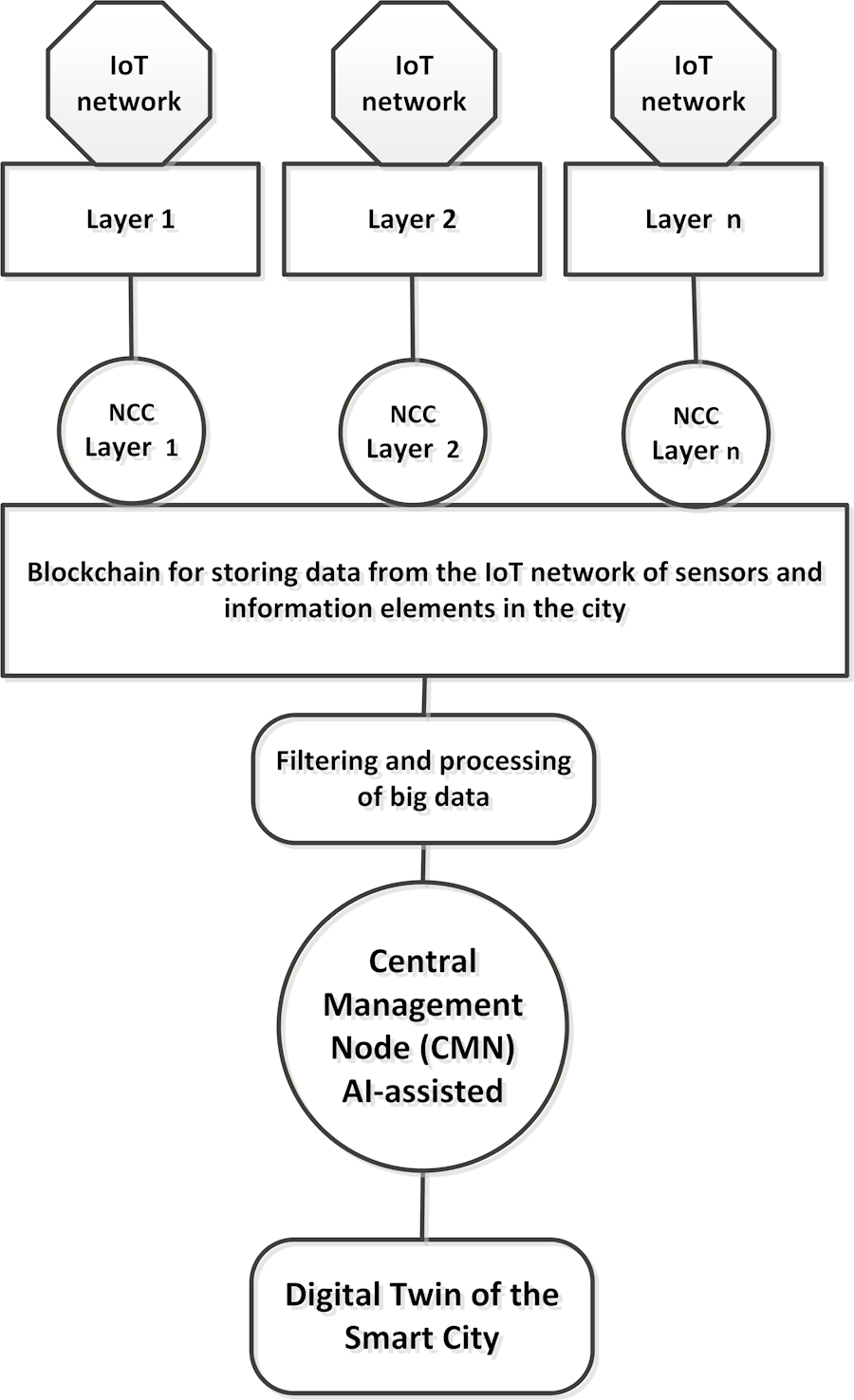
The SCCM is a model for planning and developing the set of systems, technologies, and applications that facilitate the transformation of a city into a Smart City. It is organized and structured in different layers or levels that are interconnected, all of which are coordinated by a central data processing and management node. From this central hub, all parameters and data collected by the various infrastructures that form part of the city’s services and operational elements can be monitored.
Each control and management layer within the SCCM is coordinated by its own communications and data processing node (for example, the ecosystem layer, which manages all the “green” areas of a city such as parks, trees, and landscaped zones). All data collected through IoT networks, communications, and monitoring systems for these elements are processed and supervised within their own Layer Central Node (LCN). Then, all these layer-level processing nodes are, in turn, regulated and coordinated by a central node managed by artificial intelligence (Global Central Node – GCN), which assists technical staff and city managers in making sense of the millions of data packets, information, and content generated daily by a city.
 A Blockchain-Based Platform for Managing the Cities of the Future
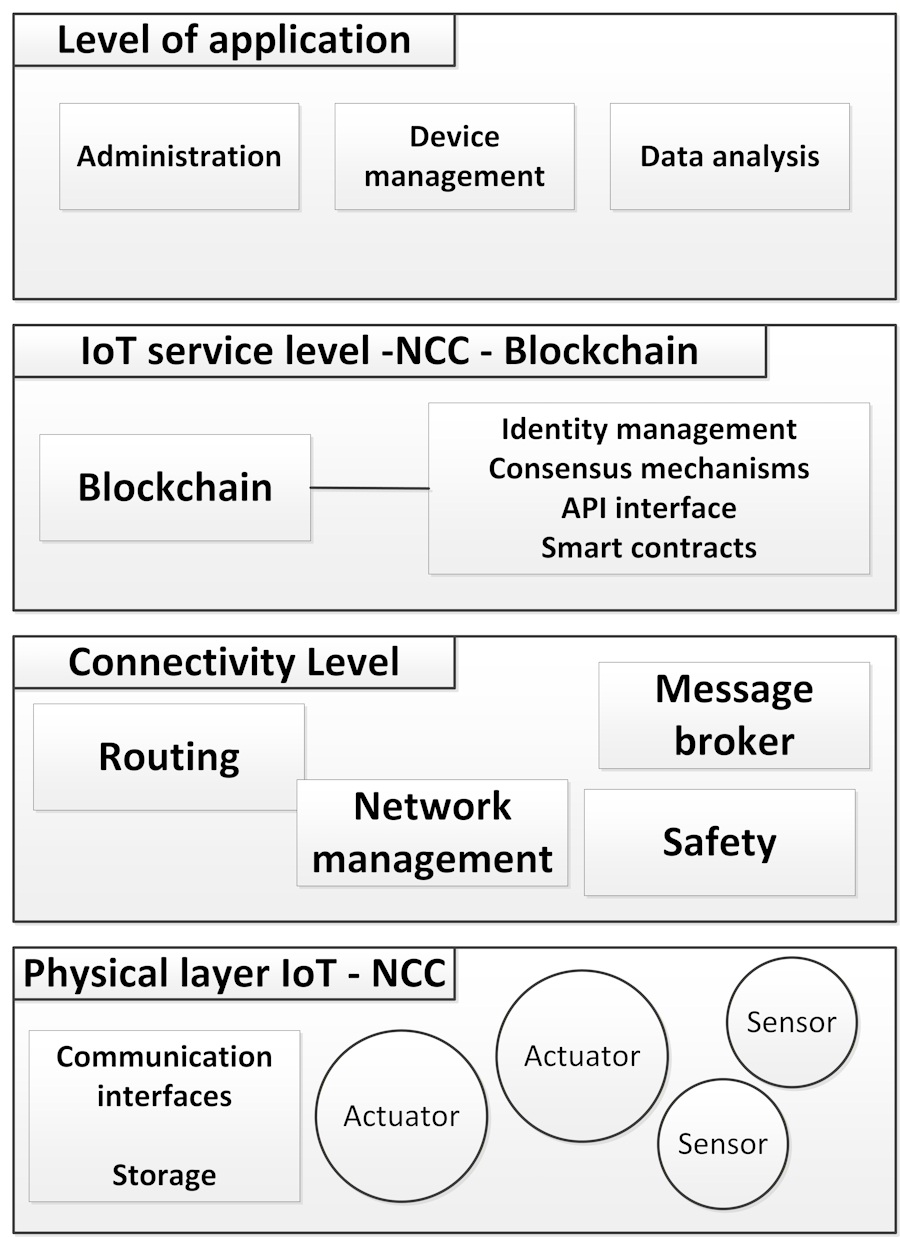
The SCCM includes a blockchain-based platform to monitor, collect data, and manage the services and infrastructure of a Smart City. The data from the IoT networks within each SCCM layer are directly written onto the blockchain, enabling secure verifications and transactions over the Internet, data storage, and the execution of smart contracts. This revolutionizes Smart City management by providing solutions to coordinate, integrate, and control different city services with transparency, efficiency, and privacy.
A Digital Twin to Monitor the Smart City
With all the data collected by the city’s sensor systems available to technical and management services, securely stored on a blockchain network and with multiple ways to analyze the behavior of urban systems and infrastructure, it becomes essential to harness the potential of having millions of data packets about different aspects of the Smart City—without losing sight of the big picture. To achieve this, the SCCM includes the creation of a complete digital twin of the urban environment, enabling real-time visualization of the development and status of the areas being monitored.
 SAHEL Token – The token that powers Smart Cities applications and services
SAHEL ($SAHEL) is the native token of the SCCM, the Smart City Cohesive Model, a cohesive platform of structures, service levels, applications, and systems for Smart Cities, which facilitates and guides the implementation of technologies and processes that lead to the transformation of our cities towards new urban models of livability, sustainability, functionality, and technological interconnection.
It is an SPL token that facilitates connectivity, interoperability, and management of all systems, applications, and blockchain-based technologies used in developing and implementing different applications and services for Smart Cities. The SAHEL token’s mission is to ensure proper functioning and to allow different systems within a Smart City to operate and be supervised by its central management and control mechanisms.
Token Contract: 4HTBbihwqz1H9SpAKJS9THAJuBrqeyokPze42r7Cpump
What SAHEL does
Each city layer runs an NCC that authenticates devices, aggregates data, and anchors cryptographic proofs to the blockchain. SAHEL coordinates value flows between these layers and the city‑wide Digital Twin, enabling trusted automation and cross‑layer optimization for real services at urban scale.
- Payments & Metering — Settle micro‑transactions for city services and APIs (mobility, energy, water), with transparent revenue sharing.
- Incentives for Data Quality — Reward device owners and operators for timely, accurate, and verifiable telemetry.
- Staking & Security — Operators post SAHEL bonds; misbehavior or downtime triggers slashing to protect the network.
- Governance & Treasury — Community proposals, votes, grants, and budget allocation recorded on‑chain for full transparency.
- Access & Compliance — Token‑gated endpoints and programmable transfer checks to enforce policies and maintain audit trails—without exposing PII.
- Developer‑friendly UX — Fee abstraction via relayers so end users can pay in SAHEL while network fees are handled seamlessly.
Below you can find the list of exchanges where you can get and trade $SAHEL
 |
 |
 |
 |
 |
 |