
The transition from traditional urban administration to data-driven governance represents one of the most profound transformations in contemporary urban development, because it redefines not only how cities manage infrastructure and services, but how they perceive reality, make decisions, allocate resources, and engage with citizens in an increasingly complex and dynamic environment.

The transformation of a city into a Smart City cannot be understood merely as the modernization of roads, utilities, or public services through digital technologies. Rather, it must be interpreted as a profound reconfiguration of governance itself, in which data ceases to be a passive by-product of administrative activity and becomes the central intelligence layer through which the city is observed, interpreted, and managed. What truly distinguishes a Smart City from a digitally equipped city is not the presence of sensors or dashboards, but the existence of a governance model capable of converting information into foresight, coordination, and evidence-based action.
In traditional urban management systems, public administration has historically relied on hierarchical structures, compartmentalized departments, and periodic reporting cycles that often produce delayed responses to rapidly evolving urban conditions. While this model has provided institutional continuity for decades, it increasingly struggles to address the complexity of twenty-first-century cities, where mobility flows, environmental pressures, demographic growth, service demand, and social expectations change in real time. The contemporary city behaves as a living, interconnected system, and therefore requires a governance model that can operate with the same level of dynamism and responsiveness.
The Structural Limits of Traditional Urban Management
For many decades, urban governance has been organized around administrative departments that operate with relatively autonomous mandates, budgets, databases, and operational priorities. Transport authorities manage mobility, environmental departments oversee waste and emissions, public works supervise infrastructure maintenance, and citizen service offices handle complaints and requests. While this separation has historically facilitated institutional order, it often creates rigid boundaries that prevent the city from responding holistically to interconnected urban challenges.
One of the most significant limitations of this model lies in its fundamentally reactive nature. Problems are generally addressed only after they have become visible and often after they have already generated economic, operational, or social costs. Traffic congestion is mitigated once bottlenecks have already formed, water leaks are repaired after service interruption, public lighting failures are corrected only after complaints have accumulated, and maintenance operations are scheduled according to fixed calendars rather than actual infrastructure conditions.
This time lag between urban events and institutional response has direct consequences. According to studies by the World Bank and Organisation for Economic Co-operation and Development, inefficient urban management and infrastructure downtime can increase operational expenditure in metropolitan areas by between 15% and 30%, particularly in sectors such as transport, water, and waste systems, where delayed intervention amplifies costs over time.
A practical example can be found in traditional waste collection systems. In many cities, collection routes are still determined by static schedules established months or even years in advance. This means that bins in low-demand areas may be emptied while still partially empty, whereas high-density commercial districts may experience overflows before the next scheduled service. The inefficiency here is not merely logistical; it reflects a governance model that lacks real-time visibility and adaptive decision capacity.
Data as the New Urban Infrastructure
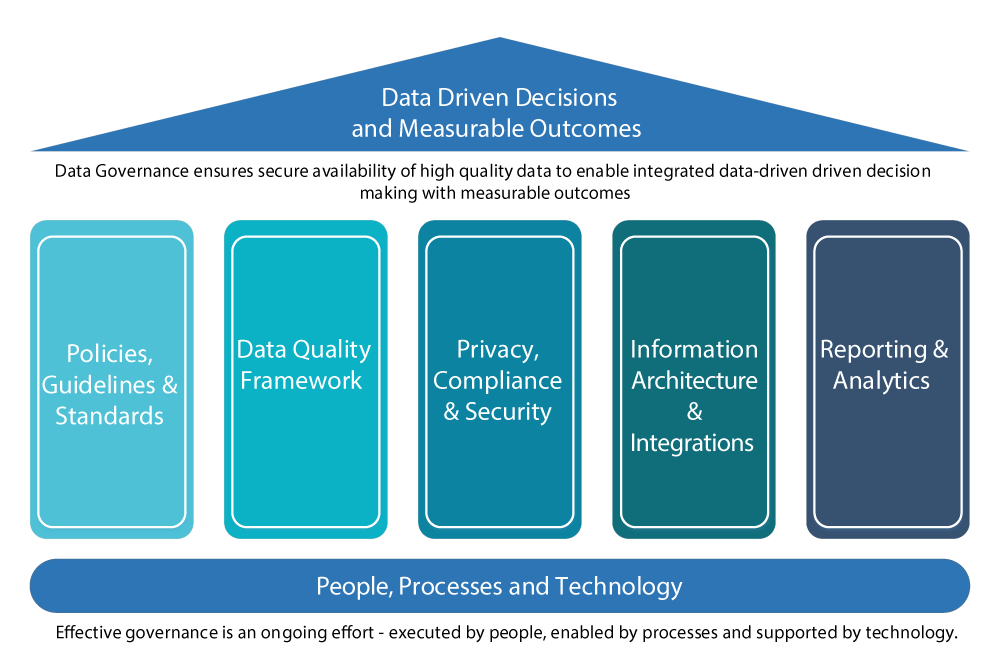
The decisive conceptual shift in Smart City governance lies in understanding that data itself must be treated as a strategic infrastructure layer, comparable in importance to roads, power grids, water systems, or telecommunications networks. Just as physical infrastructure enables the movement of people, goods, and resources, data infrastructure enables the movement of intelligence across the city’s governance ecosystem.
This means that every urban domain under transformation, whether mobility, energy, public safety, water distribution, or public space management—must be continuously observed through multiple and interoperable data streams. These streams may include IoT sensor networks, geospatial information systems, operational databases, transactional service records, citizen interaction platforms, satellite imagery, and environmental monitoring systems.
For example, in public transportation systems, data-driven governance allows authorities to move beyond static timetable planning and instead manage mobility as a dynamic flow system. Passenger demand can be measured through ticketing data, GPS-enabled fleet tracking, mobile phone location patterns, and station occupancy sensors. This allows transport operators to adjust frequency, reroute services, and deploy additional capacity during demand peaks.
A practical case often cited is Barcelona, where integrated urban data platforms have been used to optimize bus frequencies, monitor traffic density, and coordinate mobility services with environmental goals. Such initiatives have contributed to measurable reductions in congestion and improved service efficiency in several districts.
The city no longer governs only through procedures and reports; it governs through continuous situational awareness.
From Institutional Silos to Integrated Decision Ecosystems
Perhaps one of the most transformative dimensions of data-driven governance is the dissolution of institutional silos. In traditional governance, departments often maintain separate databases, isolated reporting systems, and fragmented decision frameworks. As a result, interconnected problems are addressed in disconnected ways.
Yet urban reality is inherently systemic. Traffic congestion, for instance, is never solely a transport issue. It is influenced by land use patterns, school schedules, weather events, public works, economic activity zones, tourism density, and emergency incidents.
A data-driven Smart City requires the city to function as an integrated decision ecosystem rather than a collection of independent bureaucratic units.
Consider a major cultural event held in the city centre. In a traditional model, transport authorities may increase public transport capacity only after congestion becomes visible. In an integrated governance ecosystem, the event calendar, weather forecast, mobility sensors, parking occupancy data, and pedestrian flow analytics are already connected. This enables proactive traffic diversion, adaptive traffic light sequencing, reinforcement of bus lines, and increased public safety presence before disruption occurs.
This integrated intelligence approach turns the city into something closer to a coordinated organism, where different systems exchange information and respond collectively.
Predictive and Proactive Urban Decision-Making
One of the most strategic advances introduced by data-driven governance is the transition from reactive administration to predictive management. The objective is no longer simply to solve problems efficiently, but to anticipate them before they materialize.
This is where predictive analytics, machine learning models, and anomaly detection systems become central to Smart City governance.
In water infrastructure, for example, pressure sensors and historical maintenance records can be used to predict pipe failure probabilities. Research from utilities deploying predictive maintenance systems has shown reductions of up to 25% in leakage incidents and significant savings in emergency repair costs.
A practical example would be a district water network where pressure fluctuations begin to deviate from historical norms. Rather than waiting for a burst pipe, the system identifies a high-risk segment and triggers preventive maintenance. The city is no longer managing consequences; it is managing probabilities.
Similarly, in public safety, predictive governance may integrate lighting conditions, historical incident patterns, temporal activity peaks, and spatial crowd density to optimize patrol deployment.
Evidence-Based Policy and Measurable Urban Performance
Another major evolution concerns policy design itself. In traditional governance models, policy decisions are often influenced by political cycles, anecdotal evidence, or incomplete departmental reports. By contrast, Smart City governance requires that policy increasingly be grounded in measurable performance indicators.
If the transformed urban service is waste management, performance metrics may include collection efficiency, recycling rates, carbon emissions per route, overflow response times, and citizen satisfaction.
For instance, if route optimization software reduces daily fuel consumption by 18% and lowers average collection times by 22%, policy decisions regarding fleet investment and environmental strategy can be made on the basis of demonstrable outcomes rather than assumptions.
This creates a continuous feedback loop between policy design, operational performance, and citizen experience.
Citizen Participation as a Governance Intelligence Layer
A Smart City cannot be governed exclusively from institutional control rooms. One of the most important evolutions in data-driven governance is the recognition that citizens themselves are a critical source of urban intelligence.
Through digital reporting applications, participatory platforms, sentiment analysis tools, and service feedback channels, citizens become active contributors to the governance ecosystem.
For example, if the transformed domain is public space maintenance, reports from residents regarding broken lighting, pavement damage, cleanliness, or perceived safety can be geolocated and integrated directly into maintenance prioritization systems.
This transforms governance from a top-down administrative model into a participatory intelligence architecture in which lived urban experience directly informs decision-making.
Building the Governance Culture for Smart Cities
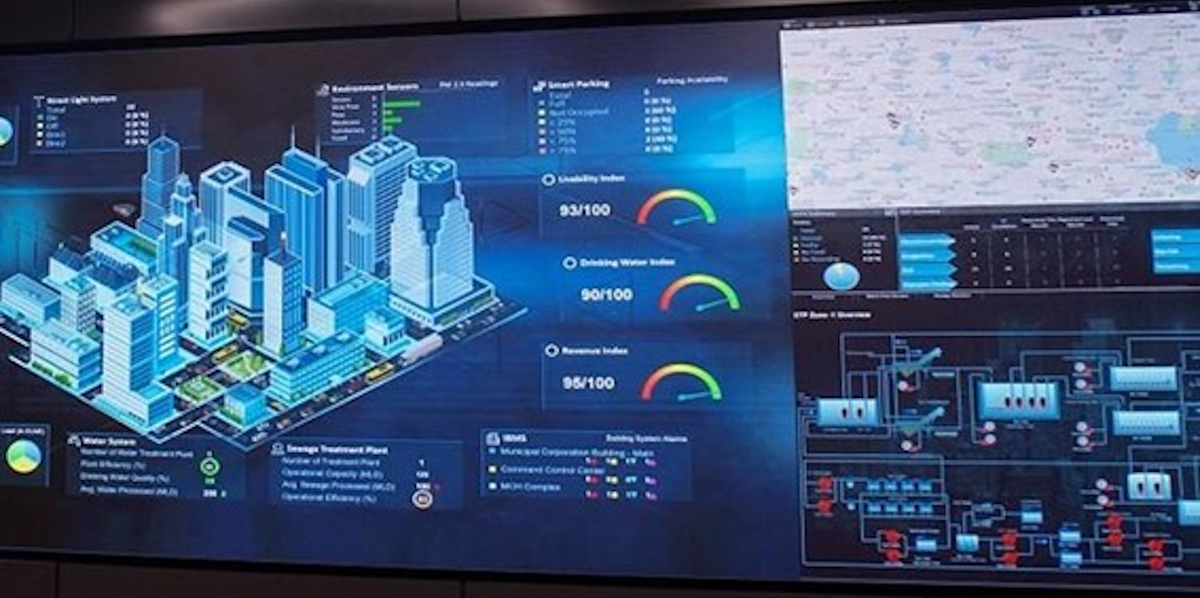
Technology alone is insufficient to create intelligent governance. The decisive factor is the development of an institutional culture capable of trusting, interpreting, and acting upon data. This requires leadership training, data literacy across departments, interoperable workflows, and strategic alignment between political vision and technical capacity. Without this cultural transformation, even the most sophisticated data platforms risk becoming underused reporting tools rather than engines of urban intelligence.
The Smart City is therefore as much an organizational transformation as a technological one.
Governance as the Cognitive Layer of the Smart City
The evolution from traditional urban management to data-driven governance is far more than administrative modernization; it is the transformation of how cities think, learn, and adapt.
A city becomes truly smart not when it merely collects information, but when it is capable of converting that information into foresight, precision, resilience, and citizen-centred policy. In this sense, data is not simply a technical asset, but the cognitive infrastructure of contemporary urban governance.
Ultimately, the future of Smart Cities depends less on technology itself than on the capacity of institutions to transform data into collective urban intelligence, enabling cities to evolve continuously in response to the realities of the people who inhabit them.