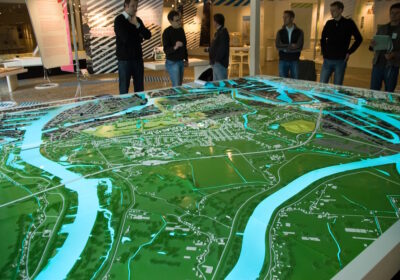
In the past, urban planning relied heavily on maps, models, and projections. Today, cities are embracing a more powerful tool, one that doesn’t just represent the physical world but mirrors it in real time. This tool is the digital twin, a dynamic, data-driven replica of the city that allows planners, engineers, and policymakers to simulate, analyze, and predict urban behavior before it unfolds in the real world.
Digital twins are rapidly becoming the nervous system of smart cities, transforming how we design, manage, and experience urban life.
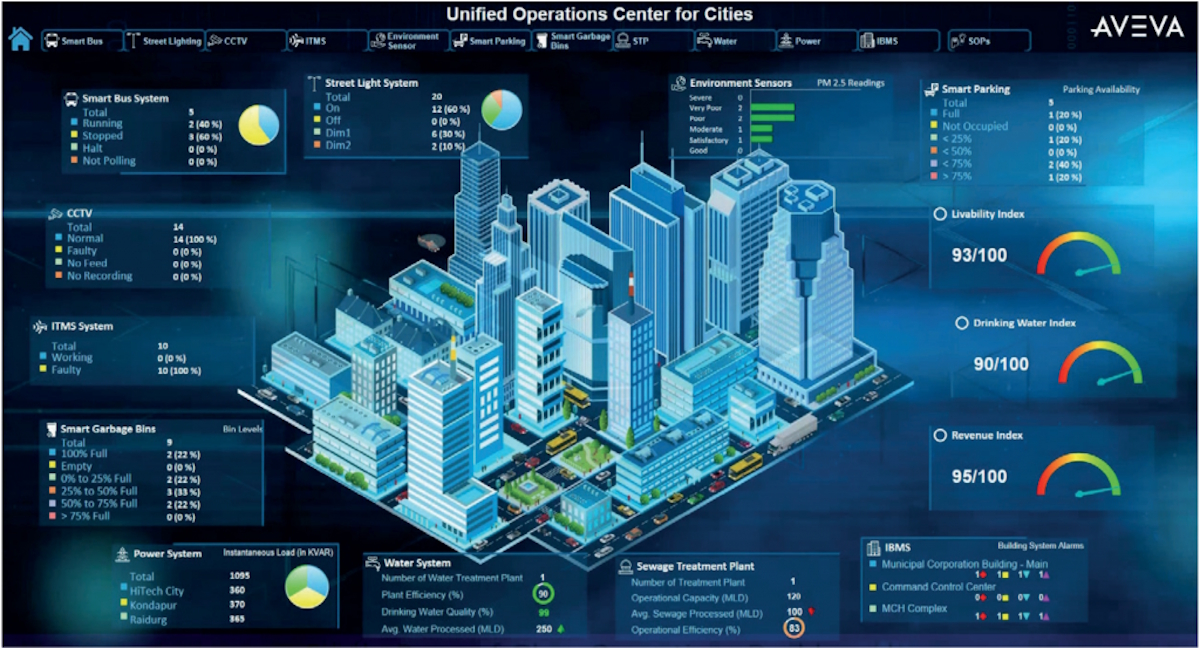
A digital twin integrates information from multiple sources: sensors, satellites, IoT devices, traffic systems, weather data, and even social media, into a virtual model that updates continuously. Unlike traditional simulations, it is not static: it evolves as the city changes. This means that every shift in temperature, every bus route adjustment, every new building or event can be reflected immediately within the model. The result is a living digital organism that mirrors the rhythms and complexities of the real city.
With this technology, urban planners can test scenarios before implementing them. For instance, they can simulate how closing a street to traffic might affect congestion in nearby areas, or how a new residential development could influence water demand or public transport usage. Using AI-driven analytics, the twin can forecast not only what is likely to happen but also propose optimal interventions to achieve specific goals, from reducing emissions to improving mobility or public safety.
In the energy sector, digital twins are being used to model smart grids that balance supply and demand in real time, preventing blackouts and improving efficiency. In water management, they simulate flow, pressure, and consumption patterns, helping utilities anticipate leaks or shortages. For emergency response, digital twins can predict the spread of floods or wildfires and coordinate rescue efforts by analyzing terrain and population density in real time.
In short, they enable anticipatory governance: the ability to act before problems occur.
But perhaps the most transformative power of digital twins lies in integration. Cities are complex systems where transportation, housing, environment, and infrastructure interact constantly. Traditionally, these domains have been managed separately. Digital twins unify them, allowing decision-makers to see the city as a connected ecosystem rather than a set of isolated parts. AI algorithms can then detect dependencies and side effects that would otherwise go unnoticed — for example, how changes in traffic patterns might impact air quality or how new green spaces affect microclimates.
The private sector is also finding new opportunities in this technology. Construction companies use digital twins to plan and monitor large projects with precision, reducing costs and environmental impact. Real estate developers can simulate building performance under different conditions, optimizing design and energy efficiency. Even cultural institutions and event organizers are using virtual replicas of neighborhoods to anticipate crowd behavior and manage logistics more safely.
However, digital twins are not without challenges. They depend on massive amounts of data, raising questions about privacy, security, and governance. Who owns the digital twin of a city? Who decides what data it collects, how it is used, and who can access it? Without clear policies and ethical standards, the same technology that makes cities more efficient could also make them more surveilled or commercially exploited.
For digital twins to serve the public good, transparency and citizen participation must be at their core.
Another challenge is maintaining accuracy and interoperability. A digital twin is only as reliable as the data it receives. Ensuring real-time updates across thousands of sensors and systems requires robust digital infrastructure and collaboration between public agencies, private companies, and technology providers. Establishing open standards and interoperable platforms will be key to scaling this technology beyond pilot projects.
Despite these hurdles, the potential of digital twins is extraordinary. They represent a shift from reactive urban management to proactive design, where every decision can be tested, optimized, and visualized before it becomes reality.
In the future, digital twins may evolve further, incorporating behavioral and social data to simulate not only physical systems but also human interaction, predicting how communities will respond to new policies or infrastructures.
As artificial intelligence and sensor networks continue to expand, the line between the physical and digital city will blur. Urban planning will no longer be confined to blueprints and forecasts but will become an ongoing dialogue between the real and the virtual.
In this sense, digital twins are not just technological tools, they are the thinking mirror of the city, helping us imagine, test, and build better urban futures before they even happen.