Public transportation is the backbone of urban life. Every day, millions of people depend on buses, trams, metros, and trains to move through the complex arteries of the city. Yet, managing that flow efficiently has always been one of the biggest challenges in urban planning. Demand fluctuates with the hour, the weather, the economy, and even social events. Traditional forecasting models, based on historical averages or linear trends, can no longer capture this dynamic reality. This is where deep learning comes in, bringing unprecedented precision and adaptability to public transport demand forecasting.
Deep learning is a branch of artificial intelligence that uses layered neural networks to detect complex patterns in massive datasets. Unlike classical models, which rely on predefined relationships between variables, deep learning algorithms can learn from data directly, identifying subtle correlations that humans might never see. Applied to urban mobility, this means AI can analyze millions of data points —ticket validations, GPS signals, social media activity, weather records, and even local events— to predict how demand will evolve across time and space.
For example, neural networks can process spatio-temporal data, understanding not only where passengers move but also when and why. By combining inputs such as traffic conditions, population density, and public holidays, these systems can anticipate rush-hour peaks or unusual fluctuations with remarkable accuracy. In cities like Singapore, Seoul, and London, transport authorities already use deep learning models to forecast ridership up to several hours or even days in advance, allowing for smarter resource allocation.
The practical implications are enormous. With accurate forecasts, transport agencies can adjust the number of vehicles on each route, optimize driver schedules, and prevent overcrowding. Dynamic timetabling powered by AI reduces waiting times and improves passenger experience while cutting unnecessary energy use. In the long term, these systems also provide strategic insights for infrastructure planning, revealing where new routes, stations, or interchanges will be most needed as the city evolves.
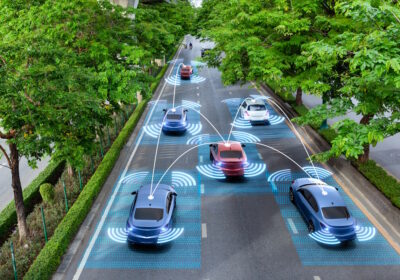
But deep learning goes beyond prediction , it enables adaptive operations. As data is collected in real time, the AI continuously refines its understanding of mobility patterns. If a sudden storm, demonstration, or sporting event disrupts traffic, the system can recalculate and issue new service recommendations instantly. This real-time responsiveness transforms static public transport networks into living systems that adjust continuously to the rhythm of the city.
To achieve this, cities rely on data fusion, the integration of information from multiple sources into a unified model. Ticketing data provides demand signals; GPS and sensor data track fleet performance; weather and event calendars supply context; and social media sentiment offers behavioral insights. Deep learning algorithms merge all these layers to build a multidimensional view of urban movement. The richer the data, the more intelligent and adaptive the system becomes.
However, the use of personal mobility data also introduces ethical challenges. Predictive systems depend on vast quantities of information that often include sensitive details about citizens’ habits and locations. Cities must therefore develop clear data governance frameworks to ensure privacy, security, and transparency. AI models should be explainable, and data collection must comply with consent and anonymization standards to maintain public trust.
There are also practical challenges: deep learning models are computationally intensive and require careful training and maintenance. Ensuring that predictions remain reliable as cities change demands constant model evaluation and retraining. Moreover, equitable service distribution must remain a central goal — the smartest systems should serve all neighborhoods, not just the most profitable ones.
Despite these complexities, the integration of deep learning into public transport is transforming urban mobility. It marks a shift from reactive management to predictive and adaptive intelligence, where transit systems no longer wait for congestion to happen — they prevent it. The payoff is immense: fewer delays, better comfort, lower emissions, and a smoother flow of people through the city.
As AI continues to evolve, deep learning will enable transport networks that not only respond to demand but anticipate it before it arises. Public transport will become a self-regulating ecosystem, efficient, resilient, and aligned with citizens’ real behaviors. In the intelligent cities of the future, every journey will be optimized not by chance, but by learning.