
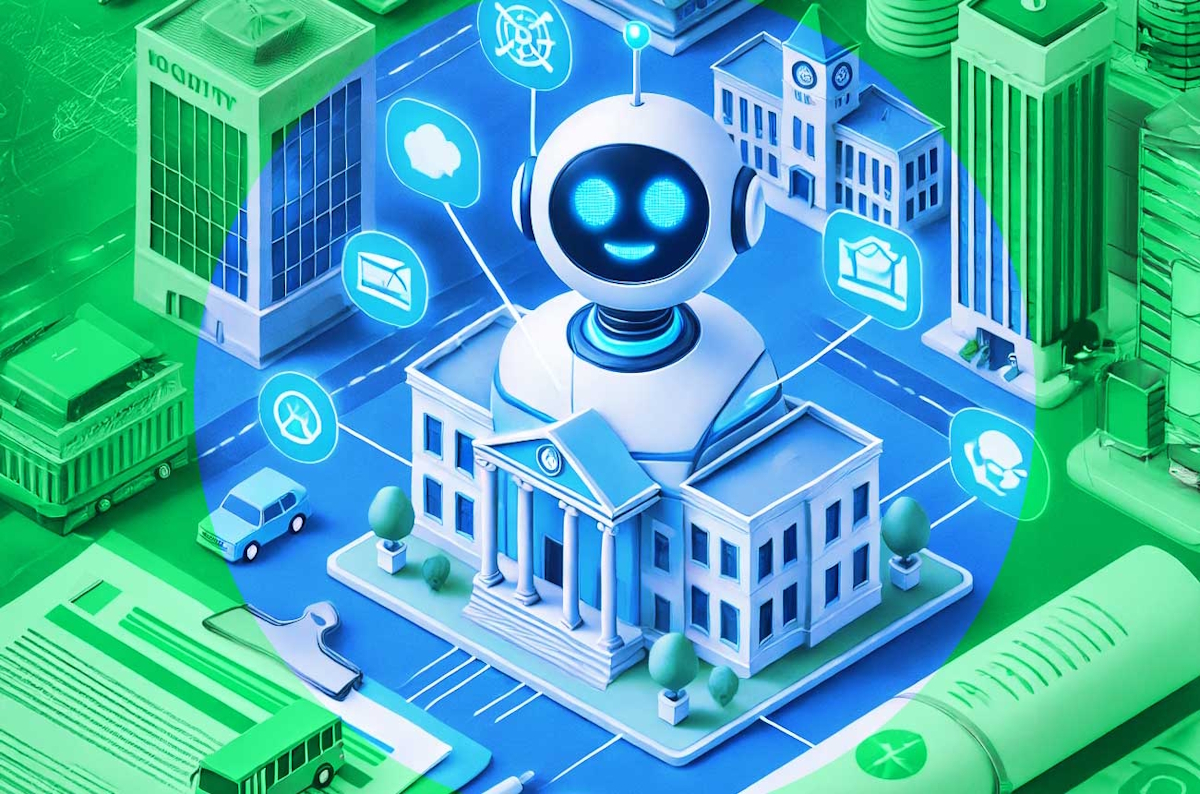
Public administrations are often perceived as slow, complex, and difficult to access. Citizens wait in lines, fill out forms, and navigate bureaucratic websites in search of information that should be immediate. Yet, in an era where artificial intelligence can hold fluent conversations, generate text, and understand context, these barriers are no longer necessary. Across the world, municipalities are beginning to deploy AI-powered conversational agents ,virtual assistants designed to provide 24/7 citizen assistance, that are transforming how local governments interact with their communities.
A conversational agent is more than a chatbot. While early systems followed rigid, preprogrammed scripts, modern AI assistants use natural language processing (NLP) and machine learning to interpret questions, detect intent, and generate coherent, personalized responses. They can understand nuance, clarify ambiguity, and even guide users step by step through complex administrative procedures. The goal is to make public service interaction as simple and intuitive as chatting with a person.
For local governments, the impact of these systems is profound. Citizens can now access information about taxes, permits, recycling schedules, public transport, or cultural events at any time of day , without waiting for office hours or navigating complex websites. Behind the scenes, AI connects to municipal databases and service portals, retrieving real-time information and automating requests that once required human intervention. This doesn’t just improve efficiency; it redefines accessibility in public administration.
One of the greatest advantages of conversational agents is their scalability. A single virtual assistant can handle thousands of simultaneous interactions, something no call center could achieve. This frees public employees to focus on higher-value tasks such as case resolution, policy design, or citizen engagement. In some cities, AI assistants have reduced response times from days to seconds, drastically improving citizen satisfaction while cutting operational costs.
But the power of conversational agents extends beyond efficiency. Properly designed, they can make administration more inclusive. By supporting multiple languages, speech interfaces, and accessible design, these systems ensure that elderly citizens, immigrants, or people with disabilities can interact with local authorities without barriers. Some agents even adapt their tone or complexity based on the user’s profile, making communication both human and context-aware.
AI assistants can also act as active mediators between citizens and decision-makers. By analyzing recurring questions, complaints, or requests, they generate valuable insights about community needs. For instance, if thousands of users repeatedly ask about public transport reliability or waste collection, the system can flag these as areas of concern for the city council. In this way, conversational agents become tools of participatory governance, translating everyday interactions into data for better policymaking.
Integrating these technologies, however, comes with challenges. Public administrations must ensure that AI systems operate with transparency, security, and fairness. Citizens have the right to know when they are speaking with a machine, how their data is processed, and how decisions are made. Trust is essential , if users fear that their personal information is being misused or analyzed without consent, adoption will suffer. Therefore, conversational AI in government must follow strict data protection and ethical standards, aligned with open governance principles.
Another challenge is training and maintenance. Language evolves, laws change, and services are updated constantly. For AI assistants to remain effective, they must be continuously trained with fresh data and supervised by human experts. This hybrid approach ,where humans guide and audit the system’s learning, ensures accuracy, accountability, and empathy in every interaction.
Despite these hurdles, the results are undeniable. From Helsinki to Dubai, from Los Angeles to Madrid, conversational agents are reshaping public service delivery. They are the front door of digital government, where accessibility meets intelligence. And as generative AI evolves, these systems will not only answer questions but also initiate conversations , reminding citizens of upcoming deadlines, suggesting nearby services, or helping them navigate life events such as moving houses or starting a business.
In the future, local government websites may disappear entirely, replaced by conversational platforms where information flows naturally and instantly. Bureaucracy will no longer feel like paperwork; it will feel like dialogue.
And in that transformation, AI-powered assistants will be the new civic interface, the voice of the intelligent city, always awake, always ready to listen, and always there to help.