Cities have always reflected human behavior, our needs, routines, and ambitions are written into their streets and skylines. But what if cities could do more than reflect us? What if they could learn from us? The emerging field of cognitive urbanism explores this question, envisioning cities as adaptive systems that evolve through continuous interaction with their inhabitants. Fueled by artificial intelligence, data analytics, and behavioral science, this approach is redefining the relationship between humans and the urban environment.
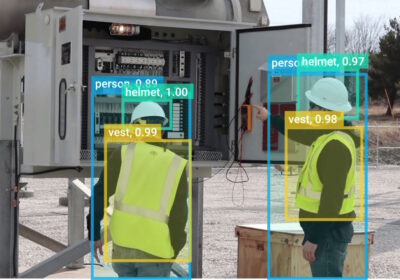
Cognitive urbanism sees the city not as a static structure but as a living intelligence. Through a vast network of sensors, digital twins, and connected devices, urban systems now gather data on everything from traffic flow to noise levels and energy use. AI processes this data to uncover hidden patterns, how citizens move, when they congregate, what times they use public services, and even how they feel about the spaces they inhabit. This collective feedback loop allows the city to learn, adapt, and improve over time.
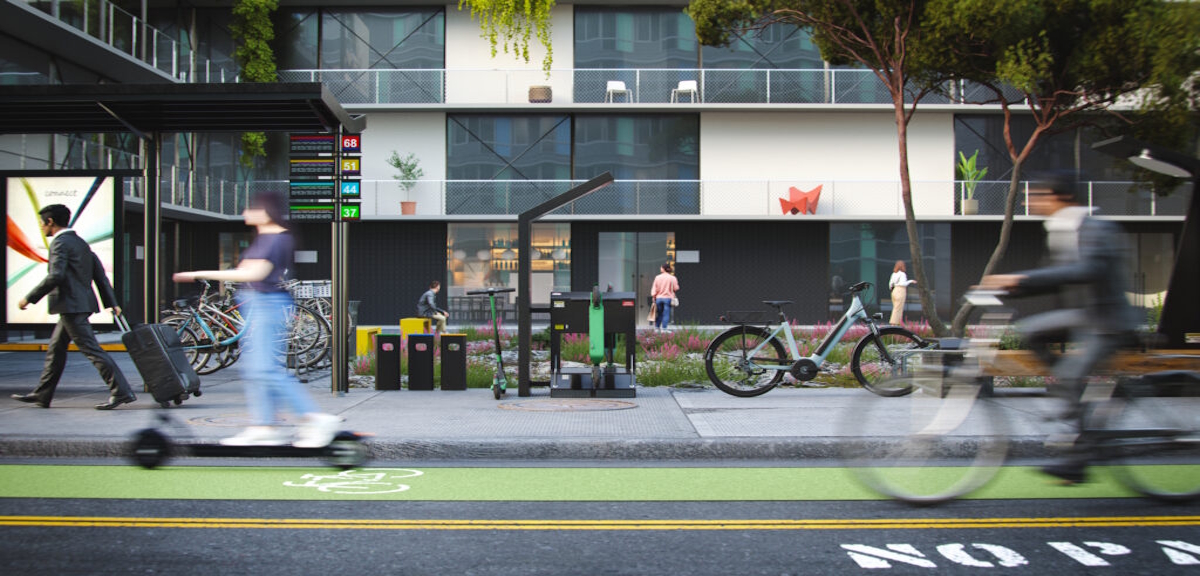
In practice, this means that urban environments can now respond dynamically to human behavior. For instance, lighting systems can brighten or dim according to pedestrian density, improving safety while saving energy. Public transport schedules can evolve daily based on real-time demand, reducing waiting times and emissions. Parks and plazas can be monitored to understand which areas attract activity and which remain underused, guiding urban renewal efforts with evidence rather than assumptions.
The concept extends beyond efficiency. Cognitive cities aim to understand the emotional and social dimension of urban life. Sentiment analysis applied to social media and participatory platforms can help municipalities gauge public mood regarding policy decisions or neighborhood development projects. Combined with demographic and spatial data, these insights allow planners to balance technical optimization with social well-being , a delicate but essential task in the age of data-driven governance.
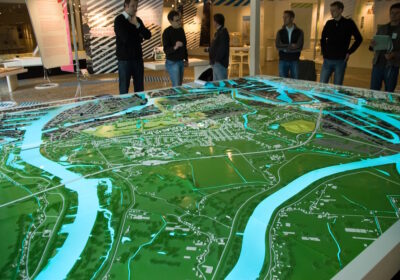
AI-powered digital twins are central to this transformation. These virtual replicas of the city enable planners and policymakers to simulate scenarios and test interventions before implementing them in the real world. When combined with cognitive analytics, they can predict how citizens will react to changes, for example, how a new bike lane might alter mobility patterns or how modifications to a public square might influence social interaction. This capacity to “think ahead” gives rise to truly anticipatory governance.
Cognitive urbanism also changes the way citizens relate to their environment. Through open data platforms and participatory tools, people become active contributors to the city’s learning process. Every digital interaction, from reporting a pothole to rating a local service, adds a data point to the collective intelligence of the city. When managed ethically and transparently, this participatory feedback strengthens trust and collaboration between citizens and institutions.
However, this vision depends on how responsibly cities use the information they collect. The ability to learn from citizens implies the ability to observe them, raising concerns about privacy, consent, and algorithmic bias. Who decides what the city learns, and from whom? A cognitive city must balance its intelligence with empathy, ensuring that its learning processes are guided by democratic values, not just technical efficiency. Ethical frameworks, data anonymization, and citizen oversight are therefore fundamental.
Cognitive urbanism also poses a cultural shift. Planners, engineers, and policymakers must learn to think not in terms of control, but of co-evolution. The city is no longer a product to be managed but a partner to be cultivated, one that learns from its inhabitants as much as they learn from it. This calls for interdisciplinary collaboration, combining AI, sociology, design, and governance in a shared language of learning and adaptation.
In the future, cognitive cities may resemble ecosystems of intelligence rather than hierarchies of control. They will sense human needs, predict challenges, and design responses collectively with their residents. Artificial intelligence will serve as the connective tissue linking infrastructure, governance, and emotion, turning the urban landscape into a mirror of collective awareness.
When cities learn from their inhabitants, they stop being machines for living and become organisms for evolving. Cognitive urbanism represents not only a technological revolution but a philosophical one: a move toward cities that think with us, grow with us, and ultimately, learn to be more human.