
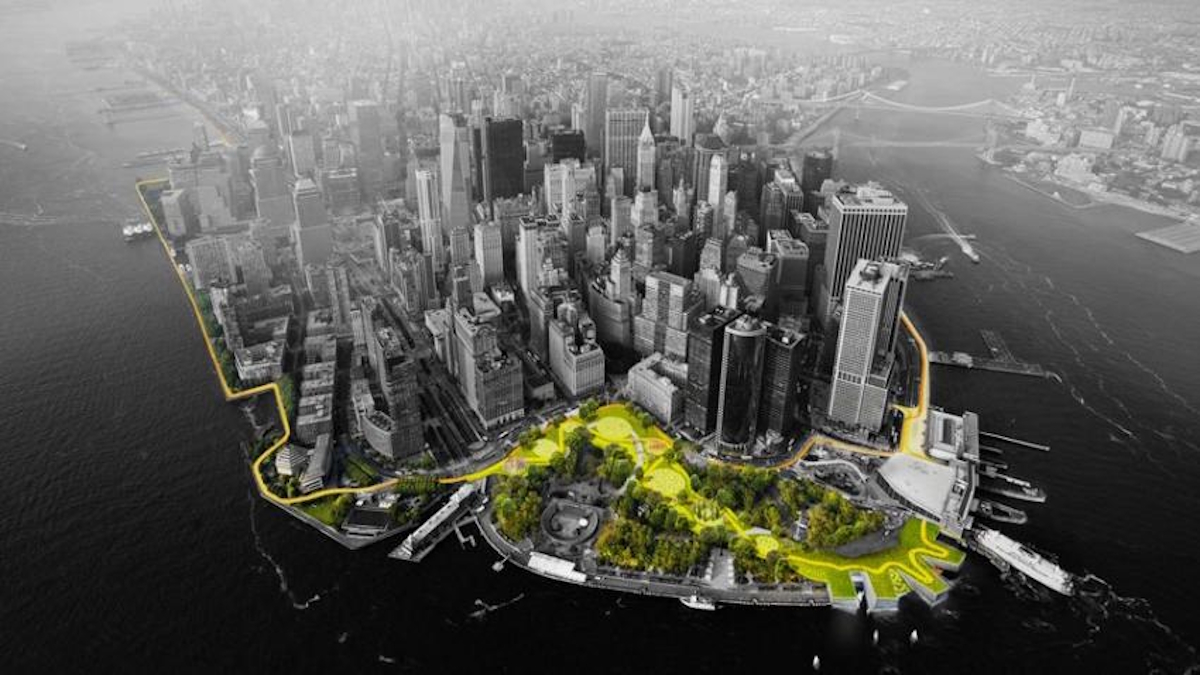
AI and Urban Resilience: Learning from Disasters Before They Strike

AI and Urban Resilience: Learning from Disasters Before They Strike

Resilience begins with foresight. Machine learning algorithms can process enormous volumes of environmental, social, and infrastructural data to identify early warning signals. For instance, AI models trained on meteorological and hydrological datasets can forecast floods days in advance, predicting not only when and where water will rise but how it will spread through the city’s drainage systems. This information allows authorities to prepare evacuation routes, deploy barriers, and alert vulnerable populations proactively, turning reaction time into preparation time. Similarly, climate analytics powered by AI help cities anticipate extreme heat or air quality events by correlating temperature trends, vegetation density, and…

Read More
Scenario 2040: How Artificial Intelligence Could Redefine Urban Life

Scenario 2040: How Artificial Intelligence Could Redefine Urban Life

  Imagine waking up in a city where everything, from your home to the street outside, adapts dynamically to your needs. The building automatically adjusts its temperature based on your sleep cycle and predicted weather patterns. As you step out, traffic lights sense your route and synchronize to reduce waiting time. Public transport vehicles reposition themselves where demand will rise, calculated hours in advance by AI-driven mobility networks. The entire urban system operates like a living organism, responding seamlessly to the rhythm of human life. By 2040, artificial intelligence will be embedded in every layer of the urban fabric. Energy…
Read More
Digital Inclusion: Avoiding New Urban Divides in the Age of AI

Digital Inclusion: Avoiding New Urban Divides in the Age of AI

Digital inclusion means more than providing internet access. It involves ensuring that every citizen, regardless of age, income, or background, can participate meaningfully in the digital ecosystem. This includes access to affordable devices, skills to use them safely and effectively, and the ability to understand how technology shapes everyday life. As AI systems become embedded in public services, from healthcare to education and transportation, exclusion from the digital world can translate into exclusion from the city itself. The digital divide manifests in multiple layers. There’s the connectivity gap, affecting those who live in areas without reliable broadband or 5G coverage.…
Read More
Smart Lighting Networks: From Efficiency to Citizen Interaction

Smart Lighting Networks: From Efficiency to Citizen Interaction

The foundation of a smart lighting network lies in connectivity. Each streetlight becomes a node equipped with sensors, controllers, and wireless communication capabilities. These lights can measure ambient light, motion, temperature, air quality, and even noise. Through machine learning algorithms, the system interprets this data to adjust brightness dynamically, dimming lights when streets are empty and increasing intensity when pedestrians or vehicles are detected. The result is a responsive illumination system that reduces energy use by up to 70% while enhancing safety and comfort. But the potential of smart lighting extends far beyond efficiency. When connected to central AI platforms,…
Read More
AI-Optimized Building Design for Energy Efficiency and Comfort

AI-Optimized Building Design for Energy Efficiency and Comfort

Traditionally, architectural design relies on simulation software and experience-based intuition to balance factors like light, temperature, ventilation, and material use. AI adds a new dimension by processing enormous datasets, from energy models and climate data to occupant behavior, to generate designs that perform better under real-world conditions. Through machine learning and generative design algorithms, architects and engineers can explore thousands of design options simultaneously, finding solutions that maximize performance while minimizing environmental impact. Generative design works by defining objectives and constraints, for example, reducing energy use, maximizing natural light, or ensuring thermal comfort, and then allowing the AI to “evolve”…
Read More
AI-Driven Traffic Lights: Reducing Congestion with Intelligent Algorithms

AI-Driven Traffic Lights: Reducing Congestion with Intelligent Algorithms

The principle is simple but revolutionary. Instead of following preprogrammed schedules, AI-controlled traffic lights use machine learning algorithms to analyze data from sensors, cameras, and connected vehicles. These systems detect vehicle density, speed, and flow direction, as well as pedestrian crossings and environmental factors such as weather or time of day. The AI then adjusts signal timings dynamically, optimizing each intersection to minimize waiting time and maximize throughput. In essence, the city learns to breathe, its traffic lights becoming the rhythmic pulse of an intelligent organism. Unlike conventional systems that rely on isolated intersections, AI-based platforms view the urban road…
Read More
Automation in City Administration: Can Algorithms Manage Public Services?

Automation in City Administration: Can Algorithms Manage Public Services?

Automation in city administration is not about replacing civil servants; it’s about augmenting their capabilities. Routine, repetitive, and rule-based tasks, such as document verification, appointment scheduling, and data entry, can be handled by AI-powered systems with greater accuracy and speed. This frees human workers to focus on strategic, creative, and empathetic functions that require judgment and communication. The result is a shift from bureaucratic management to service intelligence, a model where administration becomes proactive, personalized, and efficient. One of the most visible advances comes from robotic process automation (RPA). These systems act as digital assistants, replicating human actions across multiple…
Read More