
The transformation of an urban system into a Smart City begins not with technology, but with the deliberate construction of a strategic vision capable of redefining how the city functions, serves its citizens, and prepares for the future. This process requires a profound understanding of urban challenges, institutional realities, and long-term development goals, so that innovation is not reduced to isolated digital projects but becomes part of a coherent and measurable model of urban evolution. A truly smart city emerges where vision, governance, technology, and human well-being converge into a single strategic framework.
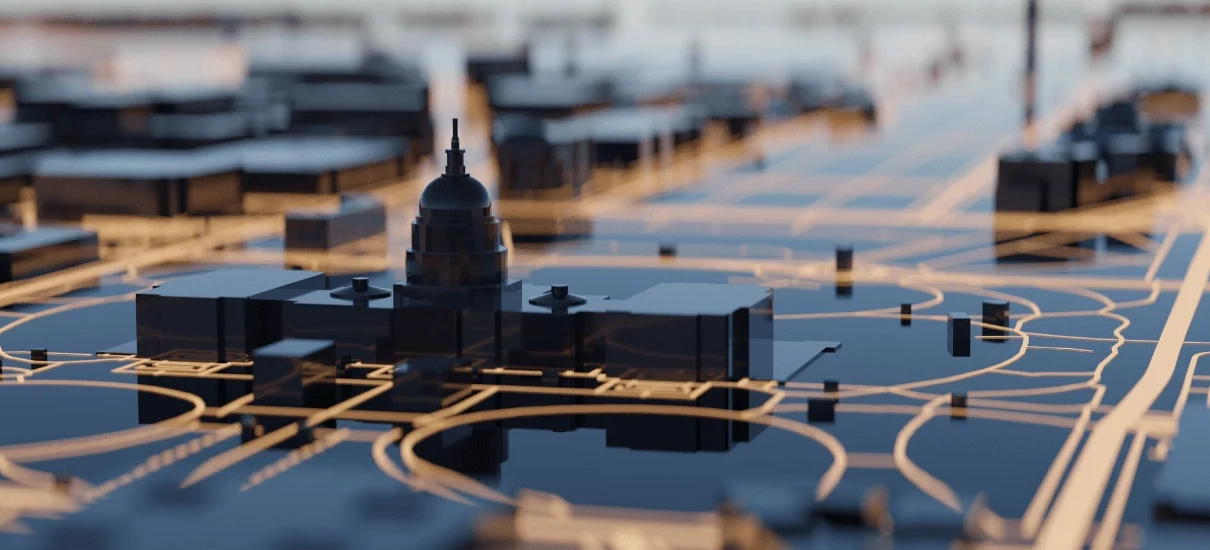
The transformation of a city into a Smart City never truly begins with the installation of sensors, the procurement of data platforms, or the deployment of artificial intelligence systems, however advanced and sophisticated these technological instruments may appear. It begins, rather, with a far deeper and more consequential act: the formulation of a strategic vision capable of imagining what kind of city must emerge in response to the structural pressures of the twenty-first century. Demographic growth, climate change, congestion, energy dependency, housing stress, environmental degradation, and rising citizen expectations all converge to create a context in which traditional urban management models are increasingly insufficient.
In this sense, strategic vision must be understood as the conceptual architecture that gives coherence, direction, and legitimacy to every subsequent decision, because without a clearly defined future model, urban innovation risks degenerating into a fragmented accumulation of disconnected pilot projects that consume budgets without generating systemic transformation. Many cities around the world have invested heavily in isolated “smart” initiatives—smart benches, sensor-equipped streetlights, isolated mobility apps—only to discover that technological sophistication alone does not produce urban intelligence.
A Smart City, therefore, should not be interpreted merely as a technologically advanced city, but rather as a city capable of using technology as an instrument of strategic intelligence, resilience, and human-centered governance. The real question is not what tools can be purchased, but what kind of urban future is being intentionally built.
Understanding the Urban Transformation Imperative
Before defining any roadmap, it is essential to understand why transformation is necessary and which urban dimension is being addressed. Every city contains multiple interconnected systems that can progressively evolve into Smart City components: mobility, energy, water management, waste collection, public safety, healthcare, education, environmental monitoring, and administrative services.
The strategic process must begin by selecting a clear transformation axis, because successful urban innovation requires focus, operational clarity, and measurable objectives. For instance, if the chosen domain is urban mobility, the challenge is not merely improving traffic flow but redesigning the entire mobility ecosystem as an intelligent and adaptive system.
This initial phase requires a rigorous diagnosis of the current urban reality. A city cannot transform intelligently what it has not yet understood in depth. This means conducting a comprehensive assessment of existing infrastructure, service bottlenecks, citizen pain points, regulatory constraints, financial capacity, and technological maturity.
To illustrate this with practical context, consider the case of traffic congestion in a metropolitan corridor. At first glance, congestion may appear to be purely a transportation issue. However, a deeper diagnosis often reveals that the problem is linked to land-use imbalances, insufficient public transport connectivity, fragmented traffic governance, and outdated data systems. In many European cities, for example, congestion hotspots are directly correlated with mono-functional districts where employment centers are spatially disconnected from residential areas.
According to recent urban mobility assessments by organizations such as Organisation for Economic Co-operation and Development and World Bank, congestion costs can account for between 1% and 3% of metropolitan GDP through lost productivity, increased fuel consumption, and environmental externalities, making strategic intervention not merely desirable but economically necessary.
Defining the Future Urban Model

Once the present condition has been mapped with precision, the strategic process moves from diagnosis to design. This is the moment when urban leadership must articulate a future state that is concrete, measurable, and narratively compelling.
A robust Smart City vision must answer several foundational questions: what should this service look like in ten years, how should citizens experience it, what outcomes must improve, and how will data support continuous optimization?
Let us consider a practical example in waste management. A conventional city may currently operate through fixed-route collection schedules, with trucks visiting every neighborhood regardless of actual waste levels. This model often generates inefficiencies, unnecessary fuel consumption, and inconsistent service quality.
A strategic Smart City vision, by contrast, would define a future model in which sensor-enabled containers transmit fill-level data in real time, route optimization algorithms dynamically redesign collection paths, and predictive analytics anticipate peak waste generation periods based on neighborhood activity patterns.
For example, the city of Barcelona has been internationally recognized for integrating digital urban management solutions, including sensor-based infrastructure systems that contribute to more efficient municipal services. In practical terms, this could translate into measurable outcomes such as:
a 20–30% reduction in fuel consumption,
a 15–25% decrease in operational costs,
higher recycling rates,
and lower CO₂ emissions associated with municipal fleets.
The strategic vision must therefore narrate not only technological change, but how the city will function differently as a living system.
Aligning Technology with Urban Purpose
One of the most frequent failures in Smart City policy is the inversion of strategic logic. Too often, cities begin by procuring technology and only afterward attempt to define its purpose. A mature strategic vision requires the opposite sequence. Technology must always be subordinated to urban purpose. Artificial intelligence, IoT, digital twins, predictive analytics, cloud architecture, and geospatial intelligence are not strategic goals in themselves; they are enabling layers that serve a defined urban mission.
For example, if the objective is to reduce emergency response times, the strategic question is not whether to adopt AI, but rather how to achieve faster, more accurate emergency intervention. Technology is then selected as an operational enabler. A practical case might involve integrating:
real-time traffic sensors,
GIS-based route optimization,
AI-supported emergency dispatch,
and predictive risk mapping.
Cities that have implemented intelligent dispatch systems have reported response-time improvements of 15–40% in specific service corridors, depending on infrastructure maturity and data quality. This alignment can always be tested through four strategic questions:
What problem does this solve?
How does it improve citizen outcomes?
How does it enhance operational intelligence?
How does it contribute to resilience?
If these questions cannot be clearly answered, the investment is strategically weak.
Building Institutional and Governance Alignment
No Smart City transformation can succeed as a technology-led initiative alone. A city is fundamentally a governance ecosystem, and therefore the strategic vision must be institutionally embedded. This requires coordination between urban planning departments, transport agencies, environmental services, finance units, IT teams, political leadership, and public-private stakeholders.
Consider the transformation of public lighting into an intelligent urban infrastructure system. At first glance, this may appear to be a public works project. In reality, it intersects with:
energy management,
public safety,
sustainability targets,
budget control,
and data governance.
A smart lighting system that adapts luminosity according to pedestrian presence, traffic flow, and environmental conditions can reduce energy consumption significantly. According to multiple smart infrastructure deployments, adaptive LED systems have delivered energy savings ranging from 40% to 70% compared with legacy sodium-vapor systems. Without governance alignment, however, such initiatives often remain trapped within departmental silos.
This is why the strategic vision must define decision rights, accountability structures, budget ownership, interdepartmental workflows, and performance metrics from the outset.
Citizen-Centric Vision Design
A Smart City strategy that ignores citizen experience is, by definition, incomplete. The ultimate measure of intelligence in an urban system is not technological sophistication, but the measurable improvement of daily life. For this reason, the citizen perspective must be integrated from the earliest strategic stage. If mobility is the transformation axis, the vision should not merely focus on traffic optimization as a technical problem. It must ask how urban life changes for the citizen:
How much commuting time is reduced?
How accessible is public transport for elderly or disabled populations?
How safe are pedestrian corridors?
How intuitive is access to real-time information?
A practical example can be found in multimodal mobility platforms that integrate metro, bus, bike-sharing, and pedestrian routing into a single real-time interface. When well implemented, these systems can reduce travel uncertainty and improve modal shifts toward sustainable transport. In some cities, even a 5–10% modal shift from private vehicles to public and shared mobility systems can generate substantial reductions in congestion and emissions. This citizen-centered lens transforms strategy from an administrative exercise into a framework for urban experience.
From Vision to Strategic Roadmap
A vision without execution pathways remains purely aspirational. For this reason, the final component of strategic vision building is the creation of a phased roadmap that translates the future-state narrative into operational stages. For example, in a smart mobility transformation, a realistic roadmap could evolve as follows:
Phase 1: urban diagnostics and data audit
Phase 2: real-time traffic and public transport data integration
Phase 3: predictive congestion management pilots
Phase 4: multimodal optimization platform
Phase 5: citywide digital twin integration
A practical timeline could span five to seven years, depending on scale, governance maturity, and investment capacity.
The value of this phased approach lies in its credibility. It enables pilot validation, iterative learning, and scalable deployment rather than immediate citywide implementation.
Vision as the True Beginning of Urban Intelligence
To transform any aspect of a city into a Smart City component, whether mobility, waste, energy, safety, or citizen services, the most decisive first step is not technology deployment but the construction of a strategic vision capable of defining purpose, direction, governance, measurable outcomes, and human value.
A city becomes smart not when it installs digital infrastructure, but when it develops the capacity to think systemically about its future and align innovation with sustainability, resilience, and quality of life.
Every intelligent city begins, first and foremost, as an intelligent strategic idea.