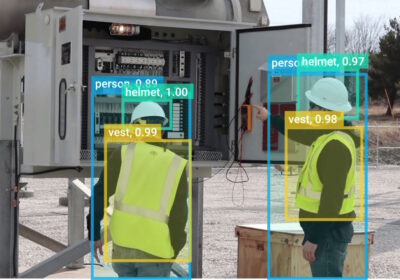
Across the world, cities are being rebuilt in software as much as in concrete, with sensors, connectivity, and analytics reshaping how streets, utilities, services, and public spaces are planned and managed. This transformation promises efficiency and resilience, but it also raises a more demanding question about what urban intelligence should ultimately serve.

Over the last two decades, the concept of the smart city has been widely adopted as a shorthand for urban progress, frequently associated with connected infrastructure, pervasive sensors, data platforms, automation, and the promise of systems that can be optimized through computation. In practice, the smart city is not a single technology but an integrated socio-technical architecture in which digital networks, edge devices, cloud services, and analytics form a continuous feedback loop between the physical city and its digital representations. This loop enables real-time visibility of urban dynamics, from mobility flows and energy demand to air quality and service performance, and it supports the operational shift from reactive management to anticipatory and preventive governance. However, as this model has matured, a more demanding question has emerged regarding the direction of urban transformation: whether intelligence, defined as efficiency and control through data and automation, is sufficient to produce cities that are equitable, resilient, and meaningful for their inhabitants. The next phase of urban development increasingly points beyond instrumented optimization toward a wise and human-centered city, in which technological capability is explicitly subordinated to human values, ethical constraints, and collective purpose, and in which “better” is measured not only by system performance metrics but by wellbeing, inclusion, trust, and ecological balance.
The distinction between smartness and wisdom is subtle in language but decisive in governance and design. A smart city typically frames problems as measurable inefficiencies that can be corrected by improved sensing, faster data processing, and algorithmic decision support. A wise city retains these capabilities but recognizes that the most consequential urban questions are rarely reducible to optimization alone because they involve trade-offs among competing goods, uneven distributions of risk and benefit, and long-term impacts that are uncertain or politically contested. In this sense, wisdom is not opposed to technology but to the uncritical assumption that technological intelligence automatically produces desirable outcomes. Wisdom requires the capacity to define objectives transparently, to surface value conflicts, to protect rights, and to determine when an optimization is appropriate and when it is socially harmful, even if it improves a narrow performance indicator. The wise city therefore places people at the center of the system not as passive endpoints of service delivery or as data sources, but as rights-bearing participants in a shared urban project whose priorities must be articulated, negotiated, and periodically revised as the city evolves.
Technology remains the primary instrument through which contemporary cities pursue transformation, but its role changes from being a symbol of modernization to being an accountable, explainable, and context-sensitive layer of urban capability. Urban Internet of Things deployments provide continuous measurement across transportation corridors, utilities, public spaces, and environmental zones, generating high-frequency data streams that can reveal patterns invisible to periodic surveys or manual inspection. Advanced connectivity, including fiber backbones, 5G networks, and low-power wide-area systems, enables this instrumentation to operate at scale, while edge computing allows latency-sensitive functions such as traffic signal coordination, safety monitoring, and localized energy management to be performed near the source of data rather than exclusively in centralized clouds. At the platform level, cities increasingly rely on interoperability frameworks, open standards, and application programming interfaces that reduce vendor lock-in and allow data from heterogeneous systems to be fused for cross-domain analysis. These technical foundations constitute the operating substrate of the smart city, and they are essential for modernization because they allow legacy urban systems, often fragmented across agencies and contractors, to be integrated into coherent operational pictures and shared decision environments.
Artificial intelligence and advanced analytics amplify this substrate by converting raw data into forecasts, classifications, and actionable recommendations. Predictive models support demand management in public transport, anticipate congestion, and improve incident response by estimating where and when disruptions are likely to occur. In energy systems, machine learning can optimize district heating, balance distributed generation, and enhance the stability of microgrids by predicting renewable output and consumption patterns. In water networks, anomaly detection models identify leaks and pressure irregularities, reducing non-revenue water and preventing infrastructure failures that disproportionately affect vulnerable neighborhoods. In waste management, route optimization and fill-level sensing reduce fuel consumption and improve service reliability. These capabilities illustrate why the smart city paradigm gained momentum: when properly engineered, data-driven control improves resource efficiency and service continuity, creating measurable benefits in operating costs, emissions, and user experience. Yet the wise city perspective insists that these benefits are not self-justifying and must be evaluated in relation to who gains, who bears new forms of surveillance or exclusion, and whether automation shifts accountability away from democratic institutions.
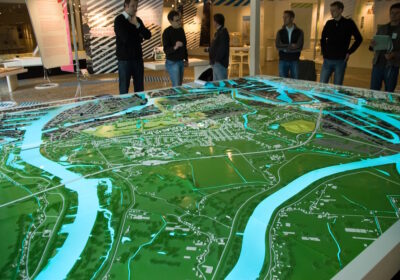
Digital twins represent a particularly important evolution of urban technology because they convert the city from a set of disconnected management dashboards into an integrated simulation environment where policy can be tested before it is deployed. A well-designed urban digital twin combines geographic information systems, building information models, transportation models, environmental sensors, and real-time operational data into a dynamic representation of the city’s assets and processes. This enables scenario analysis for climate adaptation, such as modeling flood propagation under different rainfall intensities and testing the performance of drainage upgrades, green infrastructure, or emergency routing strategies. It also supports planning for housing, zoning, and mobility by simulating the effects of new developments on traffic loads, public transport utilization, energy demand, and local air quality. The wise city model treats digital twins not merely as engineering tools but as governance instruments: they can make trade-offs legible to the public, support deliberation by translating technical proposals into comprehensible impacts, and improve accountability by documenting the assumptions embedded in planning decisions. The technical promise of simulation becomes socially valuable when the twin is used to widen informed participation rather than to narrow the set of acceptable options to those that best fit predefined optimization targets.
Human-centered transformation also requires a shift in how urban interfaces are designed and how citizens interact with digital systems. Smart city initiatives have often emphasized operational control rooms and centralized dashboards, but a wise city extends the intelligence layer outward through accessible digital services that reduce friction in daily life while respecting autonomy and privacy. Mobility-as-a-service platforms integrate public transit, bike sharing, micro-mobility, and on-demand services through unified ticketing and real-time information, enabling multimodal journeys that reduce private car dependency. Digital permitting and e-government services decrease administrative burden, improve transparency, and reduce opportunities for arbitrary decision-making when workflows are standardized and auditable. Assistive technologies and inclusive design, including accessibility-aware routing, multilingual civic portals, and adaptive interfaces, ensure that digitization does not systematically privilege highly connected, technologically fluent residents while marginalizing others. The core technical challenge is not only usability but also equitable access, which depends on broadband coverage, device affordability, public digital spaces, and service design that accounts for different capabilities and constraints across the population.
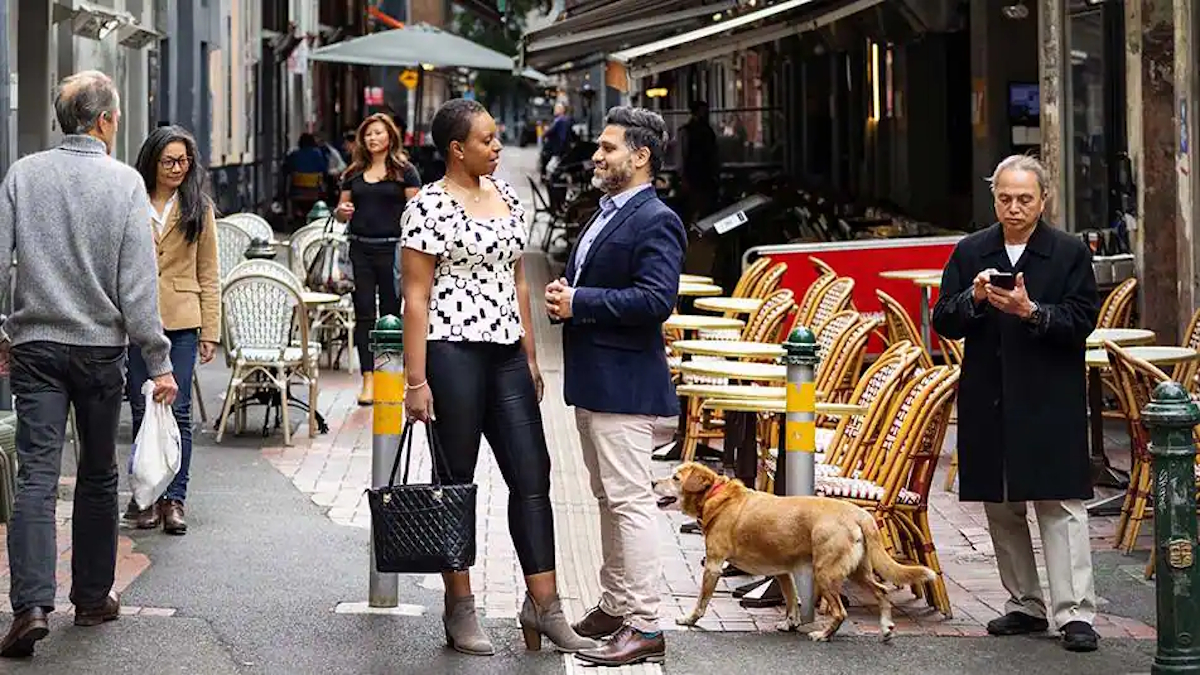
The move from smart to wise becomes most apparent in the domain of data governance and algorithmic accountability. Data is the strategic resource of the digital city, but its collection and use implicate rights, power, and trust. A wise city develops governance structures that define what data is collected, for what purposes, under what legal basis, with what retention and security controls, and with what mechanisms for public oversight. Privacy-preserving techniques, including data minimization, differential privacy, secure multiparty computation, and federated learning, can reduce exposure of personal information while still enabling useful analytics, but these methods must be accompanied by clear policy commitments and enforceable institutional responsibilities. Algorithmic systems that shape access to services, allocate enforcement attention, or prioritize infrastructure investment require transparency and contestability, including documentation of model objectives, training data provenance, performance across demographic groups, and procedures for appeal when outcomes are disputed. In this sense, the wise city treats algorithmic decision systems as part of the civic order, subject to audit and democratic control, rather than as proprietary black boxes embedded in vendor platforms.
Participatory governance is therefore not an optional complement but a structural requirement for wise urban intelligence. Technology can support this shift by enabling large-scale consultation, participatory budgeting, and continuous feedback mechanisms that go beyond periodic elections. Deliberation platforms, digital town halls, and structured consultation tools can collect proposals, measure sentiment, and surface local knowledge that is not captured by sensors, while natural language processing can help summarize public inputs and detect recurring concerns across neighborhoods. However, the wise city does not equate engagement with simple sentiment extraction; it recognizes that civic participation must be designed to reduce manipulation, ensure representation, and provide traceable pathways from citizen input to policy outcomes. Trust emerges when residents can see how decisions were made, what constraints were considered, and why certain trade-offs were chosen, and when they have meaningful avenues to challenge decisions that harm them. In technical terms, this implies governance architectures in which data and models are embedded in transparent decision workflows, supported by public reporting, independent oversight, and clear accountability lines that prevent the diffusion of responsibility into “the algorithm.”
Sustainability and resilience provide a concrete domain where the integration of technology and human values becomes operational rather than rhetorical. Climate pressures are increasingly expressed through heat waves, floods, droughts, and air quality crises, and smart systems offer powerful capabilities for monitoring and response. Distributed environmental sensors and satellite-derived data can detect heat islands, pollution hotspots, and hydrological risks, while predictive models can anticipate demand spikes in electricity or water and trigger adaptive measures. Smart grids facilitate higher penetration of renewables by coordinating distributed energy resources, storage, and flexible demand, and building management systems reduce emissions by optimizing heating, cooling, and ventilation in response to occupancy and weather. Yet wisdom requires that sustainability strategies do not externalize costs onto disadvantaged communities, for example by concentrating pollution monitoring without remediation, or by deploying dynamic pricing that penalizes households with limited ability to shift consumption. A wise city therefore couples technical optimization with distributive analysis, ensuring that climate adaptation investments, energy retrofits, and mobility reforms reduce vulnerability and improve health outcomes where needs are greatest, rather than merely improving aggregate efficiency.
Education and institutional capacity are likewise central to converting technological potential into durable urban development. Smart city programs often fail when cities acquire technology without building the skills and governance competencies required to operate it responsibly, evaluate vendors, and interpret analytics critically. A wise city invests in digital literacy for the public and in advanced capabilities for civil servants, planners, and public-sector engineers, including data management, cybersecurity, procurement expertise, and the ability to assess model validity and bias. Professional training must be complemented by ethical literacy, ensuring that those who design and deploy urban algorithms understand not only performance metrics but also the social consequences of measurement choices, proxy variables, and deployment contexts. When residents understand how systems work, what limitations they have, and how to question their outcomes, participation becomes more substantive and less vulnerable to technocratic paternalism. The city becomes an adaptive learning system in which knowledge is distributed across institutions and communities rather than concentrated in specialized technical teams or external contractors.
A crucial implication of this approach is that wisdom cannot be manufactured by computation alone. Artificial intelligence can improve detection, prediction, and optimization, but it cannot define legitimate goals or resolve value conflicts without human deliberation. The wise city acknowledges that urban development is inherently normative because it involves decisions about what to prioritize, what to protect, and what to sacrifice under constraint. It also recognizes that technological systems can produce new forms of fragility, including cyber vulnerabilities, cascading failures in interconnected infrastructures, and governance risks when cities become dependent on proprietary platforms. Consequently, resilience in the wise city includes both technical robustness and institutional robustness, incorporating cybersecurity-by-design, redundancy, and incident response, as well as procurement models that preserve strategic autonomy through open standards, modular architectures, and long-term maintainability. The objective is not to reject advanced technology but to embed it in an urban strategy where accountability, human rights, and ecological limits are treated as design requirements rather than external considerations.
Ultimately, the development trajectory from smart to wise urbanism reflects a broader maturation in how cities understand innovation. The smart city established the technical feasibility of making urban systems observable, connected, and responsive, creating unprecedented opportunities to reduce waste, improve safety, and enhance service quality through real-time intelligence. The wise city retains these capabilities but reframes them within a human-centered doctrine in which technology is a means of strengthening social cohesion, enabling fair participation, and safeguarding the conditions for long-term flourishing. In this model, progress is not measured by the density of sensors, the sophistication of dashboards, or the degree of automation, but by the coherence between technological systems and civic values, and by the extent to which digital transformation deepens trust, equity, and collective agency. When urban data serves people rather than simply managing them, and when computational intelligence is guided by ethical discernment and democratic purpose, the city moves beyond smartness toward wisdom, aligning technological development with what citizens recognize as genuinely worth building and sustaining.