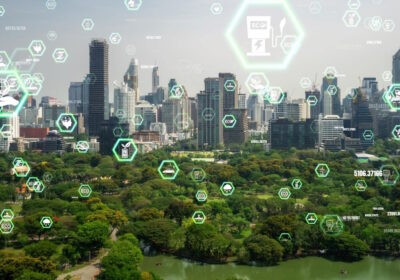

Cities are at the heart of the climate challenge. They occupy less than two percent of the Earth’s surface, yet they consume over 75 percent of global energy and generate around 70 percent of greenhouse gas emissions. Achieving carbon neutrality ,a balance between emitted and absorbed CO₂, has therefore become one of the defining goals of 21st-century urban policy. While renewable energy and sustainable mobility are key pillars, artificial intelligence is emerging as the invisible engine that connects, predicts, and optimizes all aspects of the carbon-neutral city.
At its core, AI provides the capacity to measure and understand emissions in real time. Traditional monitoring systems rely on periodic reports and static data, which often arrive too late to guide action. Machine learning and predictive analytics, however, can process continuous streams of information ,from satellite imagery and smart meters to air quality sensors and traffic data, offering a live picture of how and where emissions are produced. This granular understanding allows cities to act proactively rather than reactively.
For example, AI models can forecast daily or seasonal emission trends by analyzing variables such as temperature, traffic flow, industrial activity, and energy consumption. This predictive capability helps city managers anticipate high-emission periods and implement short-term mitigation strategies ,like adjusting public transport frequency, optimizing street lighting, or managing energy loads in municipal buildings. It also provides the analytical foundation for long-term climate strategies, enabling the simulation of scenarios before policy decisions are made.
One of the most powerful tools in this field is urban digital twinning. By creating data-driven replicas of entire cities, AI allows planners to test the carbon impact of future developments ,from a new district to an infrastructure project, before construction begins. The system can simulate how design choices, materials, or transport connections will influence emissions across the city’s lifecycle. This ability to “see the future” of carbon impact in advance turns planning into a form of environmental foresight.
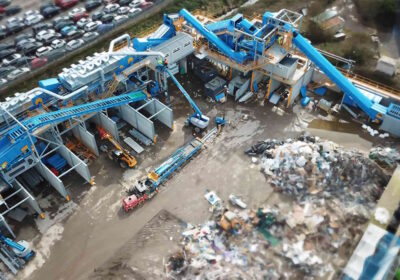
AI is also transforming the way cities manage their energy systems. Predictive algorithms optimize the operation of smart grids, balancing renewable generation with fluctuating demand. When solar or wind production drops, AI can automatically reroute stored energy, avoiding reliance on fossil sources. In heating and cooling networks, models anticipate temperature changes and regulate flows to minimize waste. Even in waste management, computer vision systems identify recyclable materials more efficiently, reducing both landfill use and methane emissions.
Transportation ,one of the largest urban polluters, is another key frontier. AI-powered mobility platforms can optimize traffic signals, predict congestion, and design low-emission zones dynamically based on real-time data. By combining GPS and vehicle telemetry, these systems calculate the cleanest and most efficient routes, reducing both fuel consumption and travel time. As electric vehicles become more common, AI will also manage charging infrastructure, ensuring that demand aligns with renewable availability rather than fossil-based peaks.
However, building carbon-neutral cities is not just a technical challenge; it is also a governance and behavioral one. Predictive models can guide decision-making, but they must be coupled with transparent policies, citizen participation, and data ethics. Who controls the algorithms that define emission priorities? How are trade-offs between economic growth and environmental limits decided? Ensuring accountability in AI-driven sustainability efforts is essential to maintain trust and equity.
Data quality and interoperability also remain critical. Emission models depend on accurate, consistent, and comprehensive data from multiple domains ,energy, transport, waste, buildings. Fragmented systems or inconsistent metrics can undermine predictive accuracy. That’s why many cities are developing urban climate data platforms, where AI can integrate cross-sector information into unified, transparent dashboards accessible to policymakers and the public alike.
Despite these challenges, the potential of AI for decarbonization is transformative. It enables cities to move from estimation to precision, from reaction to anticipation. By continuously learning from the urban metabolism, AI helps governments understand not only how emissions occur, but how they can be avoided. Each improvement in prediction translates into a tangible reduction in carbon output and a measurable step toward sustainability.
The journey toward carbon neutrality will take decades, but artificial intelligence is accelerating it. By transforming data into foresight, AI gives cities the power to see their environmental future , and change it before it happens.
In doing so, it turns sustainability from a goal into an intelligent, adaptive process: a living system that evolves, learns, and moves us closer to truly carbon-neutral urban life.