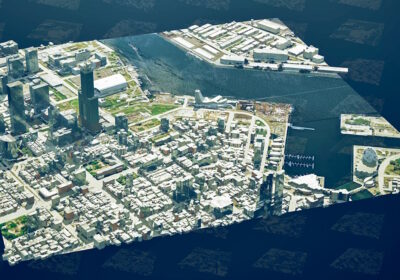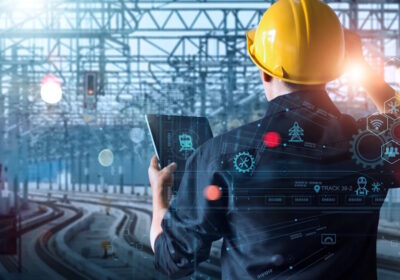
As cities grow denser and more interconnected, emergencies no longer unfold in isolation but ripple rapidly across complex urban systems. In this context, the capacity to detect, interpret, and respond to crises in real time has become a defining challenge of modern urban governance. Artificial intelligence is reshaping this landscape, transforming emergency response from a reactive function into a core pillar of smart city development and resilience.
In contemporary urban environments, where population density, infrastructure complexity, and interdependence of services continue to increase, the ability to detect and respond to emergencies in real time has become a defining capability of advanced cities. Fires, floods, traffic collisions, industrial accidents, and infrastructure failures no longer represent isolated events but systemic disruptions with cascading effects across transportation networks, energy grids, healthcare systems, and public safety services. Traditional emergency response models, largely dependent on manual reporting, human observation, and sequential communication between agencies, struggle to operate at the speed and scale demanded by modern cities. Within this context, artificial intelligence has emerged as a foundational technology for the transformation of emergency management, enabling cities to evolve into smart, adaptive, and resilient systems capable of sensing, interpreting, and responding to crises as they unfold.
At the core of AI-enabled emergency response lies the integration of real-time sensing infrastructures with advanced data analytics. Smart cities deploy extensive networks of cameras, environmental sensors, connected vehicles, drones, wearable devices, and Internet of Things platforms that continuously generate vast streams of data describing urban activity and environmental conditions. Artificial intelligence systems process this data in real time, applying machine learning models to identify deviations from normal patterns that may indicate an emerging incident. Sudden increases in temperature, abnormal vibrations in structures, unexpected changes in traffic flow, or unusual crowd dynamics can all be detected automatically. This continuous situational awareness transforms the city into a living system that monitors itself, allowing authorities to identify threats at their earliest stages and intervene before local incidents escalate into large-scale emergencies.
Computer vision technologies play a particularly significant role in this transformation. AI-powered visual analysis enables urban surveillance systems to detect smoke, flames, vehicle collisions, fallen pedestrians, or unauthorized intrusions within seconds, even under challenging conditions such as low light, adverse weather, or visual obstruction. Unlike conventional detectors that rely on proximity or threshold-based triggers, vision-based AI interprets contextual information across multiple locations simultaneously. This capability allows cities to identify incidents remotely and in parallel, significantly reducing detection times. Once an event is recognized, automated response protocols can be activated, including the immediate notification of emergency services, dynamic control of traffic signals to facilitate access routes, and the adjustment of ventilation, lighting, or safety barriers within affected areas. In this way, AI does not merely observe urban space but actively participates in its operational management.
Predictive analytics further extends the capacity of smart cities from real-time reaction to anticipatory resilience. In flood-prone regions, AI systems integrate meteorological data, river and drainage sensors, satellite imagery, and historical flood patterns to forecast inundation risks hours or even days in advance. These forecasts support proactive measures such as the pre-positioning of emergency resources, the automated regulation of pump stations and reservoirs, and the timely evacuation of vulnerable communities. Similarly, in seismically active areas, AI-enhanced monitoring of structural sensors and geological data improves the assessment of building integrity following earthquakes, enabling faster prioritization of inspections and rescue operations. When combined with autonomous drones equipped with thermal imaging and spatial mapping capabilities, AI systems provide responders with detailed situational intelligence in environments that are too dangerous or inaccessible for human teams, accelerating rescue efforts while reducing risk.
Crowd management represents another critical application of artificial intelligence within smart cities, particularly during large public events or periods of heightened social activity. Machine learning algorithms analyze pedestrian movement patterns captured by urban sensing networks to identify early indicators of congestion, panic behavior, or abnormal crowd dispersion. These insights allow city operators to intervene dynamically by opening or closing access points, redirecting pedestrian flows, and broadcasting targeted safety instructions. By continuously adapting to real-time conditions, AI-enabled systems reduce the likelihood of stampedes, bottlenecks, and secondary incidents. In this role, artificial intelligence functions as an invisible layer of governance that enhances public safety without requiring constant human supervision.
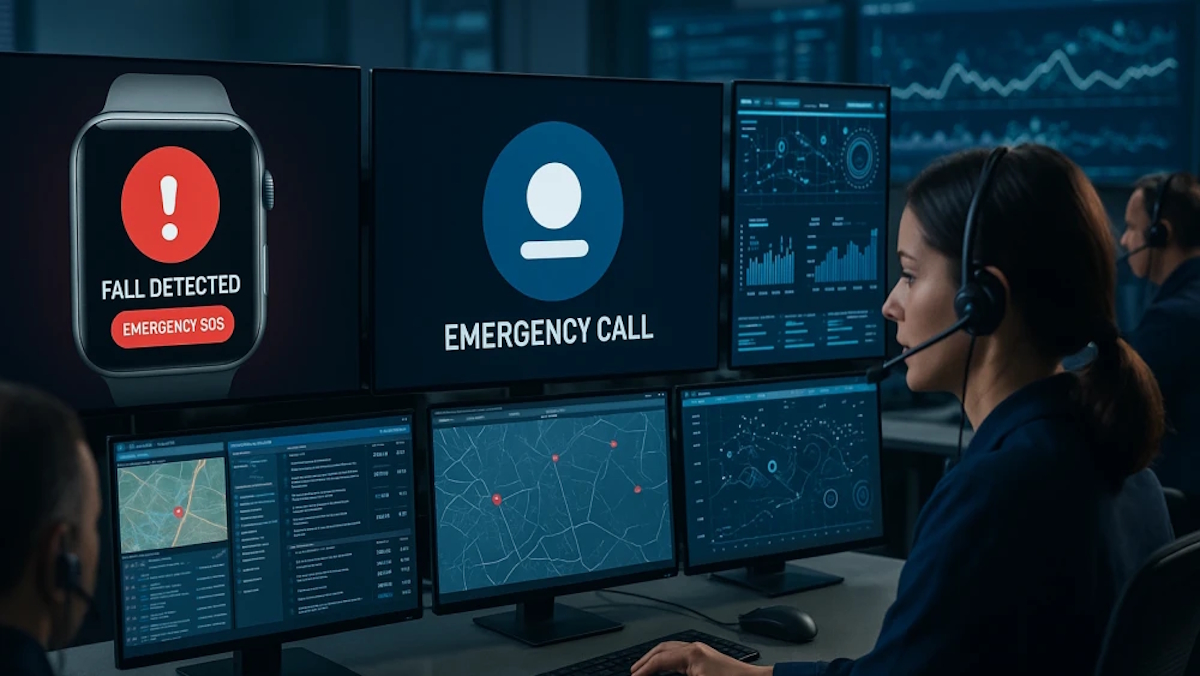
Emergency communication and information synthesis are also fundamentally reshaped by AI technologies. Natural language processing enables the real-time analysis of emergency calls, text messages, and social media content to extract relevant signals from large volumes of unstructured data. During rapidly evolving crises, such as earthquakes or large-scale accidents, these systems can identify clusters of distress messages and geolocated reports, generating an initial impact map long before formal assessments are completed. Citizens effectively become distributed sensors within the urban ecosystem, while AI serves as the analytical engine that translates collective input into actionable intelligence. This capability significantly enhances situational awareness and supports faster, more informed decision-making during the critical early phases of an emergency.
One of the most transformative contributions of artificial intelligence to urban emergency management lies in inter-agency coordination. In complex incidents, delays often arise from fragmented information flows between fire services, police departments, hospitals, transportation authorities, and utility providers. AI-driven command platforms integrate data from these diverse actors into unified operational dashboards, presenting decision-makers with a comprehensive and coherent view of the situation. Advanced optimization algorithms can recommend resource allocation strategies in real time, such as dispatching ambulances based on predicted patient loads, adjusting traffic control systems to prioritize emergency vehicles, or isolating sections of the power grid to prevent further damage. This level of coordination shifts emergency response from a reactive sequence of actions to a synchronized system-level operation.
Despite its transformative potential, the deployment of artificial intelligence in emergency response introduces important ethical, legal, and operational considerations. Continuous urban monitoring raises legitimate concerns regarding privacy, data ownership, and surveillance. Smart cities must therefore implement robust governance frameworks that ensure transparency, accountability, and compliance with data protection regulations. Citizens need clear information about what data is collected, how it is used, and under what conditions it is retained or shared. Equally important is the reliability of AI systems themselves. Models must be trained on diverse and representative datasets to minimize false positives, biases, and context-specific errors. While automation enhances speed and scale, human oversight remains essential, particularly in high-stakes decisions that affect public safety. The most effective smart city architectures are hybrid systems in which artificial intelligence augments human expertise rather than replacing it.
The cumulative impact of AI-enabled emergency response is a fundamental shift in how cities understand and manage risk. By reducing detection and response times, minimizing material damage, and improving survival rates, artificial intelligence strengthens urban resilience at both operational and strategic levels. Over time, learning systems continuously refine their models based on past incidents, building an institutional memory that enhances preparedness for future events. This capacity for adaptation is a defining characteristic of smart cities, which are not static collections of technologies but evolving systems that learn from experience.
In the cities of the future, emergencies will remain an inherent aspect of urban life, but their consequences will be increasingly mitigated by intelligent infrastructure and data-driven governance. Artificial intelligence does not eliminate uncertainty or danger, but it enables cities to confront crises with greater foresight, precision, and coordination. When urban environments are capable of sensing disruptions, interpreting complex signals, and responding dynamically in real time, they transcend the notion of technological sophistication and embody resilience as a structural principle of urban design and management.