
Few urban frustrations are as universal as traffic jams. Congestion wastes time, increases pollution, and undermines the quality of life in cities around the world. Traditional traffic management systems, based on fixed light cycles and human supervision, simply cannot keep up with the complexity of modern mobility. Each intersection is a puzzle of vehicles, pedestrians, and cyclists, all moving unpredictably. The rise of artificial intelligence is offering a powerful solution: AI-driven traffic lights, capable of adapting to real conditions in real time and transforming the way cities move.
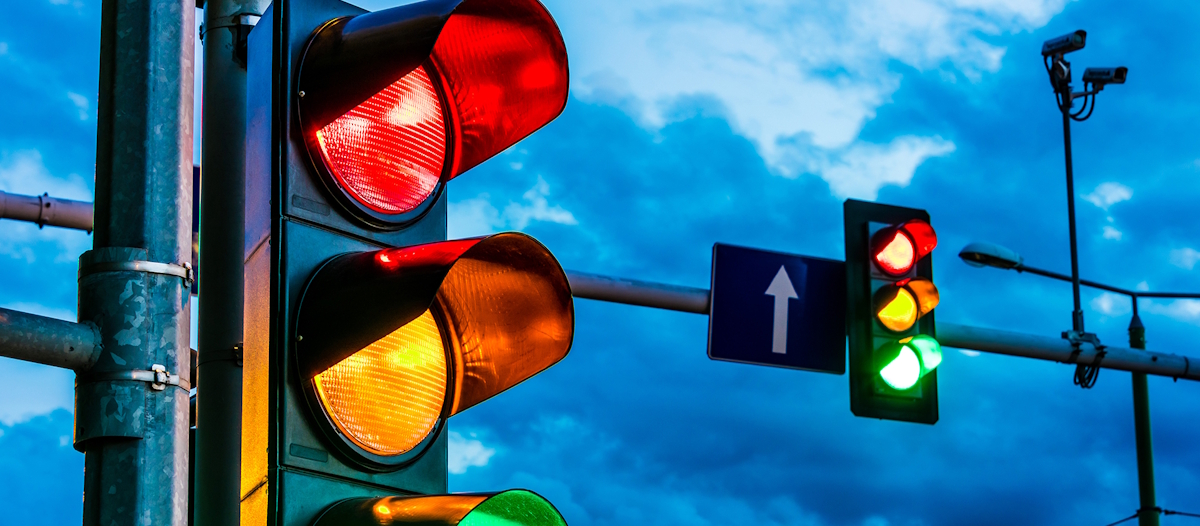
The principle is simple but revolutionary. Instead of following preprogrammed schedules, AI-controlled traffic lights use machine learning algorithms to analyze data from sensors, cameras, and connected vehicles. These systems detect vehicle density, speed, and flow direction, as well as pedestrian crossings and environmental factors such as weather or time of day. The AI then adjusts signal timings dynamically, optimizing each intersection to minimize waiting time and maximize throughput.
In essence, the city learns to breathe, its traffic lights becoming the rhythmic pulse of an intelligent organism.
Unlike conventional systems that rely on isolated intersections, AI-based platforms view the urban road network as an integrated ecosystem. Algorithms coordinate multiple intersections simultaneously, ensuring that changes at one junction improve, rather than disrupt, flow elsewhere. By analyzing real-time data across the network, the system anticipates congestion before it forms and adjusts patterns proactively. The result: smoother traffic, fewer stops, lower emissions, and shorter travel times.
The benefits extend beyond vehicle flow. AI can recognize when pedestrians or cyclists are waiting and adapt signal phases to prioritize safety and inclusivity. In some cities, dynamic crosswalk systems detect people with reduced mobility and extend green times automatically. Public transport can also be integrated: buses or trams equipped with GPS communicate with traffic lights, requesting priority passage to maintain punctuality. This kind of cooperative traffic management turns the city’s streets into a coordinated environment rather than a competitive one.
Real-world implementations are already proving the impact. In Pittsburgh, for example, an AI-driven system developed by Carnegie Mellon University reduced travel times by up to 25% and emissions by 20%. In Hangzhou, China, AI algorithms manage over 1,000 intersections, continuously optimizing flow using data from cameras, sensors, and mobile devices. These examples illustrate the transformative potential of moving from static control to adaptive intelligence in urban mobility.
The underlying technology combines several branches of AI. Computer vision identifies vehicle types and counts; reinforcement learning allows the system to improve through experience, testing different timing strategies to find optimal results; and predictive modeling uses historical data to foresee demand peaks, such as rush hours or event traffic. Together, these tools enable the city to evolve continuously, learning from its own behavior day after day.
However, the deployment of AI-driven traffic systems also raises challenges. Data privacy must be guaranteed, especially when cameras capture license plates or pedestrian images. Cybersecurity is another concern: intelligent intersections must be protected against potential tampering that could disrupt traffic or endanger safety. Cities adopting these technologies need strong governance frameworks, clear accountability, and regular auditing of AI models to ensure fairness and reliability.
Economic and operational aspects also matter. While AI systems can significantly reduce long-term costs by improving efficiency and cutting fuel use, initial installation requires investment in sensors, connectivity, and computational infrastructure. Smaller municipalities may need collaborative models or national programs to implement such systems at scale. Nonetheless, as hardware becomes cheaper and algorithms more efficient, adoption is accelerating globally.
Perhaps the most significant outcome of AI-driven traffic control is its contribution to environmental sustainability. Reduced idling time and smoother flow lead to lower fuel consumption and emissions. In dense urban areas, even small improvements in traffic fluidity translate into measurable reductions in CO₂ output and air pollutants. Intelligent intersections thus become part of the broader strategy for decarbonizing urban mobility.
In the near future, these systems will connect seamlessly with autonomous vehicles, digital twins, and urban AI platforms. Traffic lights will no longer be simple regulators, they will become nodes in a self-organizing network that senses, learns, and adapts continuously.
Citizens may not notice the algorithms behind each green light, but they will experience the results: faster commutes, cleaner air, safer streets, and a calmer rhythm of life.
The evolution of the traffic light, from mechanical timer to intelligent agent, symbolizes a deeper transformation: the shift from control to coordination, from rigid planning to responsive intelligence.
And in that transformation, artificial intelligence is teaching cities something profound: how to move with awareness.