
Every smart city service rests on the same invisible foundation, and most cities underestimate what it takes to build it

Beneath every intelligent urban service — adaptive traffic management, smart waste collection, environmental monitoring, public lighting control, water network management — there is an IoT sensor network. It is the layer through which the city perceives itself: capturing data from physical infrastructure, transmitting it to platforms, and making it available to the systems and people who act on it.
Designing that layer well is one of the most consequential technical decisions in any smart city programme. Designing it poorly — or skipping the design phase entirely in favour of deploying whatever sensors a vendor recommends — is one of the most common reasons smart city investments fail to deliver their projected value.
This article covers the architecture of urban IoT sensor networks from a feasibility perspective: not just how they work, but what determines whether a specific design is viable in a specific urban context — and what needs to be established before any procurement decision is made.
The first question is not technical: what urban problem are you actually solving?
The single most important design decision in a sensor network has nothing to do with hardware, protocols, or platforms. It is the definition of the operational purpose the network is expected to serve — with enough precision to translate that purpose into measurable variables.
This distinction matters because a sensor network designed for traffic management requires a completely different architecture from one designed for flood risk monitoring, structural health assessment of bridges, or environmental air quality surveillance. The technology, the spatial deployment logic, the communication requirements, and the data platform all follow from the service objective — not the other way around.
A practical example: a municipality considering “smart environmental monitoring” as a project objective needs to answer a prior set of questions before any sensor can be specified. What phenomena need to be measured — air quality, noise, temperature, humidity, all of the above? At what spatial resolution? With what frequency? To inform which decisions, made by whom, on what timescale? The answers to these questions determine the architecture. Without them, there is no basis for assessing whether any proposed design is viable, appropriately specified, or cost-effective.
The transformation of urban needs into measurable variables is the design step that is most frequently skipped — and most frequently responsible for deployments that generate data nobody uses.
The field layer: why sensor placement matters more than sensor count
Once the service objective is precisely defined, the design process moves to the field layer — the physical deployment of sensing devices across urban space. This is where architecture becomes tangible: sensors embedded in roads, mounted on street furniture, installed in utility chambers, and integrated into building facades.
The selection of sensor typologies depends on five core variables: the nature of the phenomenon being measured, the required accuracy, environmental exposure conditions, maintenance accessibility, and expected device lifespan. Sensors in underground drainage systems must withstand humidity, pressure variation, sediment accumulation, and corrosive environments. Sensors on lighting poles for environmental monitoring must endure solar radiation, wind stress, rain, and urban pollution. Getting these specifications wrong adds cost, reduces reliability, and shortens the effective life of the network — all of which affect the economic case for the investment.
Spatial deployment is where most sensor network designs have significant room for improvement. The effectiveness of a network depends not on the number of sensors deployed, but on the intelligence of their placement. Poor positioning produces blind spots, data redundancy, and distorted readings that undermine operational usefulness without reducing cost.
A traffic flow sensor deployment along a main urban corridor, for instance, should not place sensors at uniform intervals. It should prioritise intersections with high turning complexity, bus priority lanes, pedestrian crossing zones, and known congestion bottlenecks — the points where the data has the highest operational decision value. This requires knowing the network’s behaviour before deploying the sensors, which means the design phase needs to draw on existing traffic data, operational knowledge from the relevant city departments, and in some cases preliminary measurement campaigns.
The feasibility implication: sensor network design requires domain expertise in the urban service being monitored, not just in IoT technology. A vendor who specialises in sensor hardware will optimise for sensor density. A city that knows its own operational problems will optimise for decision value. These are different objectives and they produce different architectures.
Communication architecture: the layer where urban environments create the most complexity
Once data is captured at field level, it needs to travel from edge devices to central platforms. The communication layer that enables this is one of the most technically sensitive aspects of the entire system — and one of the most context-dependent.
Urban environments create specific communication challenges: signal interference from dense built fabric, electromagnetic noise from transport infrastructure, heterogeneous ownership of physical assets, and the need to integrate devices from multiple vendors operating on different protocols. There is no universally correct communication architecture for a city-wide sensor network. The right design depends on the specific combination of use cases, device constraints, and existing infrastructure.
Several protocols are typically considered:
LoRaWAN is well suited to battery-powered devices transmitting small data packets over long distances at low cost — waste bin fill sensors, environmental monitoring stations, parking occupancy sensors. Its low power consumption makes it the default choice for devices where battery replacement logistics are a constraint. It requires dedicated gateway infrastructure, which the municipality either deploys and owns or accesses through a shared network operator.
NB-IoT and LTE-M provide greater reliability by operating through existing mobile network infrastructure, making them effective for distributed deployments where consistent coverage is critical. They have higher power consumption than LoRaWAN, which affects device battery life and replacement cycles.
5G and fibre backhaul become necessary for high-bandwidth applications — video analytics, LiDAR-based mobility systems, real-time structural monitoring — where the data volumes generated exceed the capacity of low-power wide-area networks.
The feasibility questions at this layer are about fit, not technology preference. What is the existing mobile network coverage in the deployment area? Is LoRaWAN gateway infrastructure already present, or does it need to be built? What connectivity options exist for below-ground deployments — meter chambers, drainage systems, utility vaults — where mobile signal is unreliable? What are the latency requirements of the application? A flood alert system requires near-real-time transmission with minimal latency; air quality data collected every five minutes can tolerate slower cycles. The answers drive the architecture; the architecture drives the cost.
Edge computing: processing data where it is generated
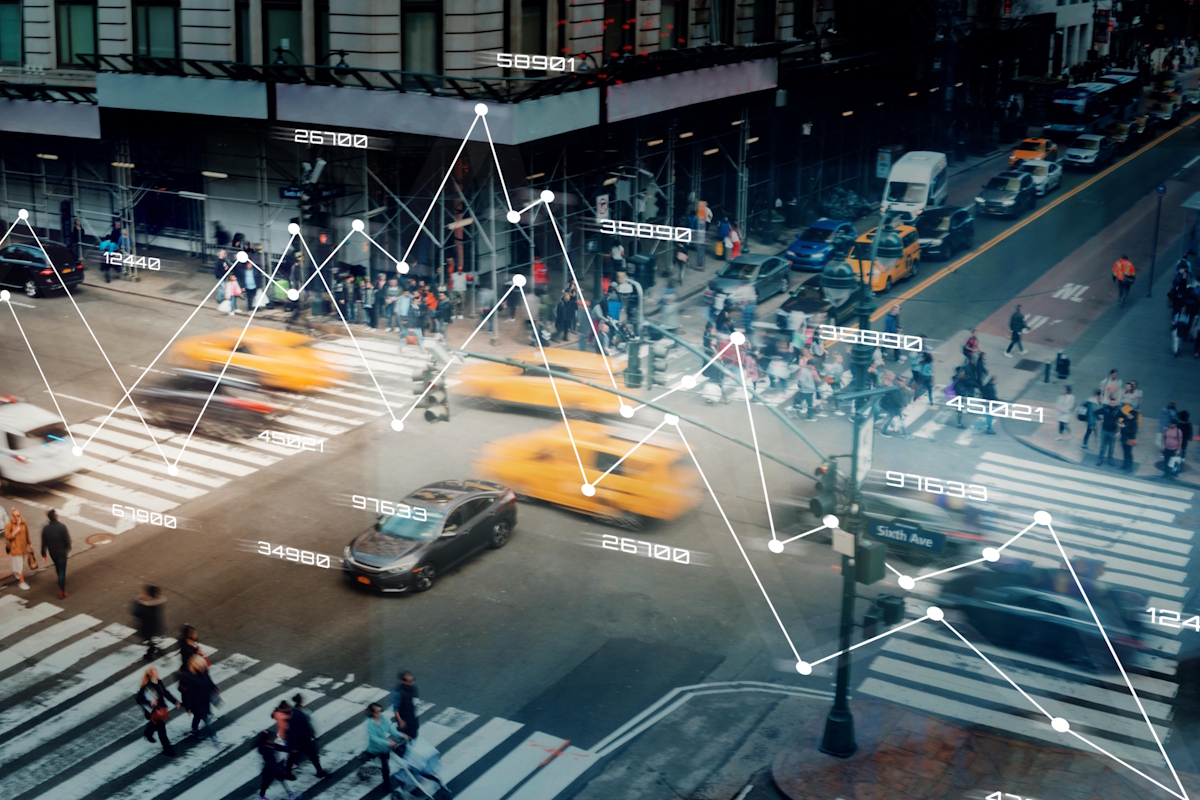
One of the most significant architectural evolutions in urban IoT is the growing use of edge computing — processing data partially or fully at the point of collection, rather than transmitting raw data to a centralised platform for processing.
The rationale is operational and economic. In a public safety deployment using computer vision cameras at a hundred intersections, transmitting continuous high-resolution video to a central server creates bandwidth pressure, storage costs, and processing latency that are often unnecessary. If the operational objective is to detect specific events — pedestrian conflicts, vehicles running red lights, abnormal crowd density — an edge device that processes footage locally and transmits only alerts and metadata achieves the objective at a fraction of the bandwidth cost.
Edge computing also improves resilience. A network that depends entirely on continuous connectivity to a central platform loses functionality when the network link is interrupted. Edge devices that can continue local processing and store data for later transmission maintain operational continuity under adverse conditions.
The feasibility consideration is about the balance between edge and cloud processing — which is determined by the latency requirements, bandwidth constraints, and operational priorities of the specific application, not by a universal architectural principle. Over-specifying edge intelligence where centralised processing would suffice adds device cost and complexity. Under-specifying it where low latency and bandwidth constraints make edge processing necessary compromises performance.
Data integration: where isolated sensors become urban intelligence
A sensor network that produces data in silos — each application feeding its own platform, inaccessible to other city systems — captures only a fraction of its potential value. The data integration layer is where sensor outputs are aggregated, normalised, and made operationally available across city departments and services.
This layer includes APIs, middleware, time-series databases, GIS integration, dashboard systems, and — in more mature implementations — digital twin environments that represent the city’s physical infrastructure in a continuously updated virtual model.
The feasibility question at this layer is about interoperability and governance, not just technology. Traffic sensors, air quality monitors, weather stations, and public transport tracking systems should not operate as isolated data silos. But integrating them requires agreed data standards, governance frameworks for data ownership and access, and organisational willingness to share data across departmental boundaries — conditions that are often more difficult to achieve than the technical integration itself.
A city that discovers, through an integrated data environment, that peaks in particulate pollution correlate strongly with specific congestion patterns at certain intersections and wind conditions has created genuinely new operational knowledge. That insight is only possible through integrated architecture. But the integration requires political and organisational alignment as much as technical capability.
Cybersecurity: a design constraint, not an afterthought
Urban sensor networks are increasingly connected to critical infrastructure — traffic management systems, utility SCADA networks, public safety systems, building management platforms. Each field device in these networks is a potential attack surface. Compromised sensors can distort operational decisions, disable services, or serve as entry points into wider municipal systems.
Cybersecurity must therefore be embedded in the architectural design from the outset — not added as a secondary control after the primary design is complete. A robust architecture includes device authentication, encrypted communication protocols, network segmentation between critical and non-critical systems, zero-trust access models, certificate-based identity management, and continuous anomaly detection.
The feasibility implication is cost and complexity. Properly secured sensor networks cost more to design and deploy than unsecured ones. The difference is not optional — it is the difference between infrastructure that can be safely connected to critical city systems and infrastructure that cannot. Procurement processes that evaluate sensor network proposals on cost alone, without assessing the security architecture, consistently underestimate the true cost of building a system that is safe to operate.
Maintenance architecture: the layer that determines long-term value
One of the most persistently underestimated aspects of sensor network design is maintenance. Cities focus on deployment capital expenditure — the cost of procuring and installing the devices — while underestimating the operational complexity of keeping a distributed sensor network functioning reliably over years of continuous operation.
A mature design includes asset inventory systems, remote diagnostics, battery replacement cycles, firmware update mechanisms, calibration schedules, spare parts logistics, and field technician workflows. Each of these elements needs to be defined before deployment, because the operational model they require — staffing, contracts, budget — needs to be in place from day one.
Air quality sensors provide a clear example of why this matters. Calibration drift in electrochemical sensors is a known and inevitable phenomenon. Over time, without scheduled recalibration against reference instruments, the readings produced by deployed sensors progressively diverge from true values. A network that appears operational — sensors transmitting data, platforms displaying readings — can be generating systematically inaccurate information that is nonetheless being used to inform operational decisions.
The feasibility question: does the municipality or utility have the internal capacity to manage a sensor network’s maintenance requirements, or does the operational model need to include managed service provision? For many smaller municipalities, the honest answer is that internal capacity is insufficient — which means the choice of operational model is a feasibility constraint that shapes the system design.
The feasibility checklist: what to establish before specifying any sensor technology
Before any procurement process for an urban IoT sensor network begins, the following questions need clear answers:
- Service objective definition: What specific urban phenomena need to be continuously measured, at what spatial and temporal resolution, to inform which operational decisions?
- Variable mapping: What are the measurable variables that correspond to the service objective? What sensor typologies are required to measure them reliably in the specific environmental conditions of the deployment?
- Spatial deployment logic: Where should sensors be placed to maximise decision value — not just coverage? What domain expertise is required to make that determination?
- Communication assessment: What connectivity options exist in the deployment area for each device type and location? What are the latency, bandwidth, and power requirements of each application?
- Edge vs. cloud balance: For each application, what is the appropriate split between edge and centralised processing, given latency requirements and bandwidth constraints?
- Integration requirements: What existing city data systems need to be integrated? What data standards, governance frameworks, and organisational agreements are required?
- Security architecture: What is the security classification of the systems connected to the network? What cybersecurity requirements does that classification impose on the sensor architecture?
- Maintenance model: What are the ongoing maintenance requirements of the specified sensors? Does internal capacity exist to meet them, or is managed service provision required?
- Total cost of ownership: What is the full cost of the network over a realistic operational life — 7 to 10 years — including hardware, installation, connectivity, platform licensing, maintenance, calibration, and replacement?
- Organisational readiness: Who in the city will use the data produced by the network, day to day? Are those departments resourced and prepared to operationalise what the sensors provide?
The bottom line
An urban IoT sensor network is not a product. It is a designed system — one whose value depends entirely on the clarity of its purpose, the intelligence of its spatial deployment, the appropriateness of its communication architecture, the rigour of its security design, and the realism of its maintenance model.
The technology to build effective sensor networks is mature and commercially available. What determines whether a specific deployment succeeds is not the technology itself, but whether the design decisions that precede procurement have been made with sufficient rigour.
A sensor network that is technically functional but operationally unused — because the data it produces was never integrated into city workflows — has delivered no value. A network that generates data but cannot be maintained to the accuracy standards required for reliable decision-making has delivered negative value. The questions in the checklist above are the ones that determine whether a sensor network investment will actually work in practice.
That is what a feasibility assessment is for — and it belongs at the beginning of the process, before any architecture is specified and before any vendor is engaged.