
Africa’s waste management crisis is no longer just an environmental issue, but a structural economic challenge with far-reaching consequences for urban development. As cities expand rapidly and infrastructure struggles to keep pace, millions of tonnes of waste remain unmanaged, generating hidden costs that impact public health, productivity, and investment.
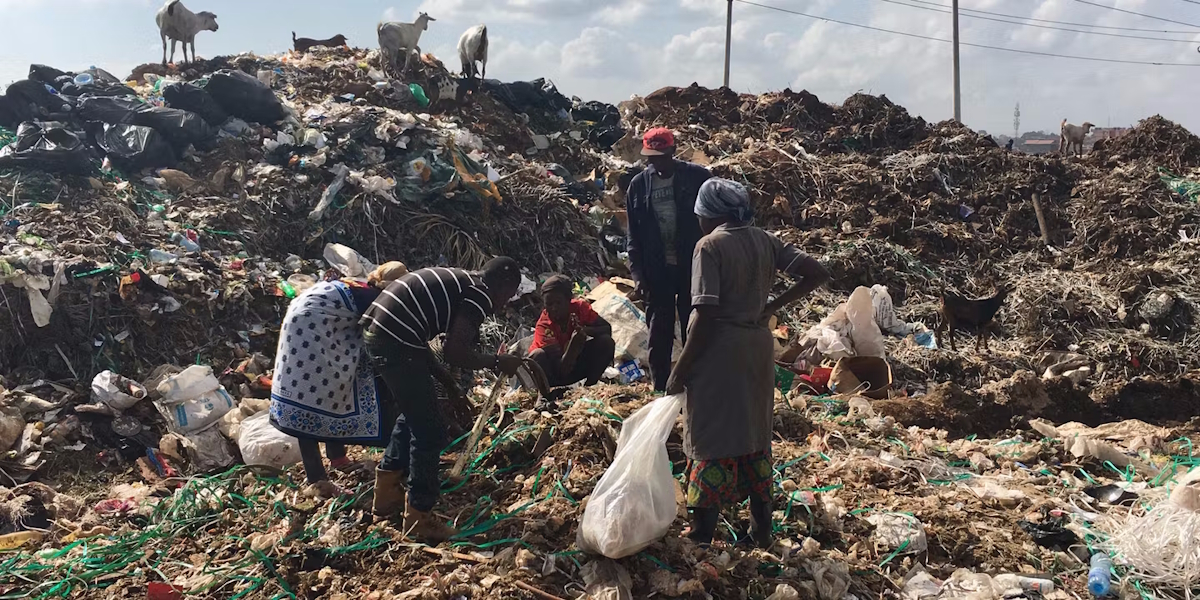
The growing accumulation of waste, the chronic insufficiency of sanitation systems, and the accelerating pace of urbanization are converging to create a persistent and deeply structural crisis of urban cleanliness across many African cities, a crisis that, while often perceived primarily through its visible environmental and social impacts, in reality conceals a far more complex and economically significant phenomenon that directly affects productivity, public finances, and the long-term attractiveness of urban environments. What emerges from the data provided by international institutions is not merely a problem of waste, but a systemic imbalance between urban growth and infrastructure capacity, whose consequences extend far beyond what is immediately visible in the streets.
A Structural Imbalance Between Waste Generation and Waste Management Capacity
At the core of the issue lies a fundamental mismatch between the volume of waste generated and the ability of cities to manage it effectively, a mismatch that has become increasingly pronounced as urban populations expand without a corresponding development of collection and treatment systems. According to the World Bank’s What a Waste 2.0 report, Sub-Saharan Africa produces approximately 174 million tonnes of municipal solid waste annually, yet less than half of this volume is formally collected, which means that the majority of waste is left to accumulate in informal dumps, open spaces, or drainage systems, thereby creating a diffuse and persistent layer of environmental degradation across urban landscapes. This structural gap between production and collection is not incidental, but rather reflects deeper institutional, financial, and infrastructural limitations that constrain the capacity of municipalities to deliver universal services.
This imbalance is further illustrated by data from the United Nations Environment Programme and various African clean city initiatives, which consistently indicate that more than 90% of waste is disposed of in uncontrolled or open sites, a situation that not only reflects the absence of adequate treatment facilities but also highlights the limited enforcement of environmental regulations. In Nairobi, for instance, the Dandora landfill, one of the most emblematic cases studied by UN-Habitat, receives up to 2,000 tonnes of waste per day within an area of approximately 45 hectares, a figure that not only demonstrates the scale of urban waste generation but also illustrates how existing infrastructure is rapidly reaching saturation, thereby increasing the likelihood of environmental contamination and public health risks.
Urbanization and Demographic Pressure as Multiplying Factors
The rapid demographic expansion of African cities acts as a powerful multiplier of these challenges, amplifying both the volume of waste generated and the complexity of managing it within already constrained systems. The United Nations estimates that the urban population of Africa will exceed 600 million inhabitants by 2025 and could approach 950 million by 2050, a trajectory that implies not only a near doubling of urban residents within a few decades but also a corresponding increase in waste generation that could overwhelm existing infrastructure if no structural reforms are implemented. Urbanization, in this context, is not merely a background trend but a central driver that intensifies every weakness in the waste management system, transforming localized inefficiencies into systemic risks.
In cities such as Kinshasa, Lagos, or Yaoundé, this dynamic is already visible in the daily reality of waste accumulation, where thousands of tonnes of waste are produced without full coverage of municipal services, leading to situations in which uncollected waste blocks drainage systems, exacerbates flooding, and creates environments conducive to disease transmission. These examples illustrate how the interaction between demographic growth and infrastructural limitations produces cascading effects that extend beyond sanitation into broader urban resilience challenges.
Budgetary Constraints and the Limits of Municipal Action
A significant part of this structural imbalance can be traced back to the financial constraints faced by local governments, which must allocate limited resources across multiple competing priorities while attempting to maintain basic urban services. The World Bank highlights that waste management can consume up to 20% of municipal budgets in some African cities, a proportion that, despite its magnitude, often fails to ensure comprehensive service coverage due to inefficiencies, fragmentation, and the sheer scale of demand. This paradox, in which substantial financial resources are mobilized without achieving universal access, reflects the complexity of managing waste systems in rapidly growing urban environments with limited fiscal capacity.
The consequences of these limitations become particularly evident during extreme weather events, when accumulated waste in drainage systems significantly increases the risk and severity of urban flooding, thereby generating additional costs related to infrastructure damage, emergency response, and post-disaster recovery. In this sense, inadequate waste management does not only represent a daily operational challenge but also a factor that amplifies the vulnerability of cities to climate-related risks.
Public Health Impacts and Their Economic Implications
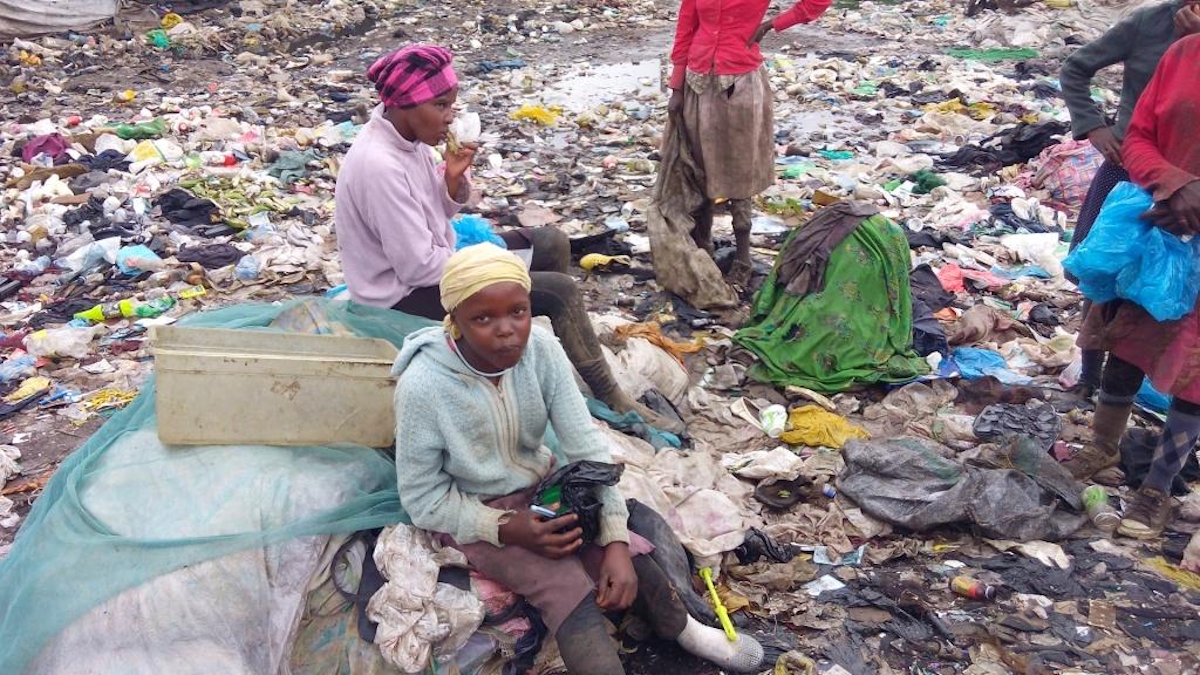
Beyond its environmental and infrastructural dimensions, poor waste management has profound implications for public health, which in turn translate into measurable economic losses through reduced productivity and increased healthcare expenditures. The World Health Organization estimates that approximately 24% of diseases in Africa are linked to environmental factors, including inadequate waste management, with conditions such as diarrheal diseases, cholera, and respiratory infections thriving in unsanitary environments. The relationship between waste and health is therefore not indirect but immediate and systemic, affecting millions of people and imposing a continuous burden on both households and public health systems.
This burden manifests itself in various forms, including absenteeism from work, reduced physical capacity, and increased medical costs, all of which contribute to a decline in economic activity, particularly in densely populated urban areas where the concentration of waste and exposure risks are highest. At the same time, emerging concerns such as the growing presence of microplastics in urban environments, resulting from the degradation of unmanaged plastic waste, introduce new and still poorly understood health risks that could further compound the long-term economic impact of the problem.
Diffuse but Substantial Economic Losses Across Multiple Sectors
When these various factors are aggregated, the economic impact of inadequate waste management becomes both substantial and multifaceted, extending far beyond the direct costs of collection and disposal. The World Bank estimates that Africa loses more than 8 billion dollars annually due to poor waste management, a figure that encompasses the combined effects on health, infrastructure, and environmental degradation. What makes these losses particularly significant is their diffuse nature, as they are distributed across multiple sectors and therefore often remain under-recognized in policy discussions, despite their considerable macroeconomic weight.
In some cases, international institutions suggest that the cumulative impact of these inefficiencies can represent up to 5% of national GDP, a proportion that underscores the extent to which waste management is not merely a technical issue but a critical component of economic development. For example, recurrent flooding caused by blocked drainage systems can lead to repeated infrastructure repairs, while poor urban cleanliness can deter investment and reduce tourism revenues, thereby affecting the broader economic prospects of cities.
The Informal Economy and the Untapped Value of Waste
In response to the shortcomings of formal waste management systems, an extensive informal economy has emerged, particularly around large dumping sites such as Dandora or in major West African cities, where thousands of individuals engage in the collection and resale of recyclable materials. While this activity provides a source of income for many households, it operates largely outside formal regulatory frameworks and often exposes workers to significant health risks due to the absence of protective measures and proper working conditions. Nevertheless, this informal sector reveals the existence of a significant economic resource embedded in waste, a resource that remains largely underutilized at the industrial level.
According to the World Bank, improvements in waste collection and recycling systems could reduce overall management costs by between 20% and 50%, while simultaneously creating new formal employment opportunities in recycling, processing, and circular economy industries. This suggests that waste, when properly managed, has the potential to shift from being a source of loss to becoming a driver of economic value creation.
Public Policies, Investments, and Uneven Outcomes
Recognizing the scale of the challenge, several African countries have launched ambitious programs aimed at improving waste management systems, often with the support of international financial institutions. Morocco, for example, has invested approximately 40 billion dirhams in its National Household Waste Program, achieving notable improvements in urban waste collection, while Senegal and Ghana have implemented large-scale initiatives such as PROMOGED and GARID, respectively, focusing on modernization and urban resilience. Rwanda, meanwhile, has gained international recognition for its strict regulatory framework and community-based approaches to urban cleanliness.
However, despite these efforts, the results remain uneven across regions and cities, with persistent waste accumulation observed in areas such as Lagos or incomplete service coverage in Kinshasa, highlighting the challenges associated with implementation, coordination, and long-term financing. These disparities illustrate that the effectiveness of waste management policies depends not only on the level of investment but also on the capacity to translate financial resources into coherent, sustained, and well-coordinated operational systems.
External Pressures and Emerging Local Solutions
An additional layer of complexity is introduced by the importation of waste from other regions, including plastic, electronic, and textile waste, which increases the volume of materials that must be managed without a corresponding expansion of treatment capacity, thereby exacerbating the saturation of existing infrastructure. At the same time, innovative local solutions are beginning to emerge, such as companies in Kenya that convert plastic waste into construction materials or projects in Côte d’Ivoire that generate energy from waste, demonstrating the feasibility of alternative models that combine environmental management with economic opportunity.
Yet, the scaling of these initiatives remains contingent upon access to financing, regulatory stability, and their integration into broader public policies, factors that are not always consistently present across different national contexts. Moreover, the role of individual behavior, including illegal dumping and the lack of waste sorting practices, continues to play a significant role in aggravating the problem, highlighting the importance of environmental education as a complementary tool to institutional action.
Waste Management as a Central Economic and Development Challenge
Taken together, these elements point to a central conclusion: waste management in Africa is not merely an environmental or technical issue but a structural economic challenge that affects multiple dimensions of urban life, from public health and infrastructure to productivity and investment attractiveness. The persistence of unsanitary conditions represents a continuous drain on economic resources, one that remains largely underestimated despite its measurable impact on development trajectories.
At the same time, projections from the World Bank suggest that the cost of waste management could increase significantly by 2030 if current systems are not improved, implying that the economic burden associated with inadequate waste management is likely to grow unless comprehensive reforms are implemented. In this context, the rapid pace of urbanization across the continent makes the reorganization and modernization of waste management systems not only necessary but urgent, as the ability to address this challenge will play a decisive role in shaping the future sustainability and competitiveness of African cities.