
Street lighting is one of the most visible, and vital, infrastructures in any city. It enhances safety, extends public life after dark, and defines the atmosphere of urban spaces. Yet for decades, lighting systems have remained largely static: fixed schedules, manual controls, and uniform brightness regardless of need. With the advent of the Internet of Things and artificial intelligence, this is changing rapidly. Smart lighting networks are turning light into an intelligent, adaptive, and interactive component of the urban ecosystem, one that not only saves energy but also communicates, senses, and connects with citizens.
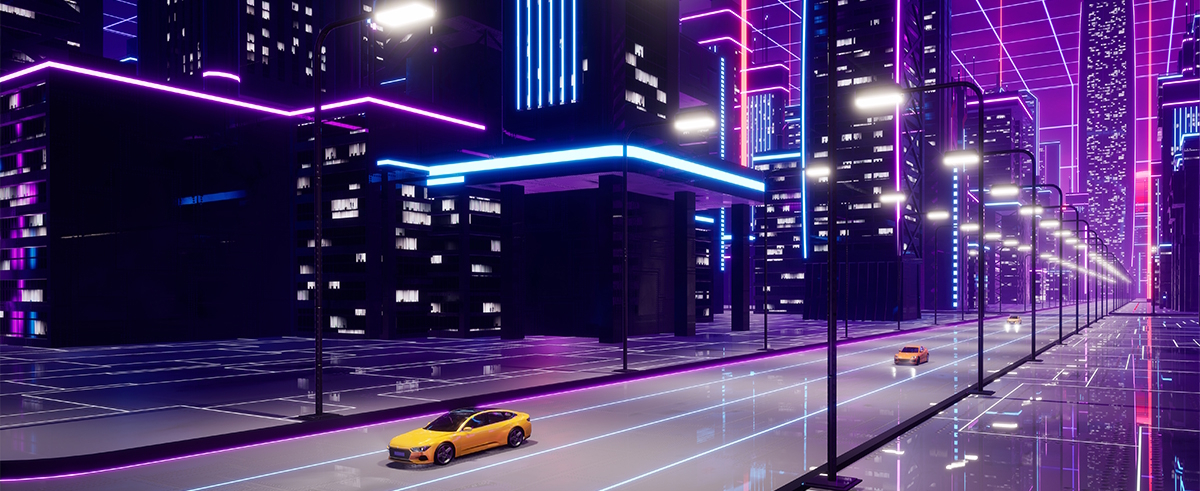
The foundation of a smart lighting network lies in connectivity. Each streetlight becomes a node equipped with sensors, controllers, and wireless communication capabilities. These lights can measure ambient light, motion, temperature, air quality, and even noise. Through machine learning algorithms, the system interprets this data to adjust brightness dynamically, dimming lights when streets are empty and increasing intensity when pedestrians or vehicles are detected. The result is a responsive illumination system that reduces energy use by up to 70% while enhancing safety and comfort.
But the potential of smart lighting extends far beyond efficiency. When connected to central AI platforms, lighting networks become part of the city’s sensory system, contributing valuable data for traffic management, environmental monitoring, and public safety. For instance, a streetlight detecting sudden noise and crowd movement can alert authorities to potential incidents. Integrated with traffic control, lights can guide emergency vehicles or support adaptive signal coordination. In this sense, lighting evolves from a utility into an intelligent communication layer of the city.
Some cities are already pioneering this transformation. Barcelona, Singapore, and Los Angeles have implemented smart lighting systems that adjust automatically to pedestrian flow and weather conditions, while also collecting environmental data. In Copenhagen, the lighting infrastructure doubles as an IoT backbone, hosting sensors for pollution, noise, and parking availability. The versatility of these networks demonstrates that streetlights can serve as platforms for urban intelligence, not just illumination.
Artificial intelligence adds predictive capability to this infrastructure. By analyzing historical and real-time data, AI models can forecast energy demand, detect malfunctioning lamps, and prioritize maintenance before failures occur. Predictive maintenance not only saves costs but also prevents service disruptions, keeping streets safely lit. Moreover, reinforcement learning allows the system to optimize itself continuously, learning how different areas use light at different times and seasons to adapt dynamically to human behavior.
Beyond management, smart lighting is transforming the aesthetic and social experience of urban life. Adaptive color and intensity can enhance public events, highlight heritage architecture, or create moods that change with festivals or seasons. In some cities, interactive lighting responds to movement, music, or temperature, making public spaces more engaging and inclusive. AI can even analyze pedestrian density to automatically brighten busy areas or dim those with minimal activity, balancing ambiance and sustainability.
The link between light and public perception of safety is particularly significant. Well-lit environments reduce crime and increase confidence in walking or cycling after dark. By optimizing illumination intelligently, cities can achieve safer streets without the energy waste associated with constant full brightness. In this way, AI contributes not only to sustainability but to the psychological wellbeing of citizens, a crucial aspect of livable urban design.
However, deploying smart lighting networks requires attention to privacy, ethics, and design coherence. When lights are equipped with sensors and cameras, citizens must be informed about what data is collected and for what purpose. Transparency in governance and robust data protection policies are essential to prevent surveillance concerns. Likewise, aesthetic integration matters: technology should enhance the character of public spaces, not dominate it.
From a governance perspective, the shift toward intelligent lighting calls for cross-departmental collaboration. Lighting management can no longer be isolated within energy departments; it intersects with transport, environment, security, and culture. The most successful smart lighting strategies are those that treat illumination as part of a holistic urban vision, a connective tissue linking infrastructure, data, and human experience.
Economically, the benefits are clear. Energy savings, lower maintenance costs, and improved operational efficiency make smart lighting one of the most cost-effective entry points for cities beginning their digital transformation. At the same time, the infrastructure it creates, dense, connected, and citywide, becomes the foundation for broader smart city applications, from air quality monitoring to 5G deployment.
Ultimately, smart lighting networks represent more than a technological upgrade; they embody a new philosophy of urban design. Light becomes a medium of interaction, between citizens, their environment, and the city itself.
When guided by artificial intelligence and ethical governance, illumination transcends function and becomes language: the city speaking softly to its inhabitants through light.