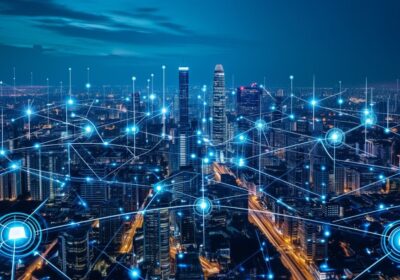
Public works shape the visible and invisible structure of cities. From transport networks and public buildings to water systems and energy infrastructure, these projects determine how urban life functions on a daily basis. Yet managing large-scale construction remains a complex challenge, marked by limited real-time visibility, high safety risks, and significant pressure to deliver on time, on budget, and in compliance with strict regulations. As cities grow and infrastructure demands intensify, traditional methods of supervision and control are proving increasingly insufficient
Construction and public works constitute the physical backbone of cities. Roads, bridges, tunnels, water distribution systems, public housing, and energy infrastructure shape not only urban landscapes but also economic productivity, social cohesion, and quality of life. Despite their importance, public works projects remain among the most complex, expensive, and risk-prone activities in urban management. Delays, cost overruns, safety incidents, and quality issues are persistent challenges, often driven by fragmented information, limited real-time visibility, and reactive decision-making.
Artificial intelligence, and particularly computer vision, is fundamentally transforming this reality. By converting visual data into actionable intelligence, computer vision enables a new level of supervision, safety, and operational efficiency across the entire lifecycle of public infrastructure projects. Cameras, drones, and image-based sensors are no longer passive recording devices; they are becoming intelligent observers capable of understanding what is happening on-site and supporting timely, evidence-based decisions.
Computer vision refers to the ability of machines to interpret and analyze visual information in ways that approximate human perception, but with far greater scale, consistency, and objectivity. In construction and public works, this capability is deployed through networks of fixed cameras, mobile devices, drones, and IoT-enabled imaging systems. These visual inputs are processed by AI models trained to recognize patterns, detect anomalies, and extract meaningful insights from thousands of images and video frames in real time. The result is a continuous, dynamic understanding of construction environments that was previously impossible to achieve through manual supervision alone.
One of the most impactful applications of computer vision in public works is automated progress tracking. Traditionally, progress monitoring relies on periodic site visits, manual reports, and subjective assessments, which can be time-consuming and prone to error. Computer vision systems can now compare real-time images and video feeds with digital plans, 3D models, or Building Information Modeling (BIM) data. By aligning visual evidence with project schedules and specifications, AI can automatically determine whether construction is advancing according to plan. Deviations such as misaligned structures, missing components, unauthorized changes, or emerging delays are detected early, allowing project managers to intervene before small issues escalate into costly problems.
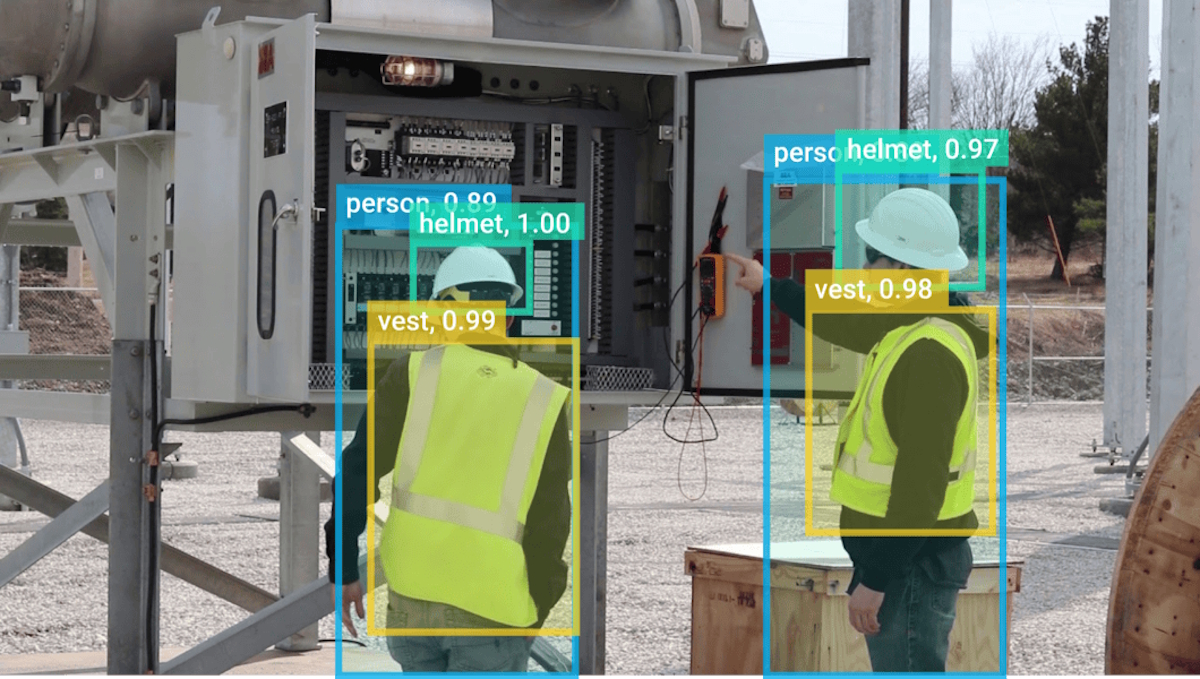
Safety is another critical domain where computer vision delivers substantial value. Construction sites are inherently hazardous environments, with heavy machinery, elevated work areas, and constantly changing conditions. AI models trained on extensive datasets of construction imagery can recognize unsafe behaviors and risk conditions in real time. These include workers operating without proper personal protective equipment, vehicles entering restricted zones, unsafe proximity between humans and machinery, or blocked emergency pathways. When such situations are detected, alerts can be sent immediately to safety officers, supervisors, or control centers, and in some cases automated warnings can be triggered on-site.
In this context, computer vision functions as a continuous, tireless safety inspector, complementing human oversight and significantly reducing the likelihood of accidents. Rather than reacting after incidents occur, safety management becomes proactive and preventive, aligned with the goal of zero-harm work environments.
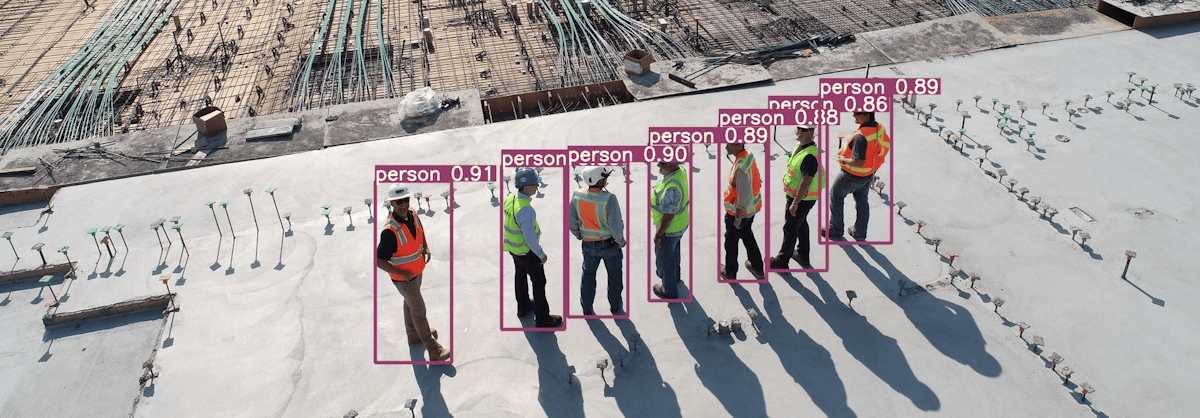
The integration of drones further extends the reach of computer vision in public works. Aerial platforms equipped with visual, infrared, and thermal cameras enable detailed inspections of areas that are difficult, dangerous, or costly for humans to access. Bridges, viaducts, tunnels, rooftops, and large-scale earthworks can be surveyed quickly and safely. AI algorithms analyze this imagery to detect cracks, corrosion, material fatigue, water infiltration, or abnormal heat signatures. Over time, these observations contribute to longitudinal datasets that reveal patterns of wear and degradation, supporting predictive maintenance strategies and extending the lifespan of critical infrastructure.
Beyond supervision and safety, computer vision is also transforming documentation and accountability in public works. AI-powered image recognition systems can automatically classify, tag, and archive visual records, linking them to specific construction phases, components, or contractual milestones. This creates a comprehensive, verifiable digital record of each project’s evolution. Such transparency is invaluable for audits, dispute resolution, regulatory compliance, and long-term asset management. Public authorities gain access to objective, timestamped evidence that enhances trust, traceability, and institutional accountability.
Environmental monitoring represents another emerging and increasingly important application. Construction activities have significant environmental impacts, from dust emissions and noise pollution to water runoff and material waste. Computer vision systems can monitor environmental indicators visually, detecting excessive dust clouds, sediment discharge into waterways, improper material storage, or fuel and chemical spills. When combined with AI analytics, these systems help ensure compliance with environmental regulations and support more sustainable construction practices. By identifying inefficiencies and sources of waste, computer vision contributes directly to greener, more responsible urban development.
Despite its potential, the deployment of computer vision in public works requires careful consideration of ethical, legal, and social implications. Continuous visual monitoring can raise legitimate concerns around privacy, data protection, and worker surveillance. Successful implementation depends on transparency, clear governance frameworks, and strict limitations on data use. Visual data should be anonymized where possible, securely stored, and processed exclusively for safety, quality, and operational improvement purposes. Open communication with workers and stakeholders is essential to build trust and ensure that technology is perceived as a protective and supportive tool rather than a mechanism of control.
Equally important is the role of human expertise. While computer vision excels at observation and pattern detection, interpretation and decision-making remain human responsibilities. Engineers, inspectors, architects, and project managers must contextualize AI-generated insights, validate findings, and apply professional judgment. The most effective systems are hybrid by design, combining automated visual intelligence with human reasoning and experience. This human-in-the-loop approach ensures that technology enhances, rather than replaces, professional accountability and institutional knowledge.
From a strategic perspective, computer vision represents a foundational element in the transition toward predictive and autonomous infrastructure management. When visual analytics are integrated with digital twins, asset management platforms, and predictive maintenance systems, cities gain the ability to oversee multiple projects and infrastructure networks simultaneously. Risks can be anticipated, resources optimized, and performance evaluated at a citywide or even metropolitan scale. Public works evolve from isolated construction activities into interconnected, intelligent systems that continuously learn and adapt.
As AI capabilities continue to mature, public works will increasingly resemble self-monitored ecosystems: transparent, data-driven, and resilient. Computer vision is not merely improving how infrastructure is built; it is redefining how it is governed, maintained, and trusted. By embedding intelligence directly into the physical processes of construction and maintenance, cities can ensure that public investments deliver safer, smarter, and more accountable outcomes from foundation to completion.