
Phison’s computational-storage announcement puts a familiar infrastructure problem in a new light: moving data can matter as much as processing it. The proposed design illustrates why AI systems need a coordinated storage and compute architecture, while leaving important questions about performance and availability unanswered.
A powerful processor is useful only when the rest of a system can supply the work it needs to do. In AI infrastructure, that makes storage more than a place to leave files between calculations. It participates in the movement of data towards memory and compute, and the arrangement of that movement can determine where a system waits. Phison’s 17 November announcement at Supercomputing 2026 presents a computational-storage architecture that moves processing into the drive. Rather than always transfer a whole dataset to a host processor, the proposed approach performs relevant work near the stored material and returns results. It is an announced development direction, not evidence that an ordinary SSD can already replace a GPU.
The distinction between a design and a deployed product is particularly important here. The announcement describes capabilities and prospective advantages, while the material available does not establish performance across an independently tested range of production workloads. A reader should therefore treat the news as an opportunity to understand an architectural choice. Where should a calculation take place, and how much information must move for it to happen? The answer can involve the processor, the storage device, the connection between them and the software deciding how to divide the task. Improving one component without understanding those relationships may simply move the bottleneck elsewhere.
The attraction of doing less moving
The industry association SNIA’s definition of computational storage centres on computation coupled with storage to reduce data movement or offload host processing. This does not imply that every calculation belongs in a drive. It describes a way of placing some work closer to the material it uses. An illustrative query might inspect many stored records but return only a small subset. If the inspection can happen near storage, fewer bytes may need to cross the host connection. If the application needs almost every byte anyway, that particular advantage becomes much less compelling. These are conceptual examples, not measurements of Phison’s device.
This is why the selectivity of a task matters. In a simplified illustration, a process reading a 100 GB collection and returning 1 GB would move one hundredth as much result data across a particular boundary if all the filtering could happen before that boundary. The arithmetic is 100 divided by 1; it is not a forecast of a hundredfold improvement in application speed. The drive still needs to read and process the source material. Instructions, metadata and intermediate results may also travel. This calculation only isolates one possible reduction in traffic, making clear both why proximity can help and why a transfer ratio cannot stand in for a complete performance result.
Capacity, bandwidth and computation are different
Phison describes its architecture as combining an integrated neural processing unit, or NPU, with 64 GB of memory and 130 GB/s of memory bandwidth. The company also claims that applicable workloads could reduce transfers by 10 to 100 times. These figures describe different properties and should not be merged into a single claim about AI capability. Memory capacity tells us how much can be held; memory bandwidth describes a rate of movement at that part of the system. Neither figure, by itself, establishes how quickly the flash can be read, how a model performs or how long a finished application takes. The transfer reduction remains a vendor claim tied to suitable workloads.
For a non-specialist reader, the simplest way to interpret the arrangement is as an attempt to give storage a more active role. The persistent data remains associated with the drive, while nearby processing can work on it before handing results to the host. That role could complement a CPU or accelerator rather than compete with it across every task. A larger AI application might still need substantial central compute, memory and networking. The architectural question is whether a specific stage can be performed more efficiently near the stored data, with acceptable accuracy, reliability and operational complexity. It is the stage and its surroundings that need evaluation.
There are several places where an apparently promising design could disappoint. A host might need to combine results from many drives, creating a new coordination cost. A task might require more working memory than the local component can provide. A supposedly local operation could repeatedly request information held elsewhere. These are general engineering possibilities, not reported faults in this design. They show why a demonstration of a supported operation should be followed by tests of the complete workload. The system needs to be judged from the arrival of a request to the production of a usable result, including the work that moves between components.
The software decides whether proximity helps
Software compatibility is another part of that evaluation. Phison names familiar frameworks among the software it intends to support. That can make a design easier for developers to approach, but recognition of a framework’s name is not proof that every model, operation or configuration will run unchanged. A useful implementation needs to specify what executes locally, which operations return to the host and how errors are reported. Otherwise, two systems might both claim support for the same software while performing very different amounts of work on the drive. The meaningful comparison concerns a defined task on a documented configuration, rather than a list of recognisable software brands.
The host also needs a way to discover, invoke and manage the available functions. SNIA’s Computational Storage API specification is relevant context because it addresses a software interface for this class of technology. Its existence should not be read as proof that Phison’s announced architecture implements that particular specification. The broader point is that hardware proximity needs an operational interface. Developers must be able to understand what a function does, how it receives data and how completion is communicated. Standardisation can help make those questions explicit, even where individual implementations differ.
Measuring the whole path
The hardware should therefore be tested as part of a path through the system. Storage reading, local computation, host communication and any subsequent accelerator work all contribute to the outcome. Reducing one transfer can be valuable without dominating the total time. In the illustrative filtering example, an application could spend most of its time on the local inspection rather than on moving the returned subset. Conversely, a relatively modest local operation might be worthwhile if it removes expensive repeated transfers. The result depends on the workload, which is why a single theoretical rate is a poor substitute for a documented measurement of a completed job.
A useful test would also distinguish latency from sustained throughput. One concerns how long a request takes; the other concerns how much work a system completes over time. A design could improve one while complicating the other, especially as more users compete for the same resources. Evaluation should include realistic request sizes and patterns, as well as behaviour when the system is busy. Power and cooling deserve attention too. Moving work into a drive does not make its energy requirements disappear. Any claim about efficiency would need a defined system boundary and measured consumption, rather than assume that fewer transferred bytes automatically means a particular saving.
Independent scrutiny reinforces the need to separate development from availability. In its 20 November reporting, Tom’s Hardware noted that the designs discussed had no product name, named controller or sample date and that features remained in development. That is useful confirmation of the announcement’s stage, not independent reproduction of its performance claims. A company planning an infrastructure purchase would still need concrete availability, support arrangements and tests relevant to its own requirements. An interesting architecture can influence the direction of a market before it becomes a service or device a customer can depend on.
What this changes for readers of the AI economy
For SMEs consuming AI through cloud services, the relevance is often indirect. The internal architecture of a provider can affect which services it can offer economically and reliably, but a particular storage innovation does not establish a future price reduction for customers. Smaller firms should not have to evaluate every low-level component to use AI. They can, however, benefit from understanding why the service is more than the model and the GPU. Storage, data preparation, movement and orchestration remain part of the cost and reliability of the final system. Changes in those layers help explain why providers with similar model access may deliver different experiences.
Phison’s announcement ultimately illustrates a shift in where infrastructure designers look for useful work. Faster processors and faster links remain important, but they are not the only response to a system that spends too much effort moving data. Sometimes the more useful question is whether some processing can move in the other direction, towards storage. The answer requires evidence about a particular operation, its software path and its complete operating conditions. Until that evidence and product availability are clearer, computational storage should be understood as a promising architectural option rather than a universal solution. Its importance lies in reminding readers that AI depends on a coordinated chain of components, each doing the right work in the right place.
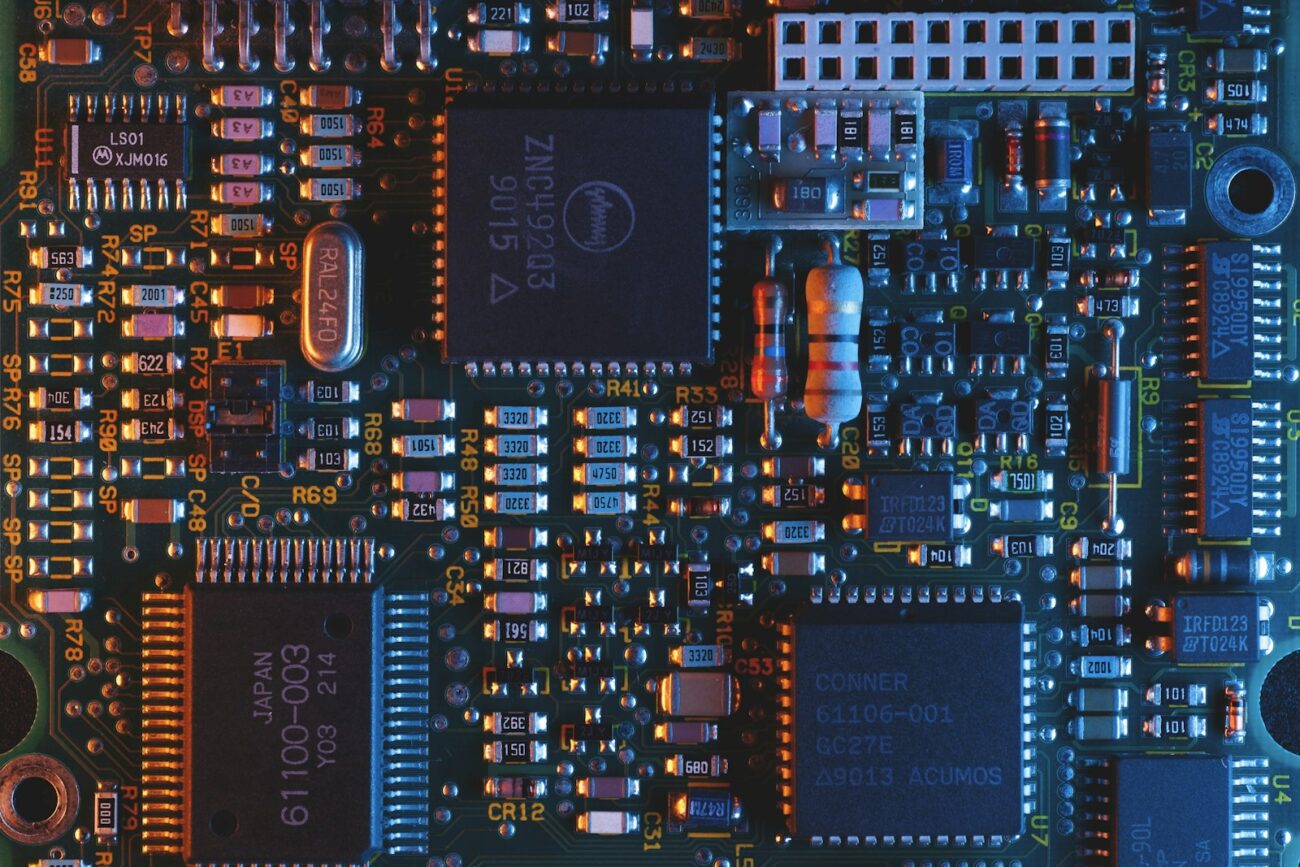
Image: Umberto / Unsplash, Unsplash License. Published 6 July 2019; resized for web. Illustrative electronic circuit board, not Phison’s announced computational-storage design.